Despite a contractual obligation, Hoyt Street Properties under-built 258 affordable housing units in Portland's Pearl District. The city has to react.


Portland's Pearl District brought promise of housing Portlanders of all incomes in its 34 acre transformative development. A major developer in the district, Hoyt Street Properties, churned out nearly 2,000 apartments and condos within 17 years. So far though, only 30 percent (and not 35 percent) of the units are classified as affordable housing, and with the building of another three complexes in the pipeline, that number will be reduced to 28 percent.
As reported by Brad Schmidt of The Oregonian, despite "knowing for months about the shortfall and a quickly approaching Sept. 8 deadline to exercise its purchase option, officials with the city have taken no documented steps to force Hoyt Street to sell land for modestly priced housing."
Schmidt spoke with Traci Manning, director of the Portland Housing Bureau, who said that the city is working to get the "best information" before deciding how to react. She said regardless of how Hoyt Street's affordability record is measured, "it will be close to target."
Read the full story: Hoyt Street Properties fails to deliver enough affordable housing under Portland's Pearl District development deal

Pearl District Revitalization Now Includes Kids
A new affordable housing development going up in Portland's dense Pearl District will include a public school on the ground floor.
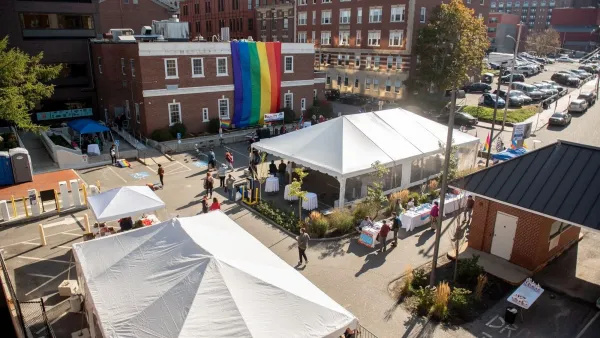
Portland unveils Maine’s first affordable housing complex for LGBTQ+ seniors
The building earmarks 11 units for people with disabilities or living with HIV/AIDS.

Portland Affordable Condo Project Offers a Path to Homeownership, but is it a Long-term Solution?
The project's affordability currently rests on temporary subsidies and market goodwill. For tenants who can’t buy—and future buyers looking for affordability—the risks are significant.

Planetizen Federal Action Tracker
A weekly monitor of how Trump’s orders and actions are impacting planners and planning in America.

California plans to bury El Niño’s downpour
If the state plays its cards right, it may be able to store a billion acre-feet of El Niño’s water in aquifers.

Chicago breaks ground on $3 billion megadevelopment
The new neighborhood, titled Foundry Park, will one day host 3,700 residences.

Satanic Place Names
From streams and lakes to valleys and canyons, I mapped more than 1,000 places named after the Devil.

California High-Speed Rail Authority CEO resigns after $600,000 scandal
Under Ian Choudri, the authority used taxpayer dollars to fund first class flights and trips to nightclubs.

Want to study the Missouri River? Soon, you may need unanimous approval from 10 states
Legislation would require 10 governors’ permission to study or build projects moving water outside the basin.

FREE Course: Walkable City 1: Why Walkability?
After describing his path towards focusing on walkability as the essence of good planning, Jeff Speck marches through his five principal reasons for making more walkable places.
Reinventing Malls: Planning Alchemy—Turning Gray Fields Into Gold
The course focuses on the opportunities and imperatives that shape reinvention of mall sites.

City of Rosemead
Rutgers University, Edward J. Bloustein School of Planning and Public Policy
One Hundred Miles
Hunter College, City University of New York (CUNY)
The Architects Foundation
University of Cincinnati Online
City of Cambridge
Montrose County
The Pocatello Development Authority