It may be hard to remember now that the winter weather has many dreaming of an escape to a warm beach, but last year's scorching temperatures set the record for the hottest year ever in the United States - by far.


For anyone who experienced "a surreal March heat wave, a severe drought in the Corn Belt [or] a huge storm that caused broad devastation in the Middle Atlantic States," it probably won't surprise you to learn that 2012 was the hottest year ever recorded in the contiguous United States. But, as new data from the NOAA indicates, not only was last year the warmest ever, it "demolished" the previous record (set in 1998) by a full degree. And while one degree my not sound like much, "temperature differences between years are usually measured in fractions of a degree," says Justin Gillis.
"Scientists said that natural variability almost certainly played a role in last year’s extreme heat and drought. But many of them expressed doubt that such a striking new record would have been set without the backdrop of global warming caused by the human release of greenhouse gases. And they warned that 2012 was probably a foretaste of things to come, as continuing warming makes heat extremes more likely."
With 11 disasters last year having exceeded $1 billion in damages, 2012 also "turned out to be the second-worst on a measure called the Climate Extremes Index, surpassed only by 1998."
2012 is expected to crack the top ten hotest years for global temperatures as well, meaning that all ten of the hottest years on record will have occured in the last 15 years. "Nobody who is under 28 has lived through a month of global temperatures that fell below the 20th-century average, because the last such month was February 1985," adds Gillis.
Read the full story: Not Even Close: 2012 Was Hottest Ever in U.S.
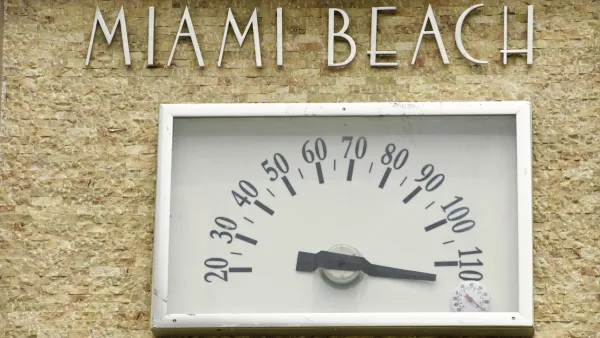
Urban Heat Waves Likely to Hit Harder
Yet another climate change side effect: more frequent urban heat waves. And because urban temperatures tend higher than rural ones, cities should be ready to protect the most vulnerable.
FTA Kills ‘Social Cost of Carbon’ in Transit Grant Criteria
The Capital Investments Grant program will no longer factor in the future impacts of carbon emissions.
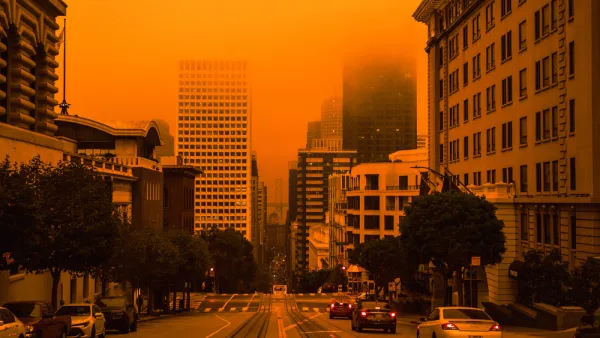
Climate Change Concerns Rising Among Americans
More Americans than ever agree climate change is happening—but fewer agree on what to do about it.

Desperate measures: Advocates weigh draining Lake Powell to fill Colorado River
Draining the reservoir could reduce evaporation losses by a couple hundred thousand acre-feet.

Eastern Nebraska is running out of electricity
Data centers and electrification are straining eastern Nebraska’s grid, throttling economic development.

Move over, LA: St. Louis gears up for Olympics, invests millions in downtown redevelopment
The Missouri city will host the 2028 Olympic soccer group stage and knockout matches.

Mass. votes against statewide minimum lot size for single-family homes
Over 2 million residents voted on Question 7; it was decided by just over 30,000 votes.

Maryland’s $15 billion bridge project gains key approval
The Maryland Transit Authority said the project will create over 60,000 jobs and add $23 billion to the local economy.

‘No clear next steps’ for Chicago's permanent festival grounds
Eleventh Ward Ald. Nicole Lee has suggested Soldier Field as a possible location for the permanent event space.

FREE Course: Walkable City 1: Why Walkability?
After describing his path towards focusing on walkability as the essence of good planning, Jeff Speck marches through his five principal reasons for making more walkable places.
Reinventing Malls: Planning Alchemy—Turning Gray Fields Into Gold
The course focuses on the opportunities and imperatives that shape reinvention of mall sites.

City of Rosemead
Rutgers University, Edward J. Bloustein School of Planning and Public Policy
One Hundred Miles
University of Michigan School for Environment and Sustainability (SEAS)
Hunter College, City University of New York (CUNY)
The Architects Foundation
City of Cambridge
Montrose County
The Pocatello Development Authority