In a rousing rebuke to the Museum of Modern Art's new show "Foreclosed: Rehousing the American Dream," Bryan Bell takes aim at the out-of-date thinking represented in top-down architecture by star architects and curators.


Some people enjoyed MoMA's new show, which presents design solutions to address the myriad problems plaguing the country's suburbs, but Bryan Bell was not one of them.
In a commentary for Metropolis, Bell draws unflattering parallels between the top-down approach of "Foreclosed" and another MoMA show, "Small Scale, Big Change," "in which the architects maintained a sustained relationship with the communities they served. The projects were developed and carried out with the involvement of the communities, not invented in a museum for distant "beneficiaries"."
For Bell, "Foreclosed" ignores the advances made by other publications and exhibitions in the last decade towards building an argument that, "design can play a direct role in addressing issues critical to the general public."
In summary of his criticisms, Bell offers this yardstick, borrowed from the disability rights movement, "Here is a good rule of thumb for successful projects in the field or for any future curators or designers who want to claim to help the general public through design: 'Nothing about us without us is for us.'"
Read the full story: MoMA Misses by 99%
How Easy Will It Be To Shift Suburbia?
A recent panel held at the Museum of Modern Art in conjunction with their current exhibition, Foreclosed: Rehousing the American Dream, provided a reality check for the visionary thinking depicted in the show, writes Jayne Merkel.
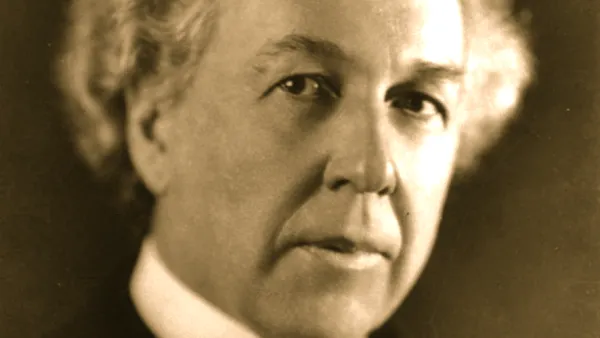
Celebrate Frank Lloyd Wright's 150th Birthday Today
June 8 marks the 150th anniversary of the birth of Frank Lloyd Wright, and Dezezen has rounded up 10 ways to celebrate nationwide.
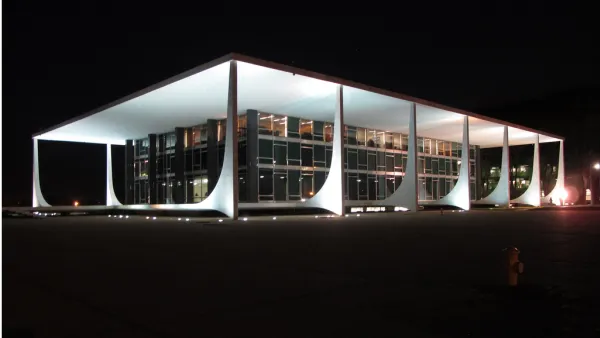
MoMA Exhibit Explores Latin American Architecture
A new exhibit at MoMA celebrates the "fitfully idealistic" architecture of Latin America, 1955 through 1980. Broad in scope, the exhibition ranges from Brasília's bold utopianism to the community-focused tactics of Bo Bardi.

Planetizen Federal Action Tracker
A weekly monitor of how Trump’s orders and actions are impacting planners and planning in America.

California plans to bury El Niño’s downpour
If the state plays its cards right, it may be able to store a billion acre-feet of El Niño’s water in aquifers.

Desperate measures: Advocates weigh draining Lake Powell to fill Colorado River
Draining the reservoir could reduce evaporation losses by a couple hundred thousand acre-feet.

Mamdani’s pied-à-terre tax survives legal challenge
A panel of judges found that the plaintiffs failed to demonstrate injury as a result of New York City's implementation of the tax.

Eastern Nebraska is running out of electricity
Data centers and electrification are straining eastern Nebraska’s grid, throttling economic development.

Seattle passes record-breaking transit services expansion
Proposition 1 will double the city’s transit tax to add 95,000 more bus trips and preserve 180,000 bus trips annually.

FREE Course: Walkable City 1: Why Walkability?
After describing his path towards focusing on walkability as the essence of good planning, Jeff Speck marches through his five principal reasons for making more walkable places.
Reinventing Malls: Planning Alchemy—Turning Gray Fields Into Gold
The course focuses on the opportunities and imperatives that shape reinvention of mall sites.

City of Rosemead
Rutgers University, Edward J. Bloustein School of Planning and Public Policy
One Hundred Miles
University of Michigan School for Environment and Sustainability (SEAS)
Hunter College, City University of New York (CUNY)
The Architects Foundation
City of Cambridge
Montrose County
The Pocatello Development Authority