Highland Park, ZIP code 75205, represents the top of the 1% in Texas, and is the most enthusiastically Republican community in the country.


The enclave of Highland Park in Texas might be considered the conservative equivalent of Berkeley, California. In 2010, the city had the highest share of donations to Republican party. Author Josh Harkinson writes:
"It's no secret why Highland Park attracts so many rich conservatives. It has a prime location near Dallas' financial center and one of the lowest property tax rates in a state with no income tax. Yet it has one of the nation's best school systems and an average emergency response time of 2.5 minutes... Wilbur David Cook, the urban planner who designed Beverly Hills, drew up the plan for Highland Park a few years before it was incorporated in 1913. One of the community's first (if factually dubious) slogans, 'It's 10 degrees cooler in Highland Park,' reflected its attractiveness to the elite, as did its restrictions prohibiting property sales to minorities."
Thanks to Urbanists Listserv
Read the full story: Inside The 1 Percent's Texas Enclave
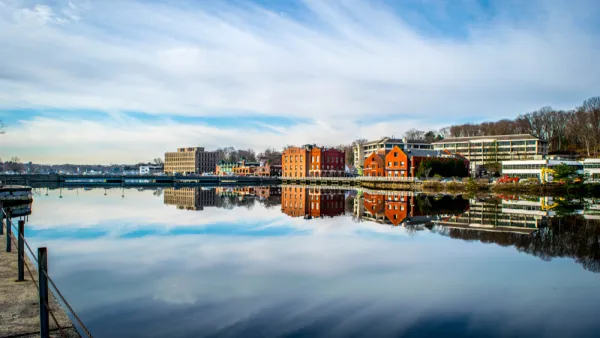
Land Use Reform Picks Up Momentum in Connecticut Again
Multiple statewide land use reform proposals are up for debate in the Nutmeg State. Which, if any, will become law?

New Ideas in Urban Research 2019
Research questions and findings from Penn IUR's emerging scholars.
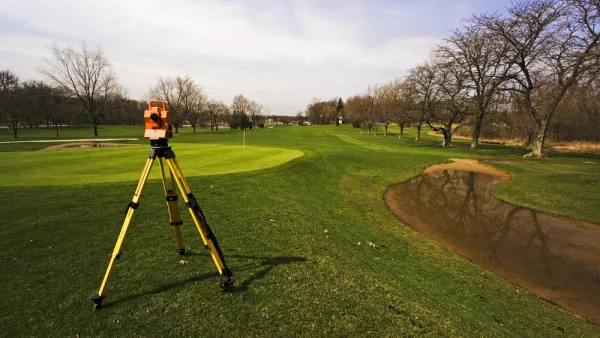
Private Golf Courses Closing in Chicago's Suburbs
Failing golf courses pose a choice for cities that can use tax dollars to turn them public or put the land to use in other ways.

Planetizen Federal Action Tracker
A weekly monitor of how Trump’s orders and actions are impacting planners and planning in America.

Washington state to charge fee to drivers with fuel-efficient cars
Revenue from the fee will go towards supporting the state’s highways.

Study reveals best places in the U.S. for cycling, walking
New research from Streetlight Data examines bicycle and pedestrian miles per capita in the 100 largest U.S. cities by population.

Mamdani unveils his ‘most ambitious bus lane project’ so far
The city has added two new bus lanes, which it expects to speed up tens of thousands of bus riders’ commutes.

New Jersey and New York suggest $10.3 billion budget for transit
Some of the budget is dedicated to replacing Manhattan's Midtown Bus Terminal.

States split over EPA’s proposal to drop greenhouse gas rules for power plants
The proposed rule drew over 165K comments, including from officials, health and environmental groups, and private citizens.

FREE Course: Walkable City 1: Why Walkability?
After describing his path towards focusing on walkability as the essence of good planning, Jeff Speck marches through his five principal reasons for making more walkable places.
Reinventing Malls: Planning Alchemy—Turning Gray Fields Into Gold
The course focuses on the opportunities and imperatives that shape reinvention of mall sites.

City of Charlotte
City of Rosemead
Rutgers University, Edward J. Bloustein School of Planning and Public Policy
University of Michigan School for Environment and Sustainability (SEAS)
Hunter College, City University of New York (CUNY)
The Architects Foundation
University District Partnership
City of Cambridge
The Pocatello Development Authority