Minneapolis and St. Paul are elevating their already high levels of biking and walking. Biking is up 22 percent over 2010 (when it was named America's #1 bike city) according to figures released last Friday.


Jay Walljasper explains the notable increase:
"The pronounced rise of two-wheel and two-feet travel between 2010 and 2011 is attributable in part to an array of street improvements - including more bike lanes and special bicycle-and-pedestrian boulevards - installed around town in the past year as part of the Nonmotorized Transportation Pilot Project. The Twin Cities was one of four communities around the country designated as transportation laboratories in the legislation, which was passed by a Congress in 2005 and signed by President George W. Bush."
Walljasper also discusses the challenges inherent in trying to get an accurate count of cyclists.
Read the full story: How to Boost Biking and Walking Even Further in Your City
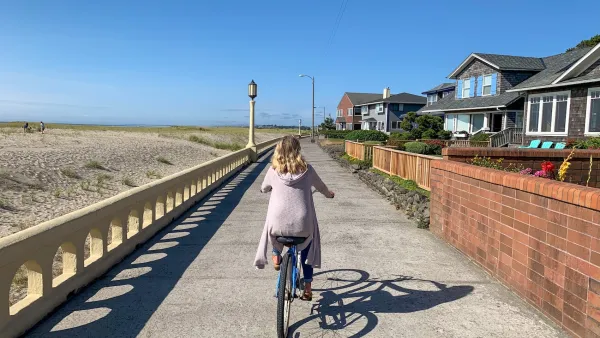
Oregon updates coastal bike map for the first time in a decade
The printed guide helps cyclists navigate the coastal region where cellular service can be unpredictable.
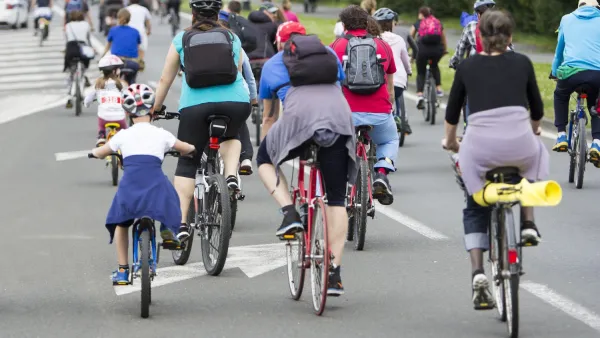
Unleashing the Power of Cycling With Smart Messaging
Lloyd Alter describes how creative design and copywriting can flip the script and promote active transport.
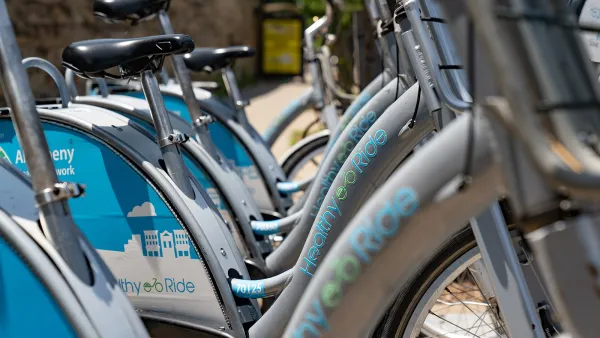
Pittsburgh To Revamp its Bike Share System With E-Bikes, New Stations
The system overhaul is partly due to nextbike's shift to focusing on its European markets. The new fleet will include 350 e-bikes and expand service to new neighborhoods.

Planetizen Federal Action Tracker
A weekly monitor of how Trump’s orders and actions are impacting planners and planning in America.

California plans to bury El Niño’s downpour
If the state plays its cards right, it may be able to store a billion acre-feet of El Niño’s water in aquifers.

Desperate measures: Advocates weigh draining Lake Powell to fill Colorado River
Draining the reservoir could reduce evaporation losses by a couple hundred thousand acre-feet.

Los Angeles just elected an urban planner as its mayor
Transportation analysts are optimistic that Raman will be more aggressive in addressing transit issues than Bass.

Mamdani’s pied-à-terre tax survives legal challenge
A panel of judges found that the plaintiffs failed to demonstrate injury as a result of New York City's implementation of the tax.

Eastern Nebraska is running out of electricity
Data centers and electrification are straining eastern Nebraska’s grid, throttling economic development.

FREE Course: Walkable City 1: Why Walkability?
After describing his path towards focusing on walkability as the essence of good planning, Jeff Speck marches through his five principal reasons for making more walkable places.
Reinventing Malls: Planning Alchemy—Turning Gray Fields Into Gold
The course focuses on the opportunities and imperatives that shape reinvention of mall sites.

City of Rosemead
Rutgers University, Edward J. Bloustein School of Planning and Public Policy
One Hundred Miles
University of Michigan School for Environment and Sustainability (SEAS)
Hunter College, City University of New York (CUNY)
The Architects Foundation
City of Cambridge
Montrose County
The Pocatello Development Authority