Cities like San Francisco, Portland and New York are facing a problem most people didn't expect: an overabundance of farmers' markets. Vancouver's planners are keeping the numbers trimmed to make sure the current markets don't wither and die.


Reporter Frances Bula talks with Tara McDonald, executive director of Vancouver Farmers Markets, who says that they get requests all the time to start new markets but they are very careful to keep the balance and make sure the current markets get enough business:
"...our organization looks at which neighbourhoods are ready. Markets take at least five years to establish, and we are making sure markets are not on top of each other." says McDonald.
Bula writes:
"Suburban markets in places such as Coquitlam and Surrey report that their vendors tell them they think there are too many markets, with too few farmers chasing around after the same shoppers."
Read the full story: Vancouver farmers’ markets struggle to avoid other cities’ mistakes
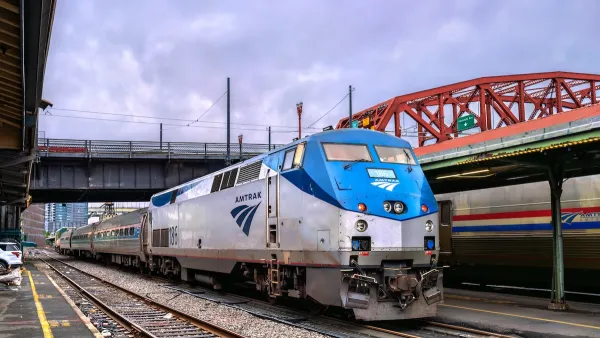
Transit leaders progress high-speed rail from Portland to Vancouver, B.C.
Washington state officials may reveal feasible routes for the high-speed rail in late 2027.

Budget constraints threaten light rail for Oregon, Washington’s new bridge
The current proposal includes only the infrastructure for the light rail, without funding for the train and tracks.
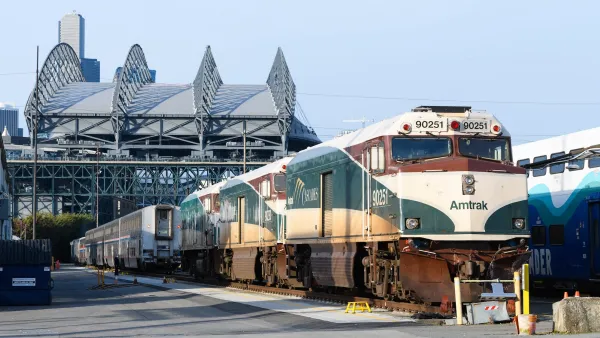
Amtrak opens border preclearance facility for travelers entering US from Vancouver
The first-of-its-kind facility streamlines the border crossing experience, eliminating long waits.

Planetizen Federal Action Tracker
A weekly monitor of how Trump’s orders and actions are impacting planners and planning in America.

California plans to bury El Niño’s downpour
If the state plays its cards right, it may be able to store a billion acre-feet of El Niño’s water in aquifers.

Desperate measures: Advocates weigh draining Lake Powell to fill Colorado River
Draining the reservoir could reduce evaporation losses by a couple hundred thousand acre-feet.

Chicago voters approve permanent festival grounds, penalty for vacant property owners
Currently, major summer and fall festivals take over public parks for weeks at a time, drawing criticism from nearby residents

NYC votes to cut outdoor dining red tape, speed up permitting
New York City also voted to allow the Department of Transportation to begin work on urgent projects before notifying elected officials.

California appears to reject Prop. 45
The proposition would have expanded the projects that qualify for a streamlined environmental review, effectively paring down the California Environmental Quality Act.

FREE Course: Walkable City 1: Why Walkability?
After describing his path towards focusing on walkability as the essence of good planning, Jeff Speck marches through his five principal reasons for making more walkable places.
Reinventing Malls: Planning Alchemy—Turning Gray Fields Into Gold
The course focuses on the opportunities and imperatives that shape reinvention of mall sites.

City of Rosemead
Rutgers University, Edward J. Bloustein School of Planning and Public Policy
One Hundred Miles
Hunter College, City University of New York (CUNY)
The Architects Foundation
University of Cincinnati Online
City of Cambridge
Montrose County
The Pocatello Development Authority