CNN looks at the next wave in urban agriculture: commercial-scale indoor farms that are hydroponic, climate controlled, and LED-lit.


To date, urban farming has primarily taken place at a small scale and on rooftops, writes Jennifer Alsever. However, large-scale indoor facilities, such as the "Vertical Farms" advocated by Dickson Despommier, may be better equipped to meet rising demand for locally grown, organic food. The highly controlled environments of indoor farms offer higher yields per square foot, inspiring experimental ventures in cities throughout the country, according to Alsever.
Some critics are skeptical as to whether the new model is fiscally sustainable, given the significant amount of electricity it requires. The author quotes Bruce Bugbee, a professor of crop physiology at Utah State University:
"Scores of companies have tried to do this, even the big guys like General Mills fifteen years ago. It's too expensive. People don't realize how much light it takes to grow plants."
Read the full story: Urban farming 2.0: No soil, no sun


Vertical Farms, Fad or Feast?
Hydroponic indoor farmers hope to charge a premium for plants grown out of season in indoor farms. The notion has generated attention from big investors, but whether or not consumers will follow is an open question.
Floating Vertical Farms Could Deliver and Monitor Food Production in Dense Cities
Known for its density with nearly 20,000 people per square mile, Singapore is changing its food systems strategy to produce more food locally, and reduce food waste.
The Future of Vertical Urban Farming is Pink
Let's put aside those renderings of high-rise urban greenhouses with lush, vertical gardens. Vertical farming's future, instead, lies more practically in large, suburban "pinkhouses", says one expert.

Planetizen Federal Action Tracker
A weekly monitor of how Trump’s orders and actions are impacting planners and planning in America.

Amtrak, CN end decades-long dispute with eight-year agreement
The new operating agreement establishes an updated framework for the companies to work together, including processes to resolve disputes.
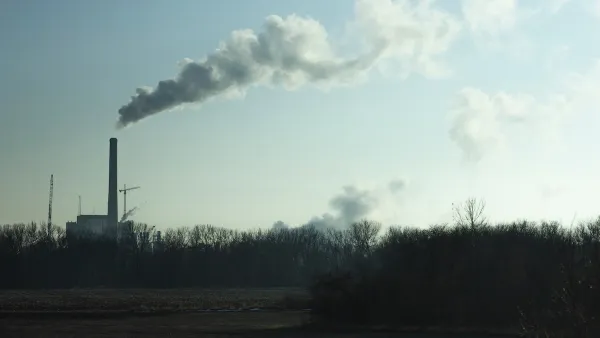
Nation's most wind-powered state turns to coal as data centers increase energy demand
For the first time in decades, Iowa has increased its generation of coal power.

Alabama scores up to $2.5 billion federal loan for largest infrastructure project in state’s history
The Mobile River Bridge and Bayway Project aims to ease congestion at Alabama’s worst bottleneck.

Trump is considering data centers on 6 states' public land — some state officials say they had no idea
If the administration approves the proposed projects, data center and data center-related developments will cover 17,600 acres of public land.

Despite court ruling, Trump is keeping nearly all wind projects in the US on hold
At least 110 wind energy projects have not heard from the government since a federal judge ruled that the Trump administration's freeze on wind turbine clearances was likely illegal.

FREE Course: Walkable City 1: Why Walkability?
After describing his path towards focusing on walkability as the essence of good planning, Jeff Speck marches through his five principal reasons for making more walkable places.
Reinventing Malls: Planning Alchemy—Turning Gray Fields Into Gold
The course focuses on the opportunities and imperatives that shape reinvention of mall sites.

KFH Group Inc.
Greater Baltimore Committee
Eagle County Government
The Architects Foundation
University of Cincinnati Online
The Pocatello Development Authority
The Urban Renewal Agency of the City of Pocatello