A new essay by Thomas Fisher details Frederick Law Olmsted's lesser known work in the realm of public health and sanitation.


Fisher argues that Olmsted's work as a general secretary of the US Sanitary Commission might have important implications for planning and public health in the 21st century:
"But when we examine Olmsted's Sanitary Commission work in light of the history of public health, it is clear that here - just as with his foundational work in public parks - Olmsted has set an example that landscape architects might follow in the future. To see where the field might venture in the 21st century, in other words, it is illuminating to chart an often-overlooked path that Olmsted pioneered in the mid-19th century."
Read the full story: Frederick Law Olmsted and the Campaign for Public Health
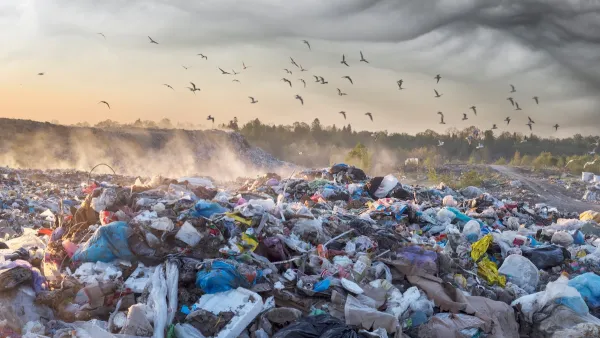
Colorado Landfills Emit as Much Pollution as 1M Cars
Landfills are the third-largest source of methane pollution in Colorado, after agriculture and fossil fuel extraction.
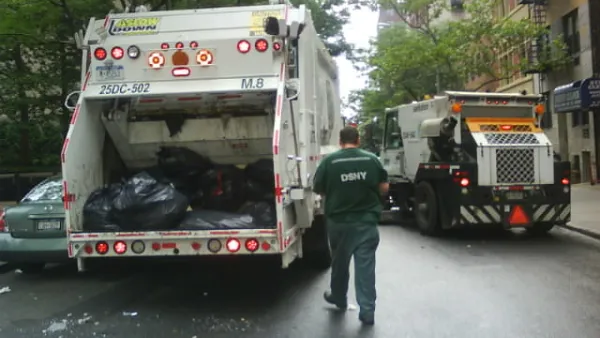
New York City Battles a Garbage Crisis
Last year's budget cuts have led to mounting complaints as the city's sanitation department falls behind on collections and rodent complaints surge.

Lessons From San Diego's Hepatitis A Outbreak
Voice of San Diego reports in detail about the months of warning San Diego officials had about the spread of Hepatitis A in public areas around the city. Still, prevention measures took a back seat to bureaucracy.

Planetizen Federal Action Tracker
A weekly monitor of how Trump’s orders and actions are impacting planners and planning in America.

California plans to bury El Niño’s downpour
If the state plays its cards right, it may be able to store a billion acre-feet of El Niño’s water in aquifers.

Desperate measures: Advocates weigh draining Lake Powell to fill Colorado River
Draining the reservoir could reduce evaporation losses by a couple hundred thousand acre-feet.

Mamdani’s pied-à-terre tax survives legal challenge
A panel of judges found that the plaintiffs failed to demonstrate injury as a result of New York City's implementation of the tax.

Eastern Nebraska is running out of electricity
Data centers and electrification are straining eastern Nebraska’s grid, throttling economic development.

Seattle passes record-breaking transit services expansion
Proposition 1 will double the city’s transit tax to add 95,000 more bus trips and preserve 180,000 bus trips annually.

FREE Course: Walkable City 1: Why Walkability?
After describing his path towards focusing on walkability as the essence of good planning, Jeff Speck marches through his five principal reasons for making more walkable places.
Reinventing Malls: Planning Alchemy—Turning Gray Fields Into Gold
The course focuses on the opportunities and imperatives that shape reinvention of mall sites.

City of Rosemead
Rutgers University, Edward J. Bloustein School of Planning and Public Policy
One Hundred Miles
University of Michigan School for Environment and Sustainability (SEAS)
Hunter College, City University of New York (CUNY)
The Architects Foundation
City of Cambridge
Montrose County
The Pocatello Development Authority