The Cleveland Plain Dealer reports that the city has begun covering the broken windows and doors of abandoned homes with plywood painted to look like functioning doors and windows as part of a program to fight blight.


Sandra Livingston writes, "A $20,000 grant is paying for the program, which involves 22 mostly residential properties and should be done by Labor Day. Separately, the city is considering its own project with the specialist.
"I think it's making the best of a bad situation," Pianka said. "It's not a solution to the vacant, abandoned property crisis, but it's one thing that can be done.""
Read the full story: Program uses decorative boards to try to blend vacant homes into Cleveland neighborhoods

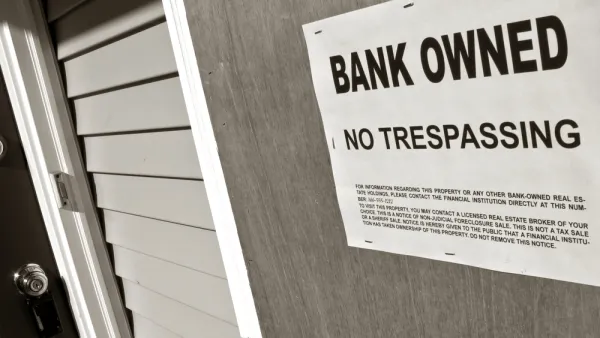
Mapping Tool Enables Housing Action in Detroit and Beyond
A web tool that helped Detroit develop a housing plan may ultimately provide public data on every parcel in the country.
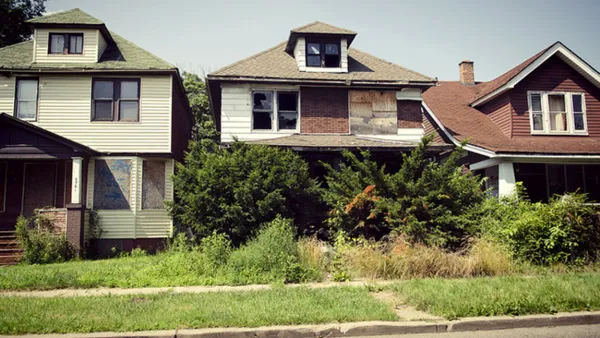
Federal Agencies Investigating the Rising Costs of Detroit's Blight Program
Detroit's aggressive blight reduction strategy, to demolish vacant homes by the thousands, is coming under scrutiny for rising costs. The FBI and the U.S. Inspector General are investigating.
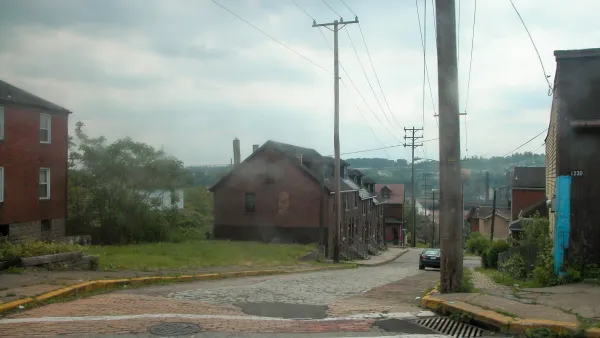
Managing Abandoned Homes in North Braddock
The usual litany of Rust Belt woes hit North Braddock, Pennsylvania particularly hard. The Pittsburgh suburb has shed two-thirds of its population and is burdened with 350 abandoned properties.

Planetizen Federal Action Tracker
A weekly monitor of how Trump’s orders and actions are impacting planners and planning in America.

Amtrak, CN end decades-long dispute with eight-year agreement
The new operating agreement establishes an updated framework for the companies to work together, including processes to resolve disputes.

Judges permit Denver to divert 77,000 acre feet from the Colorado River for reservoir expansion
Overuse and climate change have caused the Colorado River’s water levels to plummet.

Boston has spent millions making the Green Line more accessible — and there’s no end in sight
While the city has invested millions into expanding and adding platforms to the Green Line to make it more accessible, new train cars set to arrive next year will be too tall for disabled passengers to board without raising the current platforms.

Idaho may see an 18% drop in federal surface transit funding — the largest estimated cut in the US
Transit systems in rural communities are much more reliant on federal funding to provide their services.

How ‘post-disaster gentrification’ alters neighborhoods after natural calamities
After hurricanes, fires or other calamities, the original residents of a community are often replaced by younger, wealthier residents.

FREE Course: Walkable City 1: Why Walkability?
After describing his path towards focusing on walkability as the essence of good planning, Jeff Speck marches through his five principal reasons for making more walkable places.
Reinventing Malls: Planning Alchemy—Turning Gray Fields Into Gold
The course focuses on the opportunities and imperatives that shape reinvention of mall sites.

City of Wisconsin Rapids
Harvard University Graduate School of Design
KFH Group Inc.
The Architects Foundation
University of Cincinnati Online
The Pocatello Development Authority
The Urban Renewal Agency of the City of Pocatello