Some economists are warning that China's building boom is actually a bubble that is soon to burst.


And if it does, it could wreak havoc on the global economy.
"In June, real estate prices in 70 large Chinese cities declined over the previous month for the first time in almost one-and-a-half years -- by 0.4 percent for new construction and 0.1 percent for existing structures. The government statistics office also reported sobering figures for the overall economy.
Statistics also show that the economy grew by only 10.3 percent in the second quarter, compared with the same period last year. Growth in the first three months of the year was still at 11.9 percent. This decline in growth seems ridiculous when compared with economic conditions in Western industrialized countries. But for the People's Republic, whose development model needs record growth to keep the economy from quickly sliding downward, the recent data is unsettling."
Read the full story: China's Real Estate Bubble Threatens to Burst

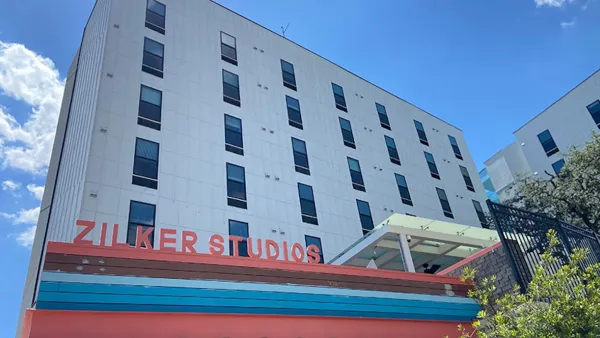
What Makes Affordable Housing Green?
There's no one way to determine what makes “green” housing. Here's a breakdown of the standards and considerations used by the affordable housing industry.
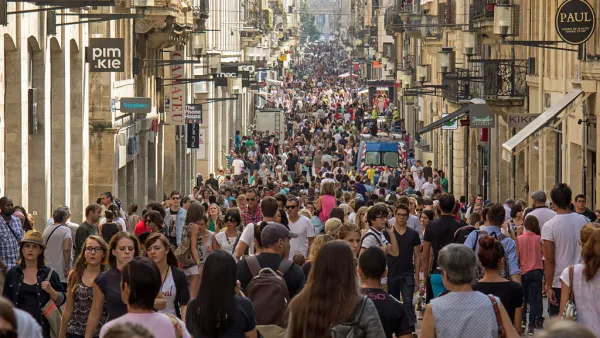
European Cities Act on Density
The sprawling mass of suburbia has been a disaster for the environment. But now smaller, denser cities herald a renaissance in city living.
The Road Forward: Cost-Effective Policy Measures To Decrease Emissions From Passenger Land Transport
This new 165-page book, available free, is a resource for identifying practical, cost-effective policies for reducing passenger transport emissions on land, and especially in urban areas.

Planetizen Federal Action Tracker
A weekly monitor of how Trump’s orders and actions are impacting planners and planning in America.

Amtrak, CN end decades-long dispute with eight-year agreement
The new operating agreement establishes an updated framework for the companies to work together, including processes to resolve disputes.

Judges permit Denver to divert 77,000 acre feet from the Colorado River for reservoir expansion
Overuse and climate change have caused the Colorado River’s water levels to plummet.

NYC DOT wants faster, more permanent street upgrades
The city is examining ways to build more concrete infrastructure without getting entangled in 'decades-long' projects.

'Something we’ve never seen before:' rising utility rates could strain city finances nationwide
Data centers, climate change and other factors have caused utility rates in the United States to increase by 38% since 2020.

Trump to overrule local leaders, lease millions of acres of America’s Pacific Island territories’ seafloors to mining companies
International law says that the Indigenous people of America’s territories have a right to prior and informed consent regarding projects that impact their countries.

FREE Course: Walkable City 1: Why Walkability?
After describing his path towards focusing on walkability as the essence of good planning, Jeff Speck marches through his five principal reasons for making more walkable places.
Reinventing Malls: Planning Alchemy—Turning Gray Fields Into Gold
The course focuses on the opportunities and imperatives that shape reinvention of mall sites.

Harvard University Graduate School of Design
KFH Group Inc.
Greater Baltimore Committee
The Architects Foundation
University of Cincinnati Online
The Pocatello Development Authority
The Urban Renewal Agency of the City of Pocatello