This piece from The New York Times profiles architectural photographer Iwan Baan, whose style differs from the status quo to emphasize the urban and social context of the buildings he's photographing.


"His work owes as much to Diane Arbus and Henri Cartier-Bresson as to Julius Shulman or Ezra Stoller, the pre-eminent architectural photographers of the late 20th century.
And where Shulman may be best known for exalting glass houses that hovered above Los Angeles, Mr. Baan often does the opposite, chartering helicopters to photograph buildings as small objects amid relentless urban sprawl. If Shulman and Stoller's glorifying of pure form was an ideal match for the purist Modern architecture of their era, Mr. Baan's conjuring of real life may be ideally suited to a time when architects like Mr. Koolhaas are creating buildings meant to absorb and reflect the messiness of 21st-century cities."
Often taken from helicopters, Baan's architectural photographs sometimes view building projects as tiny specks in a dense urban environment. His work also buck tradition and integrates people into photos of buildings.
Read the full story: Structural Integrity and People, Too

Capturing the Post-Pandemic City: The Power of 'Visual Prosecution'
Have you ever tried immersive photography to show how urban landscapes, with their ever-evolving stories, are changing post-pandemic? A three-time author of books about understanding the innate identities of urban places updates his perspective.
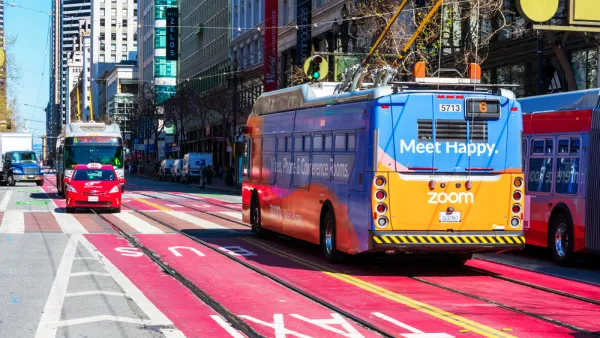
Climate Change Law: A Primer for Cities
A report from the Sabin Center provides a legal framework for municipal-level action on climate change policy.
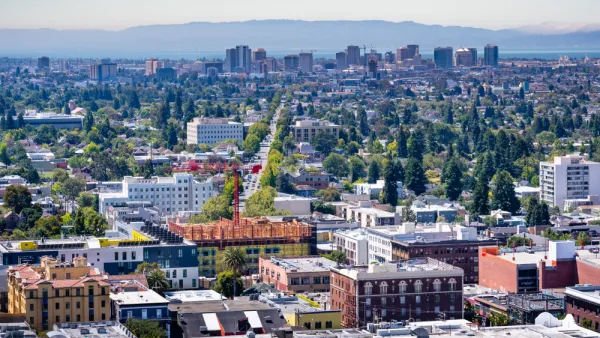
Another Berkeley 'First': Banning Natural Gas Lines in New Buildings
On Tuesday night, the City Council of Berkeley, Calif., unanimously voted to ban natural gas infrastructure from new buildings starting next year, the first city in the U.S. to pass such an ordinance. Fifty cities in the state could be next.

Planetizen Federal Action Tracker
A weekly monitor of how Trump’s orders and actions are impacting planners and planning in America.

Eastern Nebraska is running out of electricity
Data centers and electrification are straining eastern Nebraska’s grid, throttling economic development.

Move over, LA: St. Louis gears up for Olympics, invests millions in downtown redevelopment
The Missouri city will host the 2028 Olympic soccer group stage and knockout matches.

Dallas releases zoning code overhaul to officials
The drafted overhaul is over 400 pages long.

NYC renovations for dangerous, ‘mercilessly crammed’ street delayed until 2027
Construction was supposed to begin this fall.

San Diego’s Midway Rising project gets greenlight from city council
The project looks to become the largest affordable housing development in California's history.

FREE Course: Walkable City 1: Why Walkability?
After describing his path towards focusing on walkability as the essence of good planning, Jeff Speck marches through his five principal reasons for making more walkable places.
Reinventing Malls: Planning Alchemy—Turning Gray Fields Into Gold
The course focuses on the opportunities and imperatives that shape reinvention of mall sites.

City of Rosemead
Rutgers University, Edward J. Bloustein School of Planning and Public Policy
One Hundred Miles
University of Michigan School for Environment and Sustainability (SEAS)
Hunter College, City University of New York (CUNY)
The Architects Foundation
City of Cambridge
The Pocatello Development Authority
The Urban Renewal Agency of the City of Pocatello