This piece from Urban Omnibus looks at ideas to counteract global warming by adding more trees to urban areas.


"Retrofitting our urban building stock to address climate change need not be limited exclusively to increasing their energy efficiency. If "one of the primary causes of global environmental change is tropical deforestation" (Geist & Lambin, 143), then we should approach the adaptation of our buildings as an exercise in reforestation. Deforestation is too often divorced from urban discourse around climate change. In an attempt to redress that, my investigation into sustainable retrofits has included research into some causes of and solutions to deforestation, including a list of interventions already being implemented in the developing world. We must learn from both the causes of climate change and attempts to combat it as we attempt to reforest the city."
The facades and roofs of buildings are underutilized spaces that could be "re-forested" to absorb carbon emissions, according to architect Vanessa Keith.
FULL STORY: Clip-on Architecture: Reforesting Cities

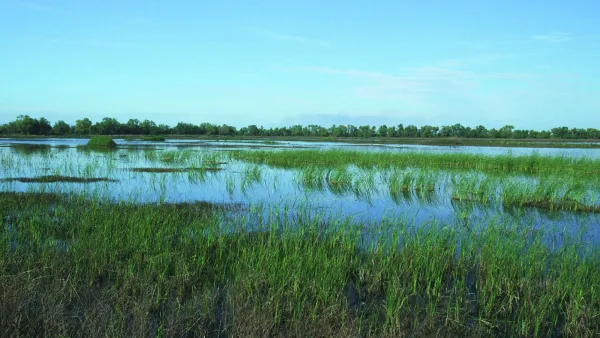
How to Fight Climate Change and Increase Resiliency, Naturally
Five actions governments could take quickly to reduce emissions and restore ecosystems.
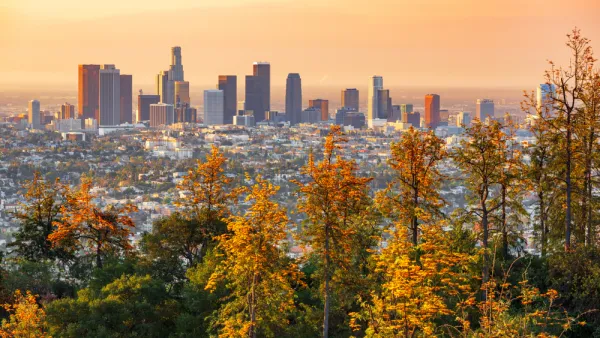
LA’s Trees Absorb More Carbon Than Expected, But Can’t Do It Alone
A USC study finds that Los Angeles’ urban trees absorb more carbon than expected, but while they provide crucial environmental benefits, they cannot replace the urgent need for systemic emissions reductions.
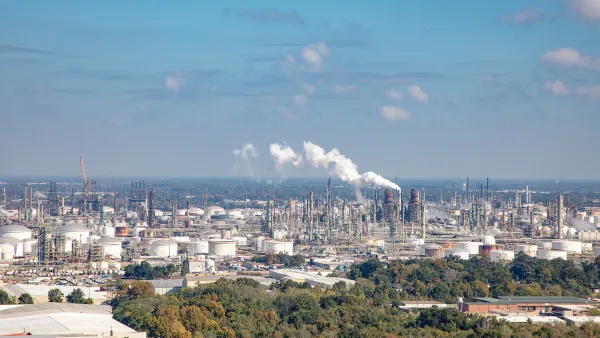
EPA: Louisiana Can Approve Carbon Capture Projects
Environmental groups worry carbon sequestration could impact water supplies and pollute the same communities already impacted by oil and gas extraction.

Planetizen Federal Action Tracker
A weekly monitor of how Trump’s orders and actions are impacting planners and planning in America.

The state-sanctioned urbicide of Austin
People don’t kill cities. Freeways do.

US to reduce Colorado River water deliveries to Mexico
A new Colorado Treaty amendment reduces Mexico’s Colorado River water allocation by 250,000 acre feet.

5 New England states march closer to 800 megawatt wind energy project
Securing federal approval for the project may be complicated under the Trump administration, which has historically been hostile towards domestic wind power.

Baltimore to break ground on $50 million Transit Priority Project
The project will bring faster bus trips, safer streets and better bike connections to Baltimore.

Airbnb launches $250 million 'last-dollar financing' housing accelerator, makes first investment in Austin
The company will put $6.4 million towards affordable housing development in Texas’ capital.

FREE Course: Walkable City 1: Why Walkability?
After describing his path towards focusing on walkability as the essence of good planning, Jeff Speck marches through his five principal reasons for making more walkable places.
Reinventing Malls: Planning Alchemy—Turning Gray Fields Into Gold
The course focuses on the opportunities and imperatives that shape reinvention of mall sites.

Eagle County Government
Harvard University Graduate School of Design
Nashville Planning Department
The Architects Foundation
University of Cincinnati Online
The Pocatello Development Authority
The Urban Renewal Agency of the City of Pocatello
Journal of the American Planning Association