Koolhaas calls architecture to task (and includes himself) for not engaging directly enough with the issues of sustainability and ecology in building.


In this transcript from a speech delivered at Harvard, Koolhaas walks through the history of ecology in architecture, expressing a deep interest in the work of Buckminster Fuller. He concludes with the observation that the field of architecture has been far too shallow in their nods toward sustainability.
"Embarrassingly, we have been equating responsibility with literal greening. The boutique of Ann Demeulemeester in Seoul, for example, covered entirely in green. Even significant buildings by serious architects, such as the California Academy of Sciences in San Francisco, for me almost fall into the same category. What is very difficult about architecture today is that architects themselves are the main commentators, using a language that is either outrageously innocent or deeply calculated – probably both – but in a shocking way."
Read the full story: Sustainability: advancement vs. apocalypse

Skyscrapers and Starchitects Coming Soon to Downtown San Francisco
Take a tour of the changes coming the to the Transbay District in San Francisco.
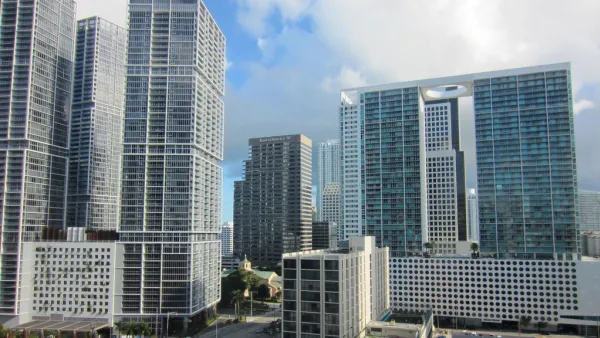
Miami's High-Rise Orthodoxy Hides a Better Way
Alastair Gordon lambasts Miami's high-end architectural extremes. A horizontal, nature-inspired urbanism might better address contradictions between breezy luxury and inland poverty.
The Fundamental Responsibility of Architects
On Places, Reinhold Martin explores the theme of this year's Venice Architecture Biennale.

Planetizen Federal Action Tracker
A weekly monitor of how Trump’s orders and actions are impacting planners and planning in America.

Amtrak, CN end decades-long dispute with eight-year agreement
The new operating agreement establishes an updated framework for the companies to work together, including processes to resolve disputes.

Judges permit Denver to divert 77,000 acre feet from the Colorado River for reservoir expansion
Overuse and climate change have caused the Colorado River’s water levels to plummet.

Northwest rail fans eager for Sept. 30 debut of Amtrak’s Airo fleet
Get ready for that new train smell and more seats. But they won’t go faster or run more frequently on the Cascades route in Washington and Oregon.

NYC DOT wants faster, more permanent street upgrades
The city is examining ways to build more concrete infrastructure without getting entangled in 'decades-long' projects.

'Something we’ve never seen before:' rising utility rates could strain city finances nationwide
Data centers, climate change and other factors have caused utility rates in the United States to increase by 38% since 2020.

FREE Course: Walkable City 1: Why Walkability?
After describing his path towards focusing on walkability as the essence of good planning, Jeff Speck marches through his five principal reasons for making more walkable places.
Reinventing Malls: Planning Alchemy—Turning Gray Fields Into Gold
The course focuses on the opportunities and imperatives that shape reinvention of mall sites.

Harvard University Graduate School of Design
KFH Group Inc.
Greater Baltimore Committee
The Architects Foundation
University of Cincinnati Online
The Pocatello Development Authority
The Urban Renewal Agency of the City of Pocatello