As bankruptcy hearings for two newspapers in Philadelphia unfold, this piece looks at the state of newspapers in cities and wonders what will happen when a big American city loses its newspaper.


"Bankruptcy proceedings in which the parties do not amicably come together on terms for restructuring debt are fluid and unpredictable. The Philadelphia newspaper case has been particularly rancorous. A possibility exists, probably remote at this point, that the papers could just fold, making Philadelphia the winner of a dubious sweepstakes: first major American city to be left without a daily newspaper. Alberto Ibargüen, president of the Knight Foundation, which finances journalistic innovation, told me, 'It's going to happen somewhere.'"
This article also probes into the mind of Brian Tierney, the leader of the ownership group that has gone deep into debt to try to save The Philadelphia Inquirer and The Philadelphia Daily News. He sees the papers as a "public trust".
Read the full story: What’s a Big City Without a Newspaper?


Philadelphia lawmakers fight to save 'Chinatown Stitch' from Trump cuts
The freeway cap project, approved and funded under the Biden administration, is now in jeopardy after the federal government rescinded all but $8 million in funding.
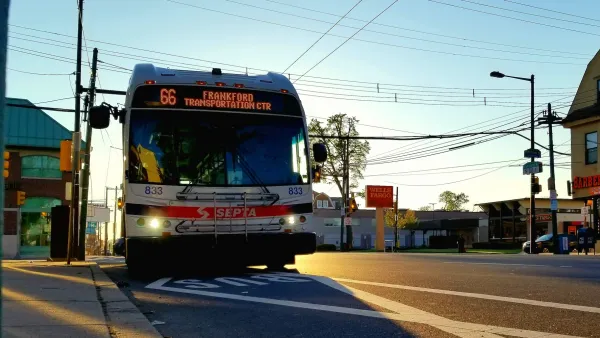
SEPTA's bus-mounted lane enforcement cameras cut travel times by up to 6%
The AI-assisted cameras have issued nearly 200,000 citations to drivers blocking bus lanes.
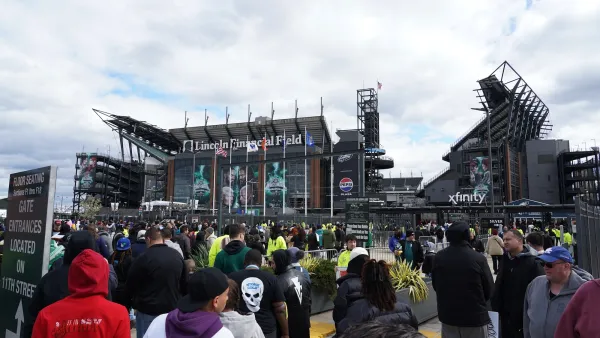
Philadelphia officials say city is ready for World Cup
The city touted its plans to ensure security and accessibility during FIFA World Cup events.

Planetizen Federal Action Tracker
A weekly monitor of how Trump’s orders and actions are impacting planners and planning in America.

Amtrak, CN end decades-long dispute with eight-year agreement
The new operating agreement establishes an updated framework for the companies to work together, including processes to resolve disputes.
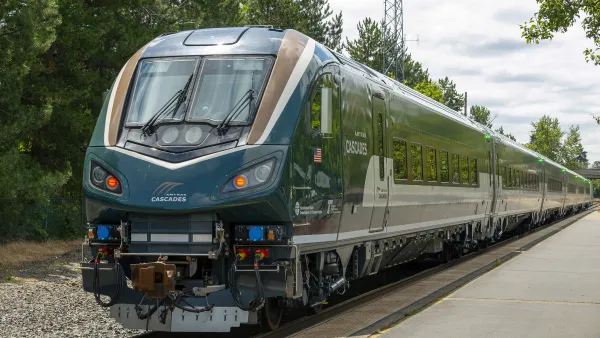
Northwest rail fans eager for Sept. 30 debut of Amtrak’s Airo fleet
Get ready for that new train smell and more seats. But they won’t go faster or run more frequently on the Cascades route in Washington and Oregon.

Record-breaking wildlife overpass in Colorado brings 91% reduction in animal collisions
Prior to the overpass, vehicles were hitting one deer per day on Colorado’s Interstate 25.

California lawmakers approve just 5% of much-needed LA28 transportation funding
State legislators appear just as unwilling as Trump to pay for Olympics-related transportation projects.

MTA looks to bring AI-assisted, multilingual announcement system to subways
Some of the transit agency’s audio systems haven’t been upgraded in 40 years.

FREE Course: Walkable City 1: Why Walkability?
After describing his path towards focusing on walkability as the essence of good planning, Jeff Speck marches through his five principal reasons for making more walkable places.
Reinventing Malls: Planning Alchemy—Turning Gray Fields Into Gold
The course focuses on the opportunities and imperatives that shape reinvention of mall sites.

City of Thousand Oaks
City of Wisconsin Rapids
Harvard University Graduate School of Design
The Architects Foundation
University of Cincinnati Online
The Pocatello Development Authority
The Urban Renewal Agency of the City of Pocatello