As a lifelong urbanite, I’ve always felt comfortable learning cities “by Braille.” I put on my walking shoes and wander, making mental maps as I go. I experience serendipity, yet can generally intuit where things are likely to be – the CBD, the government center, nightlife.This summer our family spent time in Berlin, Venice, Florence, and Paris. Of the four, Paris was the only one I’d been to before. By the time we got there, it was like greeting an old friend.


As a lifelong urbanite, I've always felt comfortable learning cities "by Braille." I put on my walking shoes and wander, making mental maps as I go. I experience serendipity, yet can generally intuit where things are likely to be – the CBD, the government center, nightlife.
This summer our family spent time in Berlin, Venice, Florence, and Paris. Of the four, Paris was the only one I'd been to before. By the time we got there, it was like greeting an old friend.
Berlin is a fantastic city for many reasons, a remarkable blend of modern sophistication and livability. I also "grokked" it – navigating the city was easy, in no small part because of its terrific public transit and very walkable neighborhoods.But deeper than that, the city made sense to me at a visceral level.
Venice was harder, but I experienced it spatially as a puzzle. As we got lost in alleys three cobblestones wide, I contemplated both the audacity of building such a place and how different the medieval mind must have been. If cities are concretization of place and time, then Venice seemed farther removed from my daily experience than any place I'd encountered in India or Latin America.
Then we came to Florence, and for the first time I was confronted with a place that I couldn't comprehend. The square on which our apartment was located – Santo Spirito – was lovely, with a daily market that changed subtly with the days of the week. The rest of the city, however, felt like a museum of itself. Most Florentines live in the suburbs, having abandoned the city proper to the hoards of tourists who descend upon it each summer. For those who come to worship at the temple of Dante or take in art at the Uffizi until they go cross-eyed, Florence is a rich place. And certainly Tuscan food and wine are sufficient distraction for anyone. Yet for those of us who travel to experience place, Florence is disappointing.
Arriving in Paris felt as though we had come back through the looking glass. It was legible; I could find my way once again. I still had my sight, but more importantly, my sense of touch was returned to me.
What makes places legible for you?
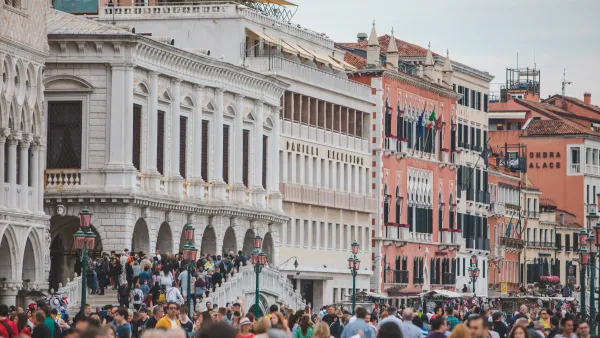
Too Much of a Good Thing? 5 Flavors of Overtourism
Popular travel destinations across the world are facing a huge challenge as international tourism surpasses pre-pandemic levels: too many visitors. But what’s driving this troublesome trend?
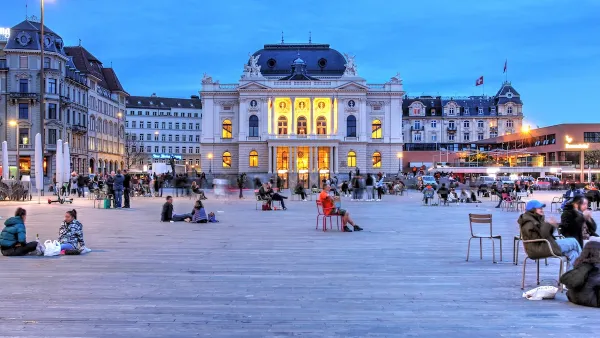
But... Europe
European cities and nations tend to have less violent crime than the United States. Is government social welfare spending the magic bullet that explains this difference?
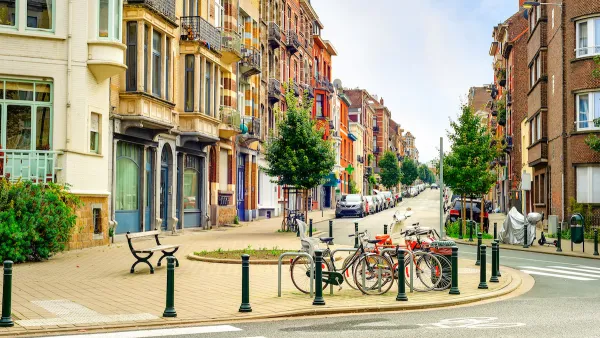
Paris Is Great, But Here's Where the Green Mobility Revolution Is Happening
A movement toward sustainable mobility is taking place across Europe, not just in the City of Lights.

Planetizen Federal Action Tracker
A weekly monitor of how Trump’s orders and actions are impacting planners and planning in America.

California plans to bury El Niño’s downpour
If the state plays its cards right, it may be able to store a billion acre-feet of El Niño’s water in aquifers.

Desperate measures: Advocates weigh draining Lake Powell to fill Colorado River
Draining the reservoir could reduce evaporation losses by a couple hundred thousand acre-feet.

Los Angeles just elected an urban planner as its mayor
Transportation analysts are optimistic that Raman will be more aggressive in addressing transit issues than Bass.

Mamdani’s pied-à-terre tax survives legal challenge
A panel of judges found that the plaintiffs failed to demonstrate injury as a result of New York City's implementation of the tax.

Eastern Nebraska is running out of electricity
Data centers and electrification are straining eastern Nebraska’s grid, throttling economic development.

FREE Course: Walkable City 1: Why Walkability?
After describing his path towards focusing on walkability as the essence of good planning, Jeff Speck marches through his five principal reasons for making more walkable places.
Reinventing Malls: Planning Alchemy—Turning Gray Fields Into Gold
The course focuses on the opportunities and imperatives that shape reinvention of mall sites.

City of Rosemead
Rutgers University, Edward J. Bloustein School of Planning and Public Policy
One Hundred Miles
University of Michigan School for Environment and Sustainability (SEAS)
Hunter College, City University of New York (CUNY)
The Architects Foundation
City of Cambridge
Montrose County
The Pocatello Development Authority

