Wired Science reports that there are now 770,000 green jobs among 62,800 businesses in the U.S., which makes up 3.7 percent of the overall job market.


Green jobs might be our final destination some day. Although only a tiny slice of the overall American jobs pie, green jobs are already approaching the same scale as the traditional energy sector.
"The report also found that the rate of growth in green jobs in the U.S. exceeds other job sectors by a wide margin - green jobs grew 9.1 percent between 1998 and 2007, as opposed to 3.7 percent for the overall job market. California, Texas, Pennsylvania, Ohio and New York (in this order) are the biggest sources of green jobs. South Dakota, North Dakota, Alaska, Montana, and Vermont, were at the bottom of the list.
The report divides green jobs into five categories: clean energy, energy efficiency, conservation and pollution mitigation, environmentally friendly production, and training and support."
Read the full story: Green Jobs Grow: 770,000 Americans Already Have One

Newsom kills bill requiring polluting factories near schools to undergo environmental review
In his veto letter, Newsom wrote that protecting communities and strengthening manufacturing “were not mutually exclusive.”
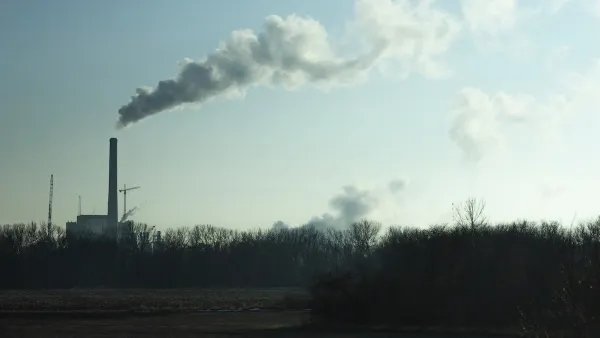
Nation's most wind-powered state turns to coal as data centers increase energy demand
For the first time in decades, Iowa has increased its generation of coal power.
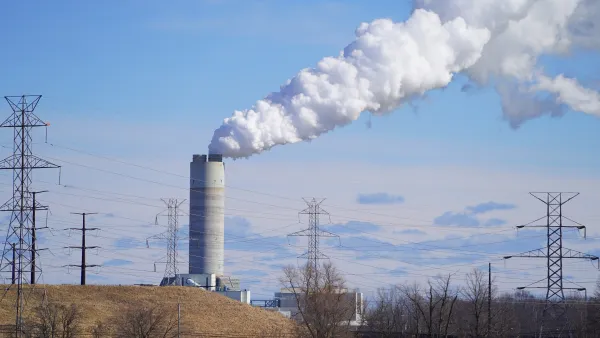
EPA erases limits on planet-warming pollution from power plants
Under Monday’s plan, power plants would still have some limits on how much mercury, arsenic and other contaminants they can emit.

Desperate measures: Advocates weigh draining Lake Powell to fill Colorado River
Draining the reservoir could reduce evaporation losses by a couple hundred thousand acre-feet.

Eastern Nebraska is running out of electricity
Data centers and electrification are straining eastern Nebraska’s grid, throttling economic development.

Malls are becoming the midtowns of the future
Mall and office park redevelopments are a generational opportunity to create new nodes of urbanity.

Officials claim feds 'rushed' Amtrak environmental review
Amtrak plans to move their Chicago maintenance facility from an industrial area to a residential one.

NYC breaks ground on anti-flooding infrastructure project
New York City's new system will reduce stormwater flows to local sewers by 90%.

One Kentucky town’s secret to affordable housing
The Smoketown Community Land Trust has already built seven affordable homes for community members.

FREE Course: Walkable City 1: Why Walkability?
After describing his path towards focusing on walkability as the essence of good planning, Jeff Speck marches through his five principal reasons for making more walkable places.
Reinventing Malls: Planning Alchemy—Turning Gray Fields Into Gold
The course focuses on the opportunities and imperatives that shape reinvention of mall sites.

City of Rosemead
Rutgers University, Edward J. Bloustein School of Planning and Public Policy
One Hundred Miles
University of Michigan School for Environment and Sustainability (SEAS)
Hunter College, City University of New York (CUNY)
The Architects Foundation
City of Cambridge
Montrose County
The Pocatello Development Authority