The USDA is considering a plan to put conservation land back into agricultural production -- a move farmers are trumpeting, but environmentalists are opposing.


"At issue is the Conservation Reserve Program (CRP), under which the government has paid farmers to stop growing row crops, such as corn and soybeans, on 34 million acres across the country. Designed in the mid-1980s to hold down production and bolster commodity prices, the $1.8 billion-a-year program has turned into a major boon for conservation, with much of the acreage planted with perennial grasses or trees, or restored to wetlands."
"But the ethanol boom, widespread flooding and high prices for feed crops have changed the equation. Livestock producers have been howling about the high price of animal feed. Pork producers say they are losing $30 per pig."
"Environmentalists argue that the short-term gains from additional row crops would be outweighed by long-term environmental damage."
Read the full story: USDA Rule Change May Lead To Crops on Conserved Land


NYC's first city-run grocery store coming to the South Bronx
City-owned grocery stores were one of Mayor Mamdani's campaign promises.
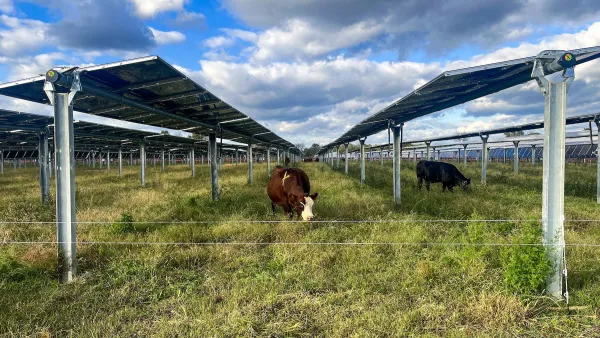
Cows at Tennessee's 'Silicon Ranch' graze under solar panels
The project aims to prove that agriculture and solar energy production can work in tandem.
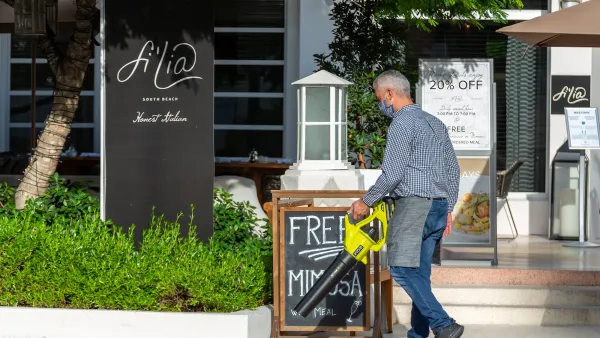
Florida Farm Bill Blocks Local Bans on Gas-Powered Tools
The law also paves the way for agricultural uses on land previously designated for conservation.

Planetizen Federal Action Tracker
A weekly monitor of how Trump’s orders and actions are impacting planners and planning in America.

Amtrak, CN end decades-long dispute with eight-year agreement
The new operating agreement establishes an updated framework for the companies to work together, including processes to resolve disputes.

Northwest rail fans eager for Sept. 30 debut of Amtrak’s Airo fleet
Get ready for that new train smell and more seats. But they won’t go faster or run more frequently on the Cascades route in Washington and Oregon.

Brightline Florida files for bankruptcy
The transit company is over $5 billion in debt.

St. Louis Metro to test if single-car trains can reduce operating costs, maintain rider satisfaction
The pilot program will run from October to spring 2027, and begin with one single-car train operating on Metrolink’s Red and Blue lines.

Pennsylvania is building data centers in abandoned mines
Housing data centers in mines provides an alternative to destroying local forests and may spare residents from data centers’ noise and air pollution.

FREE Course: Walkable City 1: Why Walkability?
After describing his path towards focusing on walkability as the essence of good planning, Jeff Speck marches through his five principal reasons for making more walkable places.
Reinventing Malls: Planning Alchemy—Turning Gray Fields Into Gold
The course focuses on the opportunities and imperatives that shape reinvention of mall sites.

City of Thousand Oaks
City of Wisconsin Rapids
Harvard University Graduate School of Design
The Architects Foundation
University of Cincinnati Online
The Pocatello Development Authority
The Urban Renewal Agency of the City of Pocatello