This slideshow from Popular Science looks at some of the most heavily polluted cities in the world.


"The World Bank estimates that 16 of the world's 20 most polluted cities are found in China's industrial areas."
"In fact, according to a study by Italian environmental group Legambiente, Milan has more smog than any other city in Europe and the continent's second-highest level of ozone. Most of the problem comes from the city's love of driving, but that's changing quickly: Congestion pricing in downtown Milan implemented in January has dropped traffic by 26 percent and, residents hope, will lead to drops in smog as well."
"Pittsburgh recently wrested the title of America's most polluted city from Los Angeles-at least when it comes to short-term particle pollution like soot, aerosols, heavy metals and exhaust. But the city of 335,000, which has transitioned from an industrial town to one of the country's most livable cities, may not be to blame for its bad air. According to some research, much of Pittsburgh's pollution is blown in from factories and power plants in Ohio."
Read the full story: The World's 10 Worst Cities
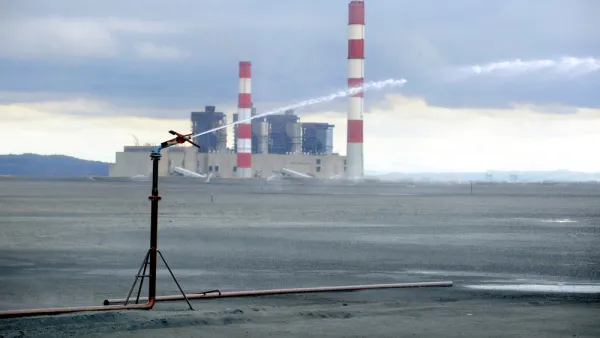
North Carolina County Reluctantly Accepts Toxic Coal Ash Stockpile for $19 Million
Chatham County, North Carolina agreed to not oppose a planned coal ash landfill in exchange for $19 Million from Duke Energy, which would help fund environmental monitoring and disaster insurance.
Sneeze Cities
This post from Mother Nature Network lists the 12 cities that are the worst for allergy sufferers.
Cities, Not Farms, At Fault For Bay Pollution
Cities, not the agriculture heavy Central Valley, are the source of most of the runoff and pollution that enters the San Francisco Bay, according to a new report.

Washington state to charge fee to drivers with fuel-efficient cars
Revenue from the fee will go towards supporting the state’s highways.

Illinois considers spending $1 billion in taxpayer money on data center
A quantum computing campus and data center are currently under construction in Chicago.

Trump to blast ‘hydrocarbon highway’ through ‘world’s longest art gallery’
Environmental and historic preservation groups are suing to stop the project.

Boston City Council votes to no longer mandate parking in residential developments
The Boston Zoning Commission still needs to approve the proposal.

Passengers in New York, California lift off in air taxis
Two air taxi companies have received a Special Airworthiness Market Survey Certificate, which allows them to service passengers.

MTA to upgrade subway signals for entire network by 2050
This is the first time New York City has planned to modernize subway signals in the Bronx.

FREE Course: Walkable City 1: Why Walkability?
After describing his path towards focusing on walkability as the essence of good planning, Jeff Speck marches through his five principal reasons for making more walkable places.
Reinventing Malls: Planning Alchemy—Turning Gray Fields Into Gold
The course focuses on the opportunities and imperatives that shape reinvention of mall sites.

City of Charlotte
City of Rosemead
Rutgers University, Edward J. Bloustein School of Planning and Public Policy
University of Michigan School for Environment and Sustainability (SEAS)
Hunter College, City University of New York (CUNY)
The Architects Foundation
University District Partnership