Today's New York Times has a kinda terrifying article (reg. req'd) about Chicago's new network of "smart" surveillance cameras. Don't worry; everything's going to be okay we're all doomed: Police specialists here can already monitor live footage from about 2,000 surveillance cameras around the city, so the addition of 250 cameras under the mayor's new plan is not a great jump. The way these cameras will be used, however, is an extraordinary technological leap. Sophisticated new computer programs will immediately alert the police whenever anyone viewed by any of the cameras placed at buildings and other structures considered terrorist targets wanders aimlessly in circles, lingers outside a public building, pulls a car onto the shoulder of a highway, or leaves a package and walks away from it. Images of those people will be highlighted in color at the city's central monitoring station, allowing dispatchers to send police officers to the scene immediately.


Today's New York Times has a kinda terrifying article (reg. req'd) about Chicago's new network of "smart" surveillance cameras. Don't worry; everything's going to be okay we're all doomed:
Police specialists here can already monitor live footage from about 2,000 surveillance cameras around the city, so the addition of 250 cameras under the mayor's new plan is not a great jump. The way these cameras will be used, however, is an extraordinary technological leap.
Sophisticated new computer programs will immediately alert the police whenever anyone viewed by any of the cameras placed at buildings and other structures considered terrorist targets wanders aimlessly in circles, lingers outside a public building, pulls a car onto the shoulder of a highway, or leaves a package and walks away from it. Images of those people will be highlighted in color at the city's central monitoring station, allowing dispatchers to send police officers to the scene immediately.
Um...yikes. Apparently the system's based not only on the one London came up with when those Irish guys were trying to blow up the city, but also on Las Vegas casino surveillance. But, it seems so cool on that show Las Vegas, and why would TiVo lie to me like that?
Seriously, is this what we're looking for from our cities? I met Chicago's mayor, Richard Daley, when he was heading the Gore-for-President campaign four years ago. He seemed like a hard-assed straight shooter. This kowtow to homeland security paranoia seems weird.
Are cities supposed to be always safe, always monitored? Obviously, no one wants a place where people get beat up, robbed, terrorized, etc. Bad for human beings, bad for business. But aren't cities supposed to be just a little bit illicit? Speakeasies, after-hours clubs, art that's naughty, theater that satirizes the powerful? I know, I know: technically, sophisticated cameras won't stop any of that.
I'm reminded of a set of short stories by the science fiction writer Larry Niven, in which America's freeways -- rendered obsolete by the invention of instantaneous, cheap teleportation (just go with it) -- become "free parks," where any behavior is legal so long as its not harmful to others. The rules are enforced by little floating robot cameras that can knock people unconscious. Putting aside how to determine what constitutes "harm" (second-hand smoke? kinky sexual behavior?) Niven's system had the same problems that Chicago's does. Who's watching the watchmen?
Here's Mayor Daley at the end of the article, scaring animals and small children:
"We're not inside your home or your business," Mayor Daley said. "The city owns the sidewalks. We own the streets and we own the alleys."
Mayor Daley went on to declare, "I am the night. I am justice. I am...Batman!"
Did I mention "yikes" before? I think I did.


Planetizen Federal Action Tracker
A weekly monitor of how Trump’s orders and actions are impacting planners and planning in America.

The state-sanctioned urbicide of Austin
People don’t kill cities. Freeways do.

Colorado’s Largest Data Center Could Rise Next to Homes — Without a Public Hearing
The proposed campus would consume 11 times the power of Denver International Airport; as it has across the country, opposition mounts.
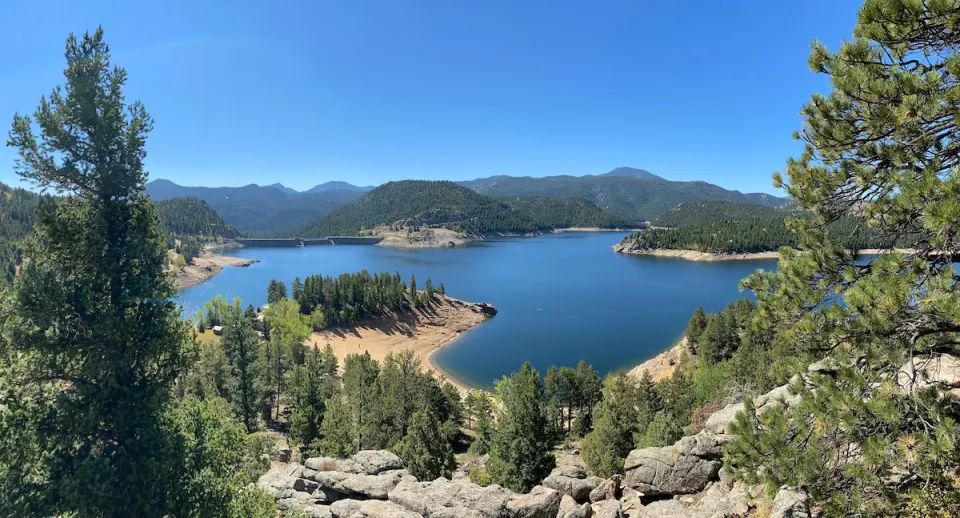
Judges permit Denver to divert 77,000 acre feet from the Colorado River for reservoir expansion
Overuse and climate change have caused the Colorado River’s water levels to plummet.

Amtrak, CN end decades-long dispute with eight-year agreement
The new operating agreement establishes an updated framework for the companies to work together, including processes to resolve disputes.
Raised interest rates may kill financially vulnerable construction projects
The chief economist at ConstructConnect warns that if construction project owners are negatively impacted by the raised rates, it could result in delayed payments to contractors.

FREE Course: Walkable City 1: Why Walkability?
After describing his path towards focusing on walkability as the essence of good planning, Jeff Speck marches through his five principal reasons for making more walkable places.
Reinventing Malls: Planning Alchemy—Turning Gray Fields Into Gold
The course focuses on the opportunities and imperatives that shape reinvention of mall sites.

KFH Group Inc.
Greater Baltimore Committee
Eagle County Government
The Architects Foundation
University of Cincinnati Online
The Pocatello Development Authority
The Urban Renewal Agency of the City of Pocatello

