The Army Corps of Engineers has plans to buyout more than half of the land in the flood-damaged Gulf Coast city of Bay St. Louis, Mississippi. But residents who have already started to rebuild after Hurricane Katrina are fighting the plan.


"This coastal resort town is on the front line of a project to gauge support for a mass federal buyout of 17,000 homes near Mississippi's Katrina-ravaged shore. This could become the nation's most significant attempt to radically reconfigure coastal communities -- converting huge swaths of flood-prone residential lots to public wetlands."
"Until now, the Army Corps of Engineers has reserved buyouts for areas prone to river flooding."
"The costs and risks of future flooding are simply too great, they say -- especially if, as many believe, sea levels are rising and hurricanes are starting to get stronger."
"The plan, which officials stress would be voluntary, has shocked many in Bay St. Louis, which is struggling to rebuild after Katrina. Residents say they had no idea that while they were taking out loans and investing their savings to rebuild their homes, federal officials were drawing up proposals to erase more than half of the city's land mass."
Read the full story: Coastal buyout talk roils lives in Mississippi


Planetizen Federal Action Tracker
A weekly monitor of how Trump’s orders and actions are impacting planners and planning in America.

The state-sanctioned urbicide of Austin
People don’t kill cities. Freeways do.
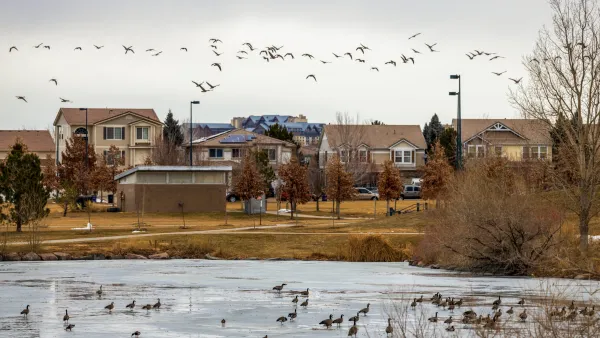
Colorado’s Largest Data Center Could Rise Next to Homes — Without a Public Hearing
The proposed campus would consume 11 times the power of Denver International Airport; as it has across the country, opposition mounts.

Nation's most wind-powered state turns to coal as data centers increase energy demand
For the first time in decades, Iowa has increased its generation of coal power.

NYC cools commuters with city's first rain garden above a bus stop
New York City officials say the plants in the rain garden can absorb 16 gallons of rainwater during heavy storms.

Brightline West’s future may rely on $6 billion federal loan
The company has until Nov. 2 to make a $400 million equity investment into its proposed high-speed rail line.

FREE Course: Walkable City 1: Why Walkability?
After describing his path towards focusing on walkability as the essence of good planning, Jeff Speck marches through his five principal reasons for making more walkable places.
Reinventing Malls: Planning Alchemy—Turning Gray Fields Into Gold
The course focuses on the opportunities and imperatives that shape reinvention of mall sites.

Greater Baltimore Committee
Eagle County Government
Harvard University Graduate School of Design
The Architects Foundation
University of Cincinnati Online
The Pocatello Development Authority
The Urban Renewal Agency of the City of Pocatello
Journal of the American Planning Association