Arizona embarked on a plan to spend$10 million to "incent" people to convert their vehicles to clean fuels.


But theplan will wind up costing the state some $600 million and still notclean theair.The specifics of the plan were sloppy enough. Owners of $50,000 SUVscouldreap tens of thousands in tax credits just by spending a few grand on anatural gas tank that their vehicle need not ever use.But the underpinnings of the idea are faulty to the core. Only a fewthousandvehicles could've possibly been converted, not enough to substantiallychangethe amount of particulate pollution in the air. Besides, the cars thatwouldundergo the change would already be among the cleanest burning in thestate'sfleet: new or nearly new models.Better to focus on the dirtiest cars if the goal is cleaner air. And$600million could buy a lot of tune-ups.
Thanks to Reason Express
Read the full story: Arizona's Alternative Fuel Incentives Backfire

Planetizen Federal Action Tracker
A weekly monitor of how Trump’s orders and actions are impacting planners and planning in America.

Washington state to charge fee to drivers with fuel-efficient cars
Revenue from the fee will go towards supporting the state’s highways.
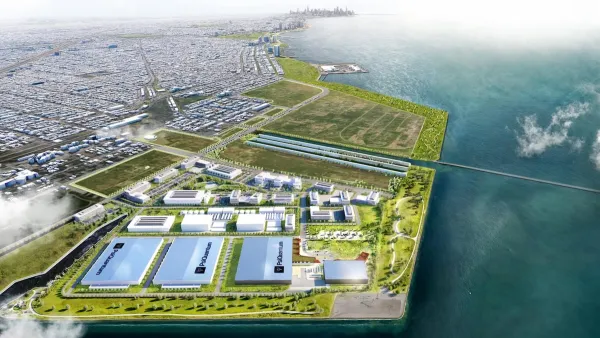
Illinois considers spending $1 billion in taxpayer money on data center
A quantum computing campus and data center are currently under construction in Chicago.

Senate passes bill overhauling permitting
The bill still needs to pass the House.

Did data centers change how voters cast their ballots?
Texas, Ohio, and Georgia all flipped party control. But in rural counties, the effect of local data centers was mixed.

Amtrak invests in eight new Airo trainsets
The new trainsets will begin serving passengers in 2031.

FREE Course: Walkable City 1: Why Walkability?
After describing his path towards focusing on walkability as the essence of good planning, Jeff Speck marches through his five principal reasons for making more walkable places.
Reinventing Malls: Planning Alchemy—Turning Gray Fields Into Gold
The course focuses on the opportunities and imperatives that shape reinvention of mall sites.

City of Charlotte
City of Rosemead
Rutgers University, Edward J. Bloustein School of Planning and Public Policy
University of Michigan School for Environment and Sustainability (SEAS)
Hunter College, City University of New York (CUNY)
The Architects Foundation
University District Partnership