One urban dweller calls on nature writers to take a look at Los Angeles, and other cities, in order to regain relevance in today's world.


The author argues that nature writers should focus on urban issues like sustainable resource use, livable cities, and environmental justice.
Nature writing has remained "a refuge for personal meditations on the soul-saving power of wildness in our modern urban lives. As a consequence, nature writing has lost its essential relevance as well as much of its audience, and environmentalism has lost its muse."
The author suggests five questions that nature writers should explore in cities: What and where are the wild things? How do people use nature as resources? How do people transform the landscapes they live in, and how does the nature act back? How do different people encounter nature differently? How do people imagine and understand nature?
"So come write about Los Angeles. Because to figure out how to inhabit nature in L.A. equitably and sustainably is to figure out how to build the cities we want and to preserve the wilderness we need."
Read the full story: In Cities Is the Preservation of the Word


Planetizen Federal Action Tracker
A weekly monitor of how Trump’s orders and actions are impacting planners and planning in America.

Chicago breaks ground on $3 billion megadevelopment
The new neighborhood, titled Foundry Park, will one day host 3,700 residences.
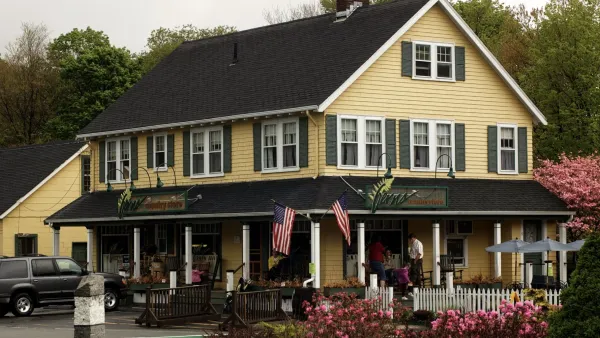
This MA town is drowning in its own sewage — and residents like it that way
Susan Murcott, a waste water expert, said if Carlisle didn't address their leaking sewage, the problem could turn “deadly.”

Feds to more closely scrutinize proposed Amtrak facility’s environmental impact
The Federal Railroad Administration had initially said the facility qualified for a less extensive environmental review.

Boston is hard to build housing in: its chief of planning wants to keep it that way
Chief of Planning Kairos Shen said she would not make changes to Boston’s affordability requirements for new housing, which critics say have slowed down development.

California plans to bury El Niño’s downpour
If the state plays its cards right, it may be able to store a billion acre-feet of El Niño’s water in aquifers.

FREE Course: Walkable City 1: Why Walkability?
After describing his path towards focusing on walkability as the essence of good planning, Jeff Speck marches through his five principal reasons for making more walkable places.
Reinventing Malls: Planning Alchemy—Turning Gray Fields Into Gold
The course focuses on the opportunities and imperatives that shape reinvention of mall sites.

City of Rosemead
Rutgers University, Edward J. Bloustein School of Planning and Public Policy
One Hundred Miles
Hunter College, City University of New York (CUNY)
The Architects Foundation
University of Cincinnati Online
Montrose County
The Pocatello Development Authority
The Urban Renewal Agency of the City of Pocatello