Philadelphia's Navy Yard provides a suburban office park environment, and historic fabric, at the edge of the city, with opportunities from dog walking for office employees to a future 2016 Olympic site.


The City of Philadelphia has been trying to attract commercial and office uses to the former Naval Yard, 1,000 acres located at the confluence of the Delaware and Schuykill Rivers. John Grady, senior vice president of the Philadelphia Industrial Development Corporation, believes that up to 30,000 jobs will be created on the site. Over 7,000 private sector employees work at the site, with local clothing retailer Urban Outfitters bringing all of its 650 employees there this summer. Richard Hayne, President of Urban Outfitters, said: "We have a number of people who wanted to bring their dogs to work. So when we first started looking at high-rise buildings downtown, even if dogs were allowed, which they weren't, I thought, 'Where would they walk them?'" Mr. Hayne was attracted to the historic buildings, green space, and waterfront of the Navy Yard. The Navy Yard will also be promoted as an athlete village when Philadelphia bids to host the 2016 Olympics.
Read the full story: Recycling a Big Urban Navy Yard


Planetizen Federal Action Tracker
A weekly monitor of how Trump’s orders and actions are impacting planners and planning in America.

Data reveals that NYC’s bet on congestion pricing has paid off
After almost two years of the program, reports show positive impacts on traffic and air quality and no disruptions to parking.
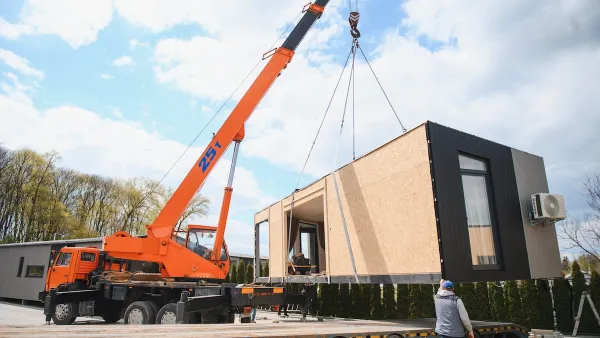
HUD modernizes 50-year-old manufactured housing framework
The Next Generation Manufactured Housing Action Plan establishes new energy-efficiency standards for manufactured homes, and new guidelines for anchoring them.

Florida could lose billions in funding for infrastructure, parks
If Amendment 3 passes, Miami-Dade would lose about $445 million annually by fiscal year 2028-29.

New Mexico spent millions drafting climate goals. Data centers are unraveling them
Three data centers in New Mexico and El Paso will release more emissions yearly than 2 million cars in the same timeframe.

This Ohio town is using AI to speed up transit analysis
The Greater Dayton Regional Transit Authority’s new AI tool correctly determined riders’ preferred ways to reach key commuter routes.

FREE Course: Walkable City 1: Why Walkability?
After describing his path towards focusing on walkability as the essence of good planning, Jeff Speck marches through his five principal reasons for making more walkable places.
Reinventing Malls: Planning Alchemy—Turning Gray Fields Into Gold
The course focuses on the opportunities and imperatives that shape reinvention of mall sites.

Rutgers University, Edward J. Bloustein School of Planning and Public Policy
One Hundred Miles
County of Mendocino
The Architects Foundation
University of Cincinnati Online
Montrose County
Northern Illinois Transit Authority (NITA)
The Pocatello Development Authority