A case before the Supreme Court which tests the limits of Federal control under the Clean Water Act could have a major impact on development around the country.


"All water flows downhill to the sea. But at what point does it enter the federal government's jurisdiction?
That was the question at the Supreme Court yesterday, as the justices heard arguments in the first major environmental case of the Roberts Court era -- a test of the Clean Water Act that could determine the scope of federal authority over the development of wetlands nationwide...
On the theory that what gets dumped upstream eventually winds up downstream, the government has interpreted that phrase to include not only large lakes and rivers, but also their smaller tributaries and wetlands near those tributaries...
But property owners, backed by homebuilders, developers, farmers, ranchers and some water districts from the arid West, say that view would federalize every drop of water in the country, effectively putting Washington in control of development miles away from any recognizably navigable waters."
Read the full story: Court Hears Water Act Arguments


Planetizen Federal Action Tracker
A weekly monitor of how Trump’s orders and actions are impacting planners and planning in America.

The state-sanctioned urbicide of Austin
People don’t kill cities. Freeways do.

Colorado’s Largest Data Center Could Rise Next to Homes — Without a Public Hearing
The proposed campus would consume 11 times the power of Denver International Airport; as it has across the country, opposition mounts.
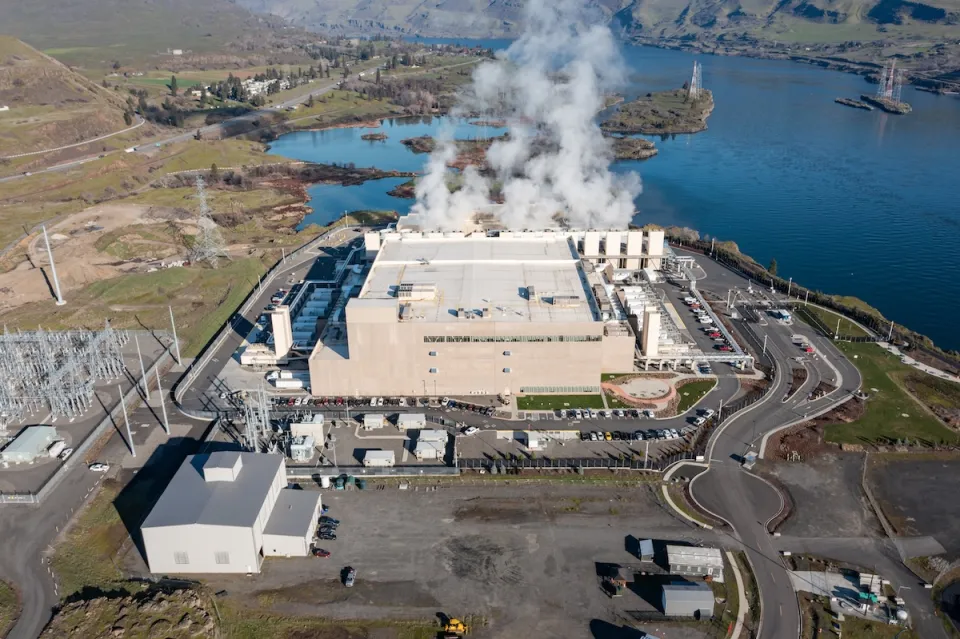
Data centers are consuming nearly 25% of Oregon’s power
The state has 111 data centers, with 32 more either planned or under construction.

A third of Texas cities must update their zoning codes to comply with new housing law
Texas municipalities are now required to allow manufactured housing in at least one residential zoning district.

Nation's most wind-powered state turns to coal as data centers increase energy demand
For the first time in decades, Iowa has increased its generation of coal power.

FREE Course: Walkable City 1: Why Walkability?
After describing his path towards focusing on walkability as the essence of good planning, Jeff Speck marches through his five principal reasons for making more walkable places.
Reinventing Malls: Planning Alchemy—Turning Gray Fields Into Gold
The course focuses on the opportunities and imperatives that shape reinvention of mall sites.

Greater Baltimore Committee
Eagle County Government
Harvard University Graduate School of Design
The Architects Foundation
University of Cincinnati Online
The Pocatello Development Authority
The Urban Renewal Agency of the City of Pocatello
Journal of the American Planning Association