Housing data centers in mines provides an alternative to destroying local forests and may spare residents from data centers’ noise and air pollution.


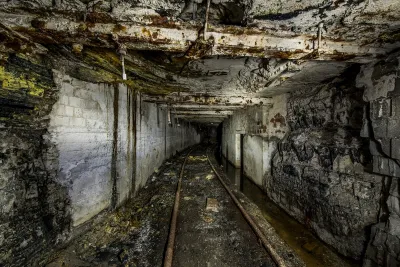
Pennsylvania is building data centers in abandoned mines in hopes of sparing residents from data centers’ excessive water use and noise and air pollution. The state has the most abandoned coal mines in the United States, roughly 5,586, which could provide an alternative to destroying farmlands or local forests for data centers, Jessica Klein writes for Inside Climate News.
The underground pools found in mines could cool data centers without the help of outside water sources, and developers cover the cost of cleaning up the contamination in and around abandoned coal mines. Inside Climate News reports:
“If the data centers can demonstrate that they can clean up, treat the acid water and help restore their local environment, the local people are more likely to accept such development proposals,” says Zhongyang He, a researcher in Penn State’s Department of Energy and Mineral Engineering who’s been examining possible data center development on abandoned mine lands in the state.
Two data center developments in coal mines are already in the works in Western Pennsylvania: the former Robena Mine is slated to become a data center, and another proposed data center may find its home at the former Consol coal mine.
Read the full story: Could Abandoned Mines House Pennsylvania’s Unwanted Data Centers?

A noise limit on data centers is only as good as its measurement
Counties and states must make conscious decisions about when, where and how they measure data center noise if they want to meaningfully improve residents’ lives.
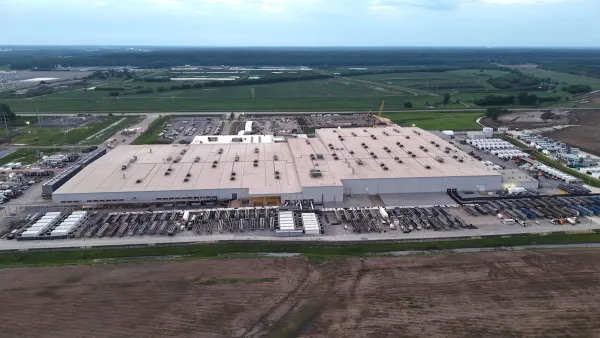
'I can't live in this:' Mississippi town besieged by power plant noise
A plant powering Elon Musk’s xAI data centers is subjecting Southaven, Mississippi residents to ceaseless noise.
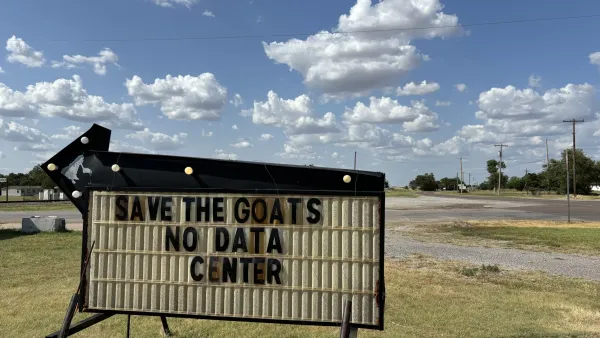
This rural Oklahoma town doesn’t want a data center. It may not be able to stop the project
With the project outside city limits and little county oversight of unincorporated land, officials are considering measures to gain local control.

Desperate measures: Advocates weigh draining Lake Powell to fill Colorado River
Draining the reservoir could reduce evaporation losses by a couple hundred thousand acre-feet.

Eastern Nebraska is running out of electricity
Data centers and electrification are straining eastern Nebraska’s grid, throttling economic development.

Malls are becoming the midtowns of the future
Mall and office park redevelopments are a generational opportunity to create new nodes of urbanity.

NYC breaks ground on anti-flooding infrastructure project
New York City's new system will reduce stormwater flows to local sewers by 90%.

One Kentucky town’s secret to affordable housing
The Smoketown Community Land Trust has already built seven affordable homes for community members.

Houston gains petal-shaped cooling infrastructure to make streets more ‘delightful’
The city has installed the pavilions along 15 blocks in Houston.

FREE Course: Walkable City 1: Why Walkability?
After describing his path towards focusing on walkability as the essence of good planning, Jeff Speck marches through his five principal reasons for making more walkable places.
Reinventing Malls: Planning Alchemy—Turning Gray Fields Into Gold
The course focuses on the opportunities and imperatives that shape reinvention of mall sites.

City of Rosemead
Rutgers University, Edward J. Bloustein School of Planning and Public Policy
One Hundred Miles
University of Michigan School for Environment and Sustainability (SEAS)
Hunter College, City University of New York (CUNY)
The Architects Foundation
City of Cambridge
Montrose County
The Pocatello Development Authority