Florida has more manufactured homes than any other state, the majority of which may have been built before federal regulations required them to be capable of withstanding extreme weather.


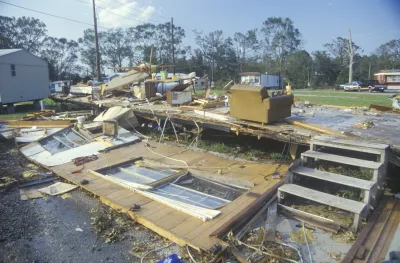
In 1998, during one of the strongest El Niño climate patterns ever recorded, the deadliest tornado in Florida’s history killed 42 people, the majority of whom lived in mobile homes. This year, forecasters put the odds of a strong El Niño above 90 percent, increasing the chances of severe weather in Florida — and the state’s manufactured-housing industry estimates that 600,000 manufactured homes are not built to withstand strong winds.
Nationally, people in mobile and manufactured homes are 15 to 20 times more likely to die in a tornado than people in permanent homes. Florida has roughly 830,000 manufactured homes, more than any other state. In 1994, after Hurricane Andrew destroyed nearly every mobile home in its path, new federal regulations required all mobile homes be built to withstand strong winds, Kate Waxman writes for Inside Climate News. However, mobile homes built before 1994 are still vulnerable, and Florida has no way of knowing exactly how many there are, as the Census doesn't track build years that closely.
Inside Climate News reports:
“Manufactured home parks are ‘the perfect representation of environmental justice in the disaster context,’ said Andrew Rumbach of the Urban Institute. Parks were historically pushed onto the cheapest, least desirable land, Rumbach said, and today’s zoning rules often bar them from expanding or moving; residents, as he put it, are ‘locked in place.’ Many residents are what his colleague Esther Sullivan calls ‘halfway homeowners’: they own the home but rent the land beneath it, leaving them little power to make their communities safer and little ability to leave."
Read the full story: A Super El Niño Is Building. Florida’s Most Vulnerable Homes Aren’t Ready.

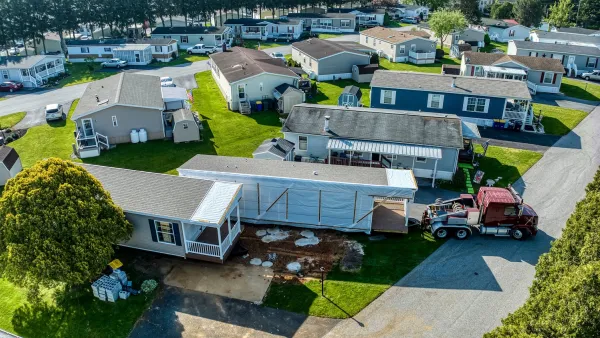
Federal Law Says Manufactured Homes Must be Movable. Changing That Could Unlock an Affordable Housing Boom.
A proposed rule change in the Road to Housing Act would make manufactured housing more flexible and affordable.
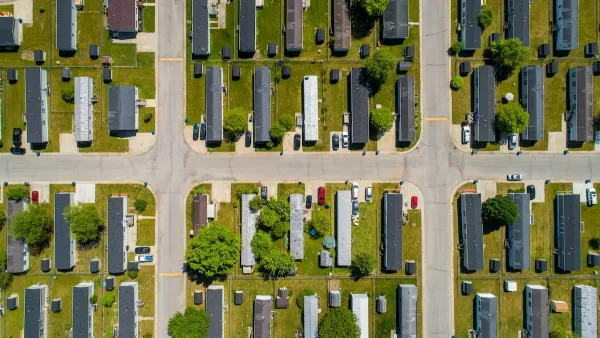
Manufactured Crisis: Losing the Nation’s Largest Source of Unsubsidized Affordable Housing
Manufactured housing communities have long been an affordable housing option for millions of people living in the U.S., but that affordability is disappearing rapidly. How did we get here?
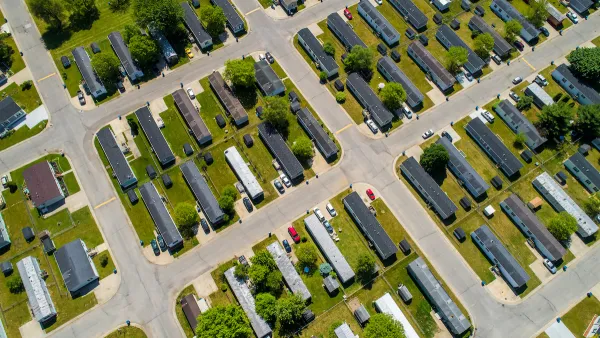
HUD Reforms to Manufactured Housing Policy Could Unlock More Affordable Homes
The agency took a series of steps to make manufactured homes, often excluded from neighborhoods and loan programs, more accessible and affordable.

Planetizen Federal Action Tracker
A weekly monitor of how Trump’s orders and actions are impacting planners and planning in America.

California plans to bury El Niño’s downpour
If the state plays its cards right, it may be able to store a billion acre-feet of El Niño’s water in aquifers.

Chicago breaks ground on $3 billion megadevelopment
The new neighborhood, titled Foundry Park, will one day host 3,700 residences.

Want to study the Missouri River? Soon, you may need unanimous approval from 10 states
Legislation would require 10 governors’ permission to study or build projects moving water outside the basin.

Desperate measures: Advocates weigh draining Lake Powell to fill Colorado River
Draining the reservoir could reduce evaporation losses by a couple hundred thousand acre-feet.

This road in NYC is infamously dangerous — and Mamdani can't fix it
New York City's Ocean Parkway is known for reckless driving, but the power to implement safety measures lies with the state rather than the city.

FREE Course: Walkable City 1: Why Walkability?
After describing his path towards focusing on walkability as the essence of good planning, Jeff Speck marches through his five principal reasons for making more walkable places.
Reinventing Malls: Planning Alchemy—Turning Gray Fields Into Gold
The course focuses on the opportunities and imperatives that shape reinvention of mall sites.

City of Rosemead
Rutgers University, Edward J. Bloustein School of Planning and Public Policy
One Hundred Miles
Hunter College, City University of New York (CUNY)
The Architects Foundation
University of Cincinnati Online
City of Cambridge
Montrose County
The Pocatello Development Authority