A new Colorado Treaty amendment reduces Mexico’s Colorado River water allocation by 250,000 acre feet.


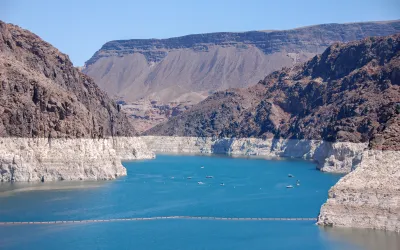
The United States and Mexico have signed a Colorado Treaty amendment under which the United States will reduce Colorado River water deliveries to Mexico by 250,000 acre feet, the International Boundary and Water Commission announced on Sept. 9. Mexico’s share of the Colorado is normally 1.5 million acre-feet.
An ongoing drought and record-low water levels at the Colorado River’s largest reservoirs has brought the river to critically low levels. On Aug. 21, the Bureau of Reclamation released its two-year operating plan for the Colorado River, which requires the lower basin states — Arizona, California and Nevada — to reduce their use by 1.25 million acre-feet over the next two years. The plan called on Mexico to take 250,000 acre feet per year in reductions, which the temporary amendment, formally known as Minute 334, confirms.
The agreement also ensures a continuation of environmental restoration projects in the Colorado River delta in Mexico, Brandon Loomis writes for Arizona Republic.
Read the full story: Mexico will share Colorado River shortage with Arizona, other states

Desperate measures: Advocates weigh draining Lake Powell to fill Colorado River
Draining the reservoir could reduce evaporation losses by a couple hundred thousand acre-feet.
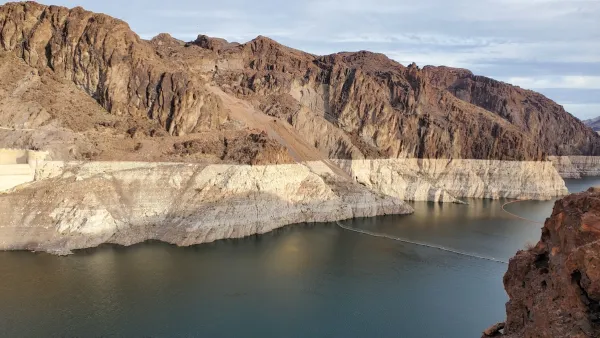
‘No state has sacrificed more:’ Arizona joins Nevada, sues feds over Colorado River plan
The Arizona Department of Water Resources' motion claims that the state's cities, tribes and farmers can't survive without sufficient water from the Colorado River.
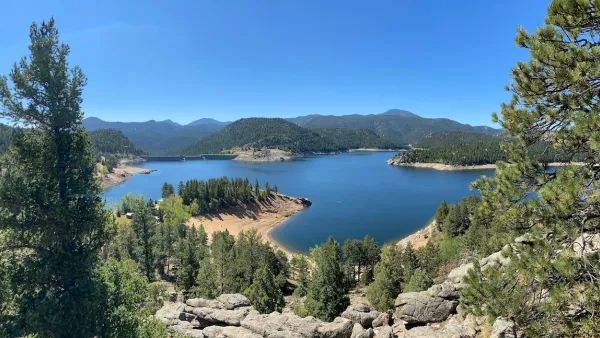
Judges permit Denver to divert 77,000 acre feet from the Colorado River for reservoir expansion
Overuse and climate change have caused the Colorado River’s water levels to plummet.

Planetizen Federal Action Tracker
A weekly monitor of how Trump’s orders and actions are impacting planners and planning in America.

California plans to bury El Niño’s downpour
If the state plays its cards right, it may be able to store a billion acre-feet of El Niño’s water in aquifers.
Desperate measures: Advocates weigh draining Lake Powell to fill Colorado River
Draining the reservoir could reduce evaporation losses by a couple hundred thousand acre-feet.

In Texas, data centers are swallowing promised parkland
Residents who moved to Taylor, Texas for a rural community now have to contend with three data centers in their backyard.

How a Chicago-sized wind farm beat the odds and powered on
The project spanned five presidential administrations and a standoff with a U.S. military base.

MTA gives itself 30 days to transform pit into basketball court
The site has been under construction since 2022; the city originally estimated it would finish the court in 2024.

FREE Course: Walkable City 1: Why Walkability?
After describing his path towards focusing on walkability as the essence of good planning, Jeff Speck marches through his five principal reasons for making more walkable places.
Reinventing Malls: Planning Alchemy—Turning Gray Fields Into Gold
The course focuses on the opportunities and imperatives that shape reinvention of mall sites.

City of Rosemead
Rutgers University, Edward J. Bloustein School of Planning and Public Policy
One Hundred Miles
Hunter College, City University of New York (CUNY)
The Architects Foundation
University of Cincinnati Online
City of Cambridge
Montrose County
The Pocatello Development Authority