Hundreds of cities around the United States are named after other places. We tour a few of them.


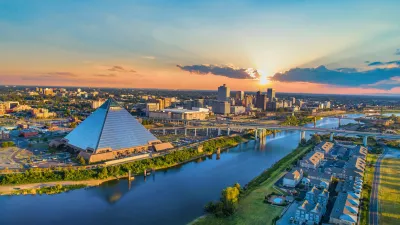
Did you know you can visit London, Amsterdam and Budapest without ever leaving the United States? That's because hundreds of U.S. communities are named for cities in other parts of the world. Whether named by immigrants who wanted to honor their heritage or promoters who thought they hit upon a clever marketing gimmick, these towns offer another lens into U.S. history.
To trim down the long list of American cities with global namesakes, we omitted cities in England, Mexico and Canada, as well as cities with "New" before their name. While this is by no means an exhaustive list, we hope you enjoy these images of American cities and their foreign counterparts.
- Cabool/Kabul (Missouri and Afghanistan)
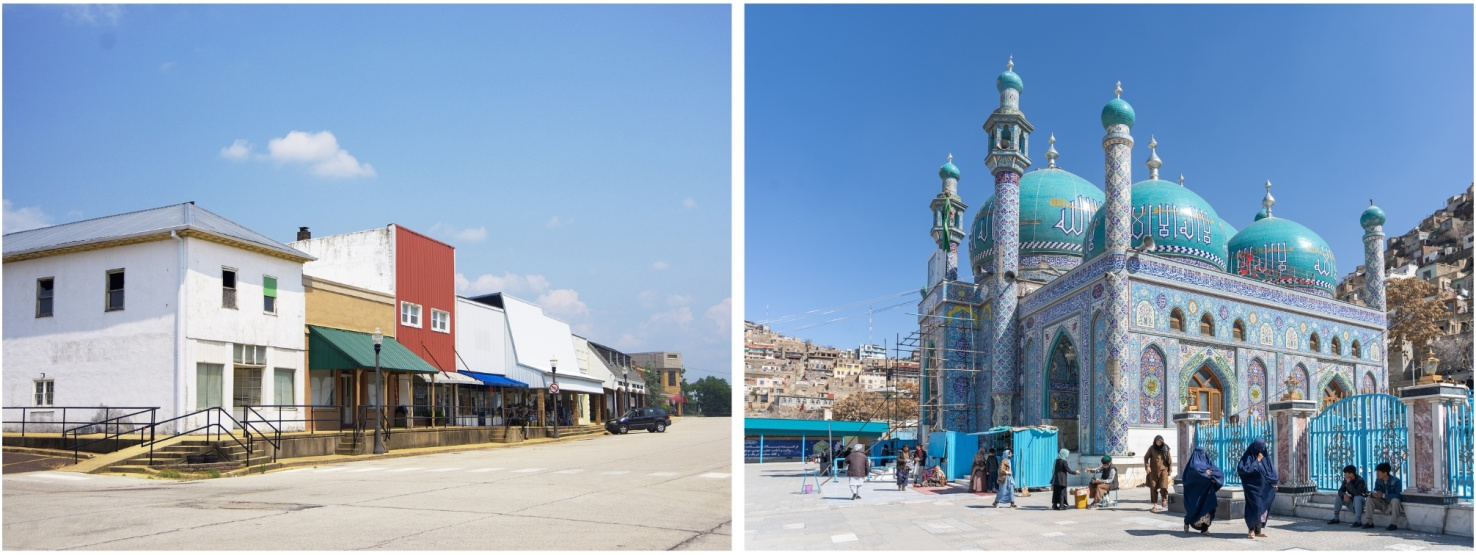
Cabool, Missouri was likely named after the capital of Afghanistan in 1882, shortly after the British Army withdrew from Kabul during the Second Anglo-Afghan War. A local legend states that a railroad worker in the area who had been to Afghanistan commented on the similar look of the landscape. Another legend mentions a local Native American chief named Cabool, but there is no evidence to suggest that this is where the name comes from.
- Ballarat (California and Australia)
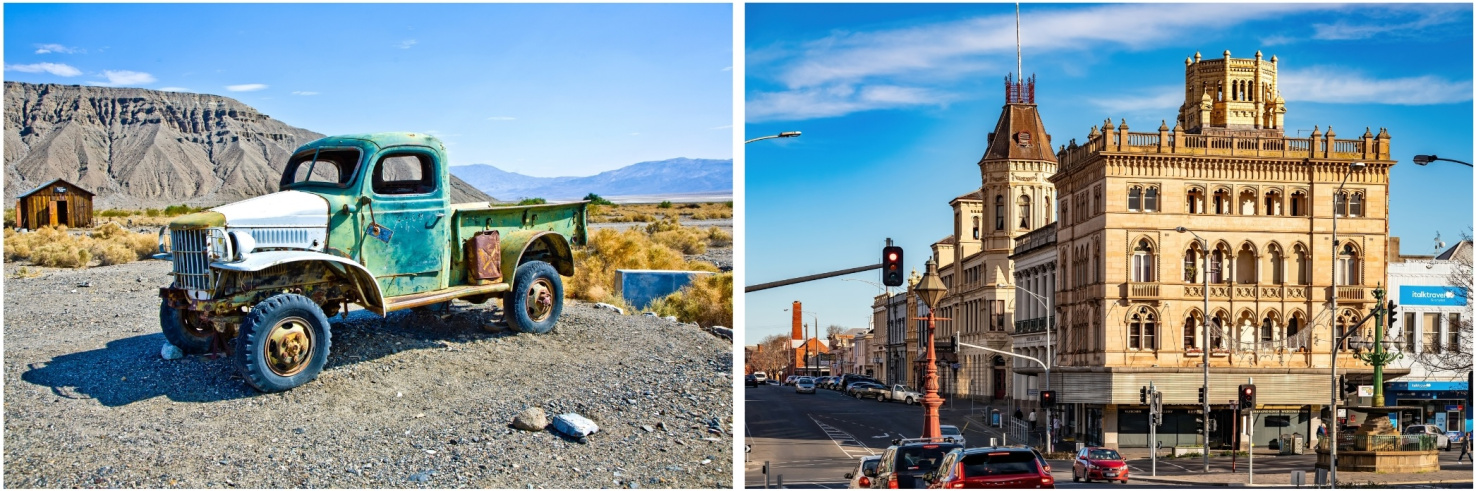
Now a ghost town frozen in time, Ballarat, California is a former mining town named for an Australian city where a gold discovery kickstarted the Victorian gold rush in the 1850s.
- Cairo (Illinois and Egypt)
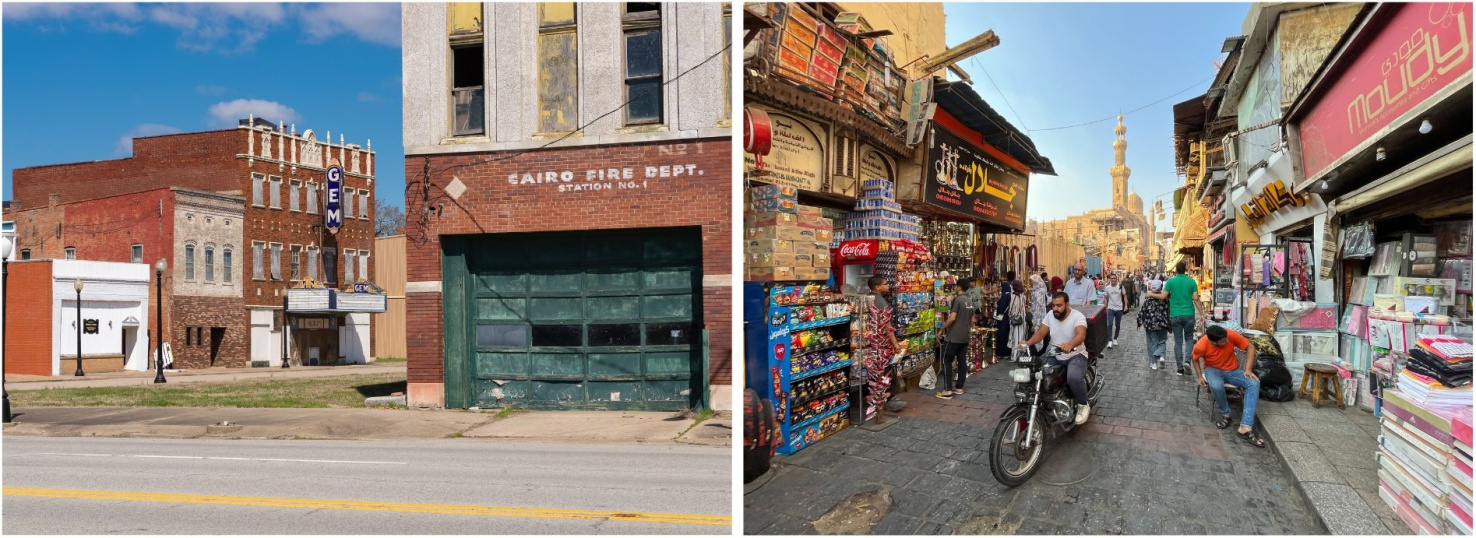
Cairo, Illinois, at the junction of the Ohio and Mississippi Rivers, was named for the Egyptian city and was once poised to become a major steamboat port.
- Memphis (Tennessee and Egypt)
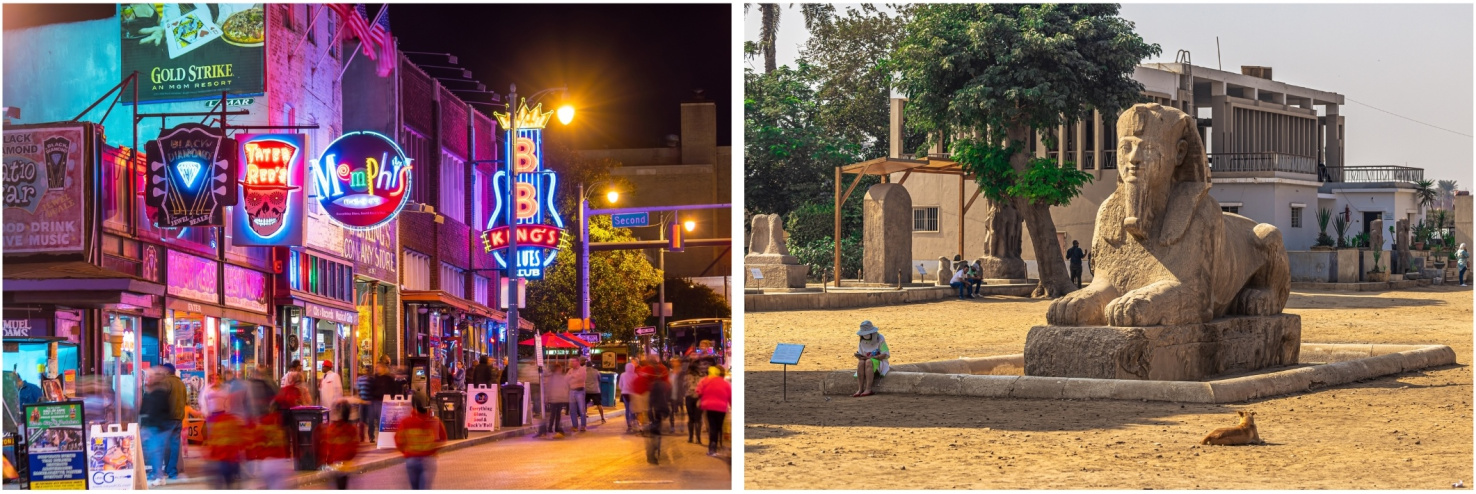
Memphis, Tennessee was named after the ancient Egyptian capital to one-up the newly incorporated Cairo, Illinois. While Memphis was the home of ancient kings, the American Memphis had some kings of its own — Elvis and B.B. King.
- Havana (Florida and Cuba)
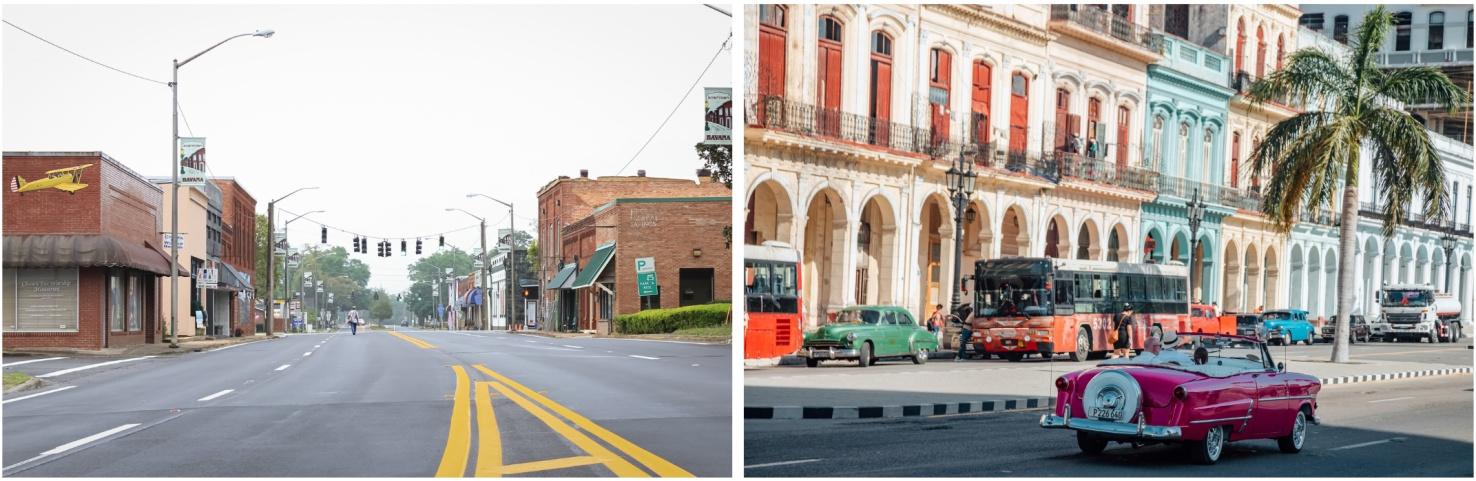
Pronounced "Hay-vana" by locals, Havana, Florida, incorporated in 1906, was named by a local teacher who believed the region's cigar factories made cigars good enough to rival Cuba's famous export.
- Paris (Texas and France)
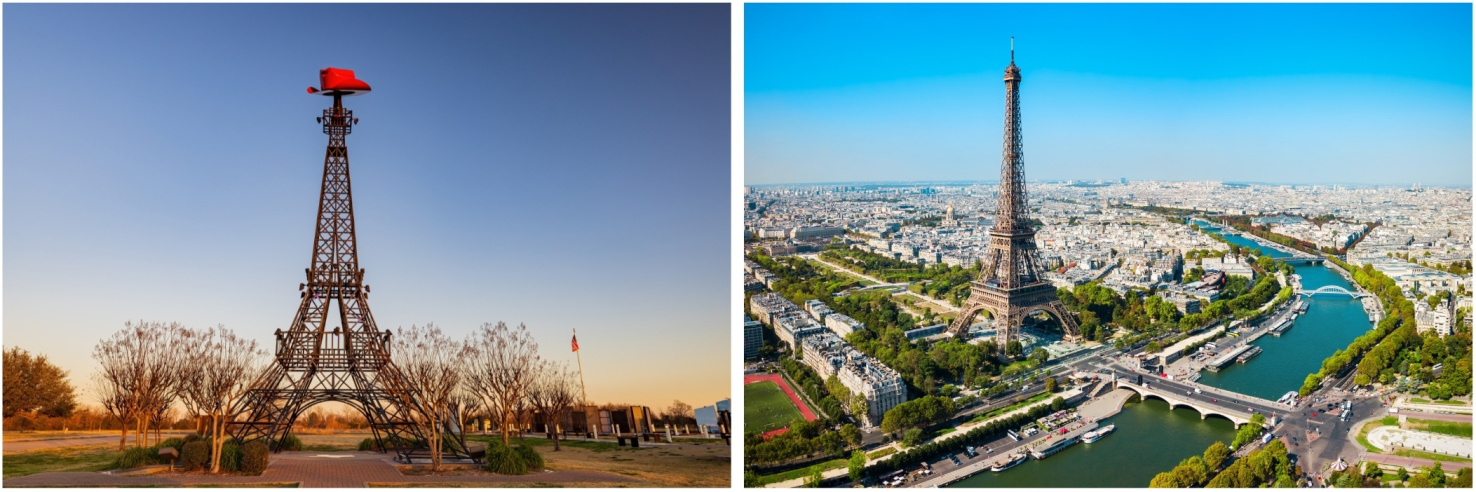
Paris, Texas was named to evoke the sophistication and heritage associated with Paris, France. It's not the only Paris in the United States: there are 23 cities named Paris across the country!
- Troy and Ithaca (New York, Turkey, Greece)
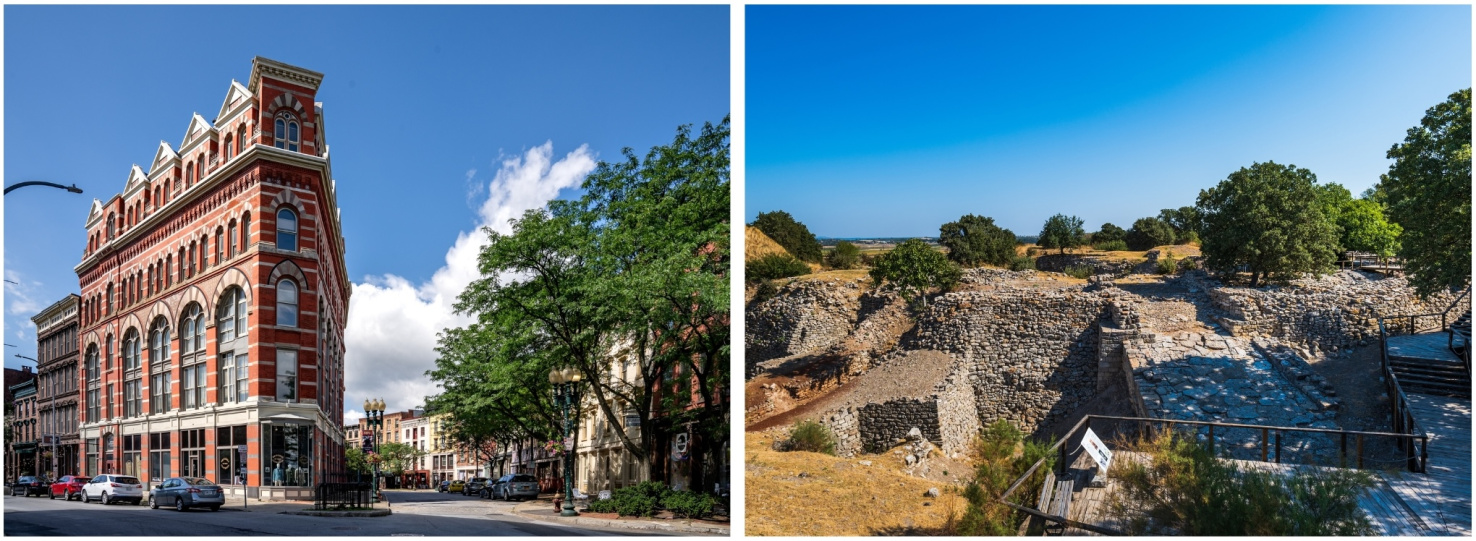
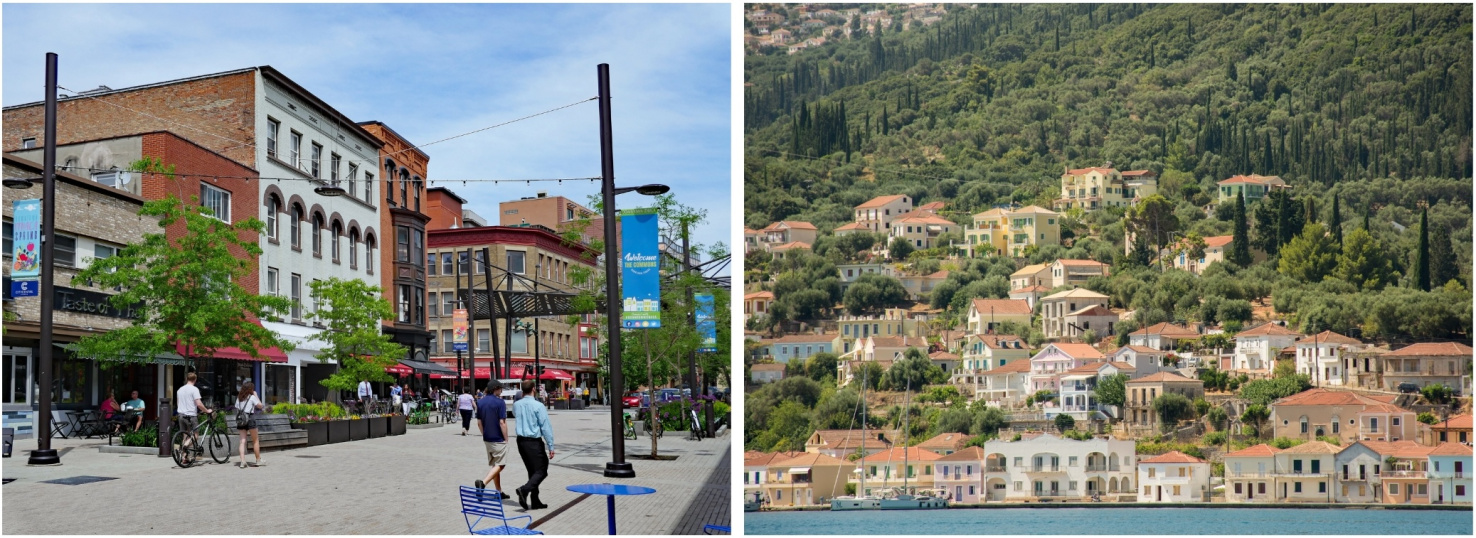
Troy, New York was named for the city of Greek legend from Homer's Iliad, in what is now Turkey. At the time (late 1700s), classical names were all the rage in New York State, with other cities like Rome and Syracuse being founded around the same time. Ithaca, which went through several names (including Sodom!), was named for Odysseus' hometown as a nod to the classical names popular in the region and because it was part of the Military Tract township of Ulysses — the Roman name for Odysseus.
- Athens (Georgia and Greece)
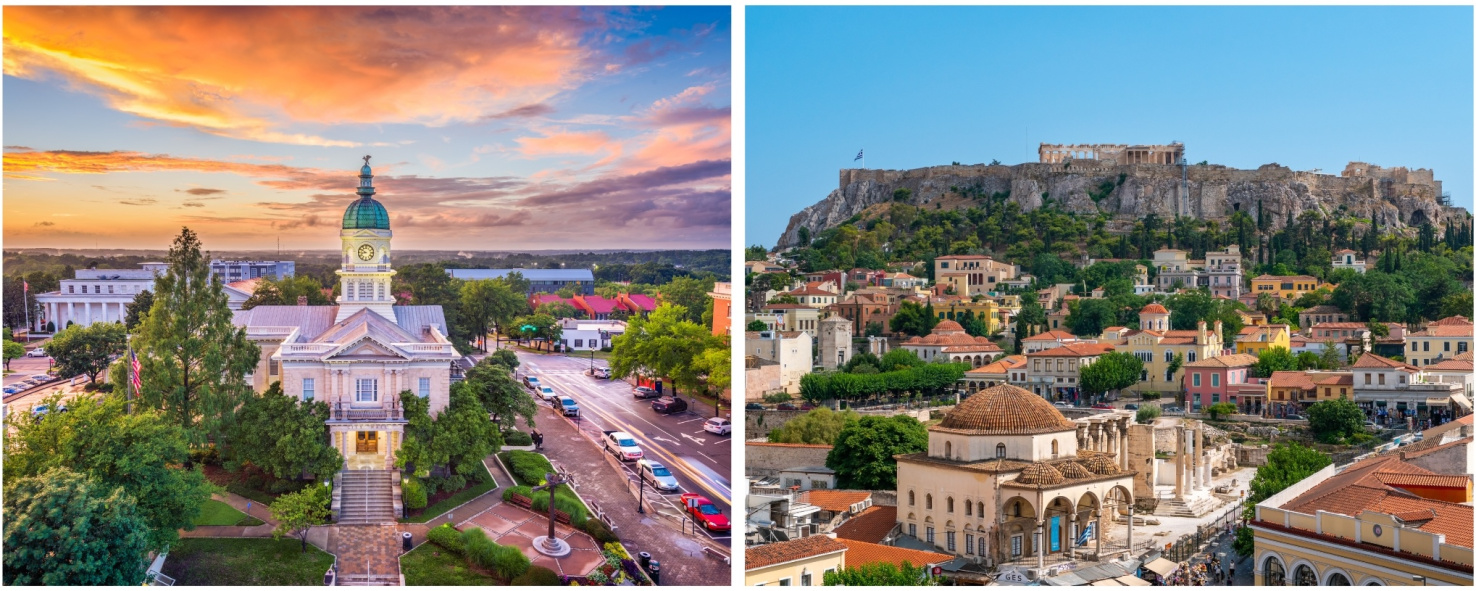
Athens, Georgia was named after the Greek capital as a nod to its role as a center of learning when the University of Georgia was being founded in the early 1800s as the first state-chartered university in the country. There are 19 other cities named Athens in the United States.
- Bagdad/Baghdad (Arizona and Iraq)
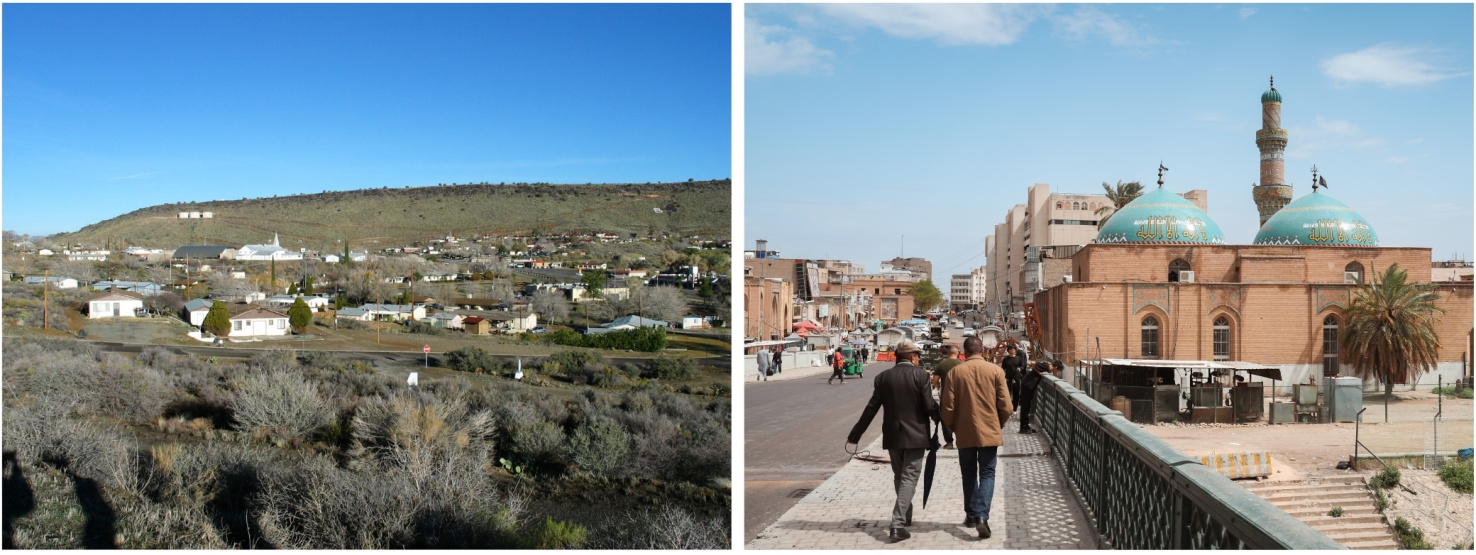
While the true origins of its Arabian-sounding name are unknown, Bagdad, a mining town in the Arizona desert, could have a much more familial origin: legend has it that a father and son were looking for ore there when the son found something and called for a bag: "Bag, dad!"
- Dublin (Ohio and Ireland)
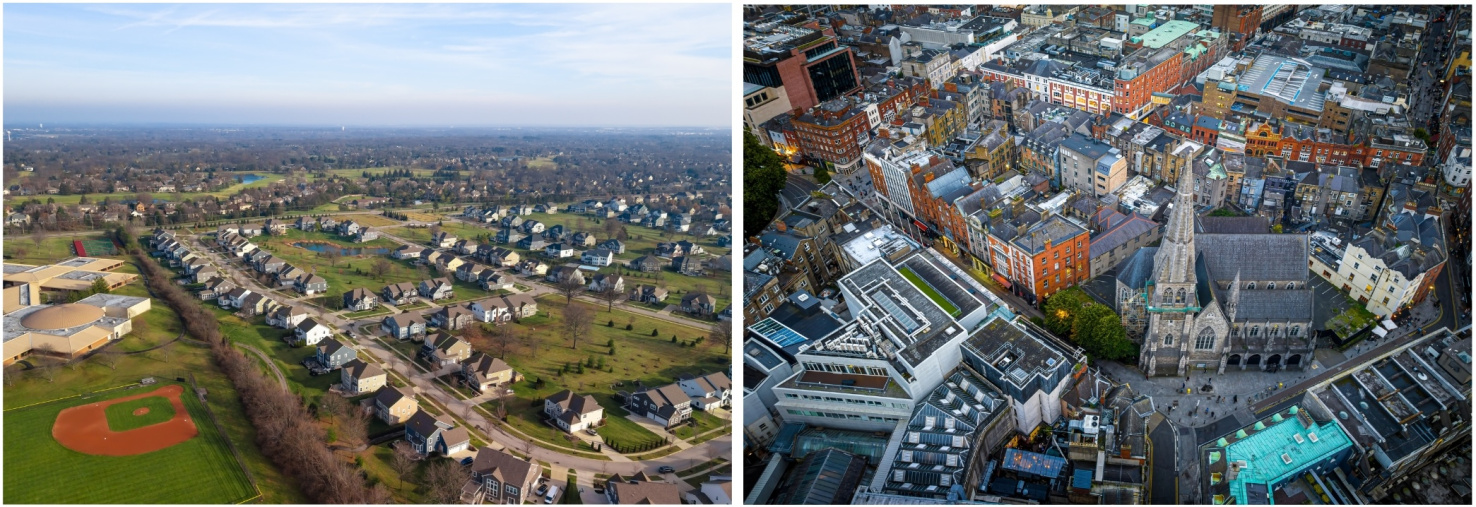
Dublin, Ohio was named by its first surveyor, who said its hilly landscape reminded him of his birthplace of Dublin, Ireland.
- Venice (California and Italy)
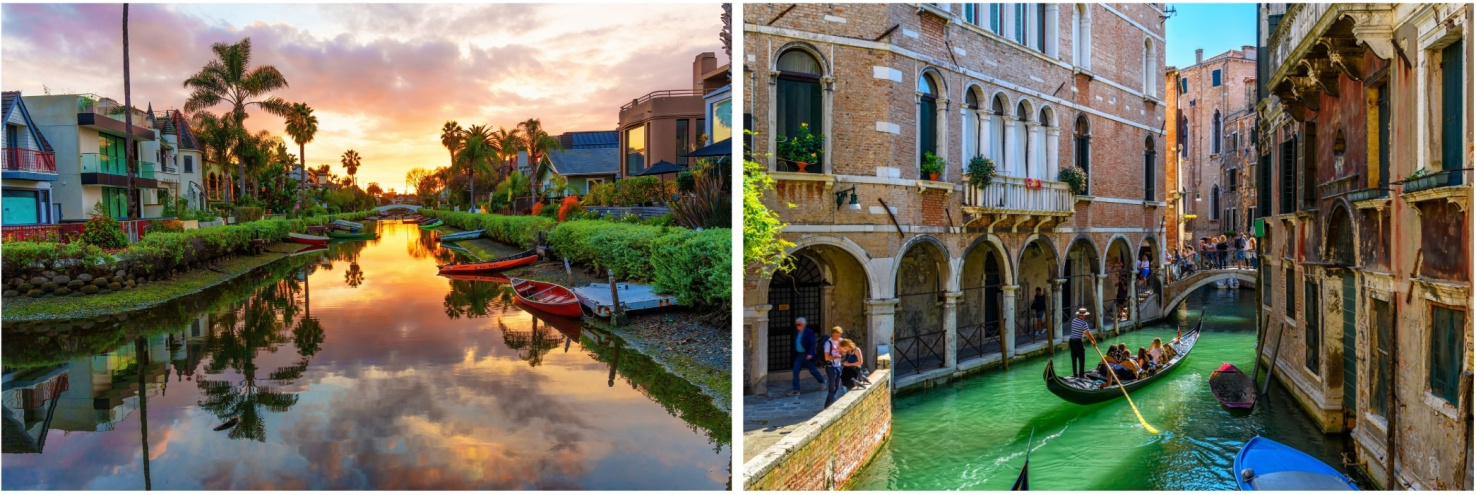
Venice, California was designed in 1905 to emulate its Italian counterpart, complete with an extensive system of canals, some of which still exist today. It was built as a resort community on the coast near Los Angeles, touted for its healthful, dry climate.
- Mecca (California and Saudi Arabia)
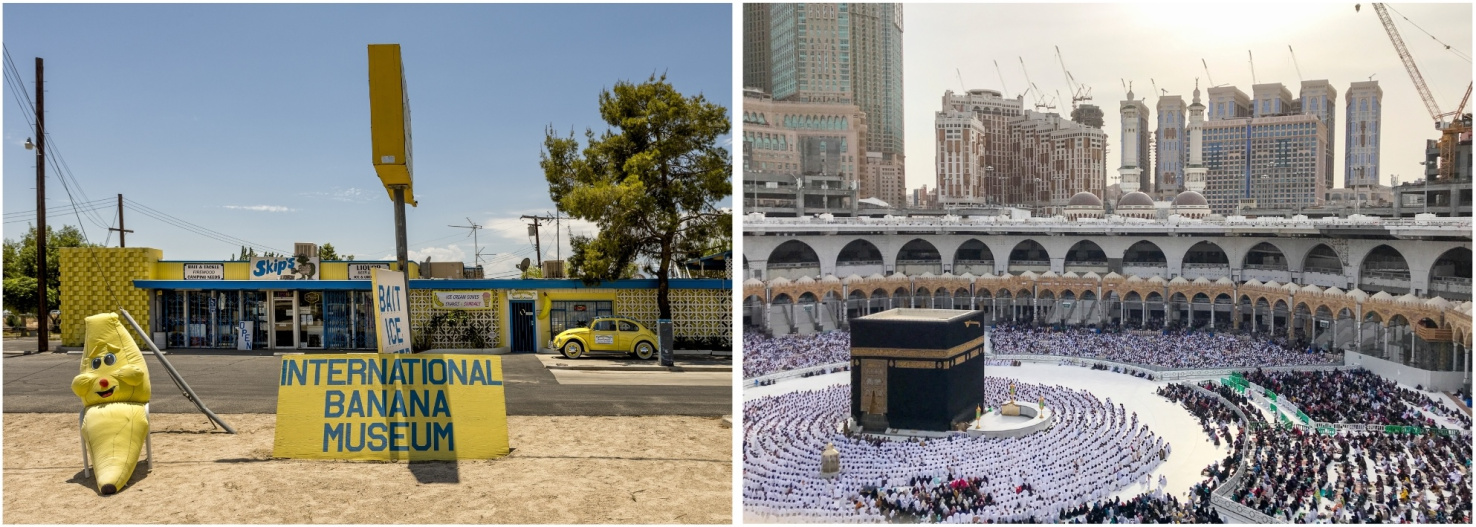
Mecca, California is situated in the arid desert near the Salton Sea and has been a veritable mecca for date palm cultivation since the 19th century. The town was named due to its similarities to the Arabian desert.
- Toledo (Ohio and Spain)
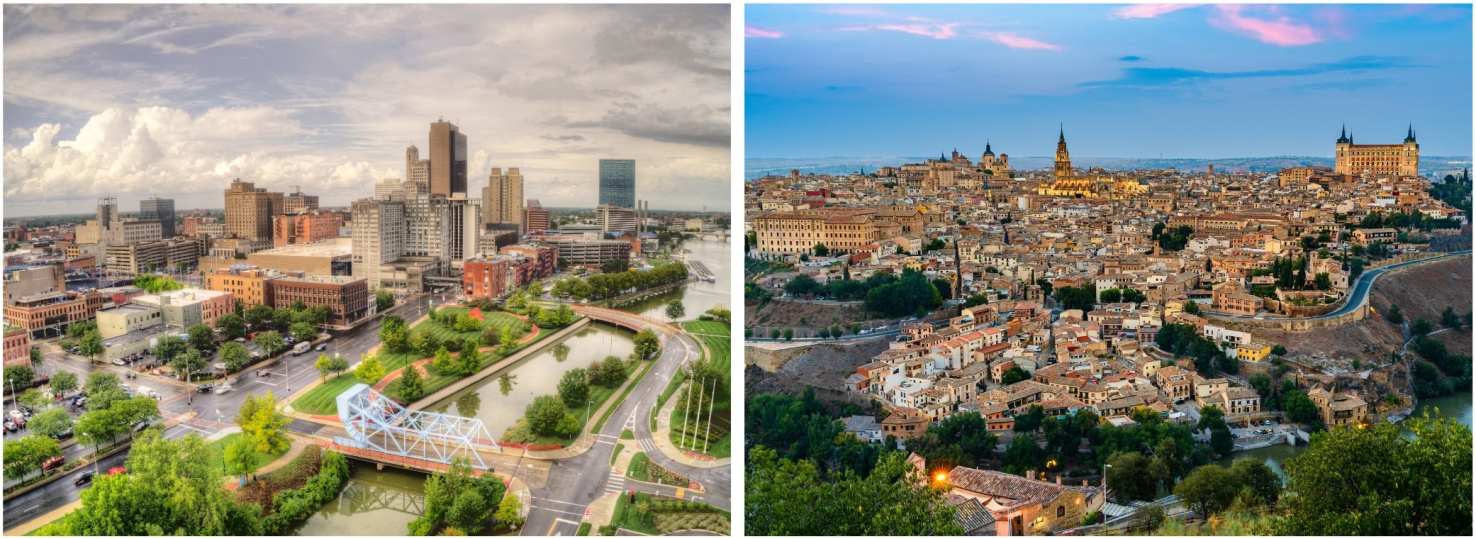
Toledo, Ohio's founders were inspired by the Spanish city of the same name and its role as a hub of creativity, commerce and diversity. They hoped their city would grow to have a similar cultural importance in the United States.
- Bethlehem (Pennsylvania and West Bank)
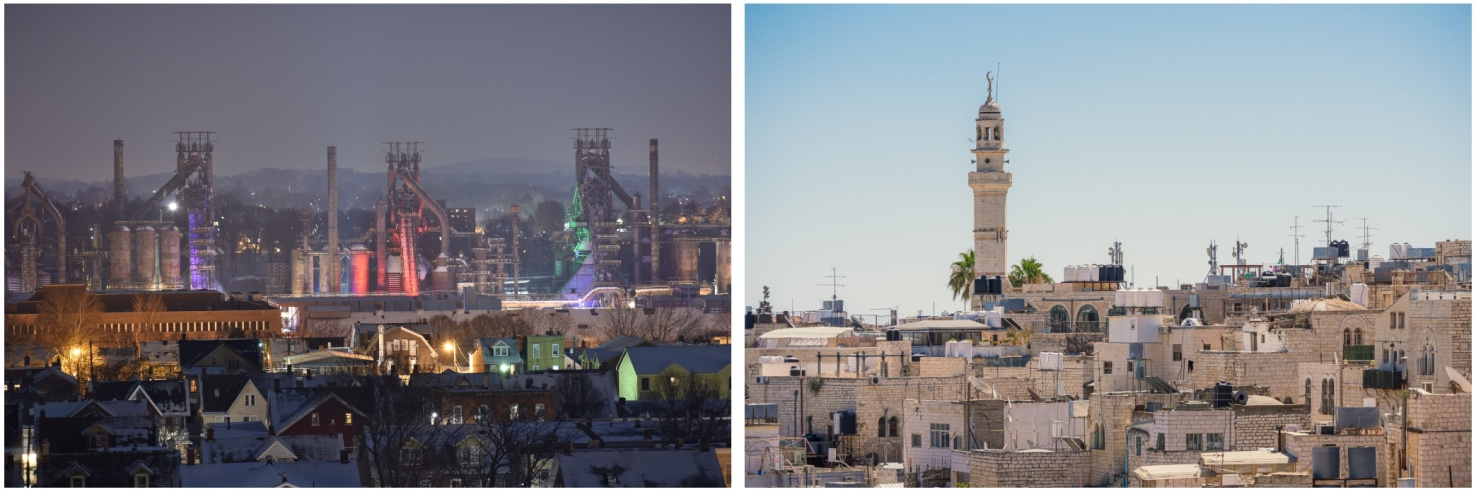
Bethlehem, Pennsylvania was founded on Christmas Eve, 1741 by a group of settlers from the Moravian Church as a "mission community" aimed at proselytizing to the Native Americans in the area. It was named after the Middle Eastern town where Jesus is said to be born.
- Manila (Utah and Philippines)
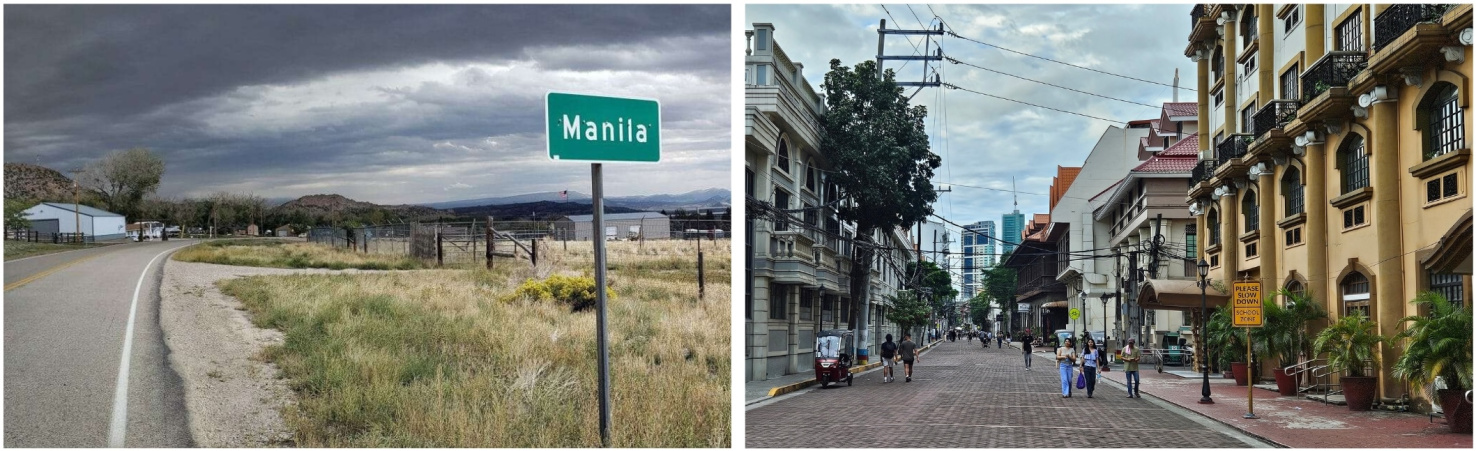
Manila, Utah was settled in 1898 amidst the Spanish-American War, when the U.S. was embroiled in conflict in the Philippines. It was named for the Philippine capital to commemorate the American victory at the Battle of Manila Bay that year.

Is There a Capital of the World?
Intelligent Life magazine asks what city would be the capital of the world.
The Example of Miami, a Global City
Miami could be the next major American city, and one that other global cities should try to emulate, according to this interview with economist Saskia Sassen.
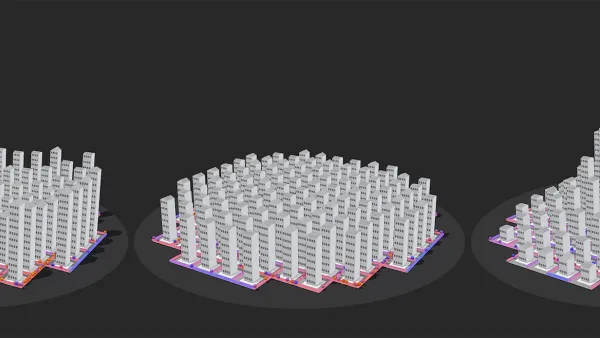
New study visualizes how city shapes impact mobility
Whether circular or linear, the shape and layout of cities affects how their residents get around.

Planetizen Federal Action Tracker
A weekly monitor of how Trump’s orders and actions are impacting planners and planning in America.

Amtrak, CN end decades-long dispute with eight-year agreement
The new operating agreement establishes an updated framework for the companies to work together, including processes to resolve disputes.

Judges permit Denver to divert 77,000 acre feet from the Colorado River for reservoir expansion
Overuse and climate change have caused the Colorado River’s water levels to plummet.

NYC DOT wants faster, more permanent street upgrades
The city is examining ways to build more concrete infrastructure without getting entangled in 'decades-long' projects.

'Something we’ve never seen before:' rising utility rates could strain city finances nationwide
Data centers, climate change and other factors have caused utility rates in the United States to increase by 38% since 2020.

Trump to overrule local leaders, lease millions of acres of America’s Pacific Island territories’ seafloors to mining companies
International law says that the Indigenous people of America’s territories have a right to prior and informed consent regarding projects that impact their countries.

FREE Course: Walkable City 1: Why Walkability?
After describing his path towards focusing on walkability as the essence of good planning, Jeff Speck marches through his five principal reasons for making more walkable places.
Reinventing Malls: Planning Alchemy—Turning Gray Fields Into Gold
The course focuses on the opportunities and imperatives that shape reinvention of mall sites.

Harvard University Graduate School of Design
KFH Group Inc.
Greater Baltimore Committee
The Architects Foundation
University of Cincinnati Online
The Pocatello Development Authority
The Urban Renewal Agency of the City of Pocatello


