A common rule about how much housing should cost no longer holds water in today's economy.


For decades, it was a well-worn aphorism that housing should cost less than 30% of a person's income. As Cassidy Horton explains in an article on Realtor.com, "The 30% rent rule can be traced back to federal housing affordability guidelines that used the 30% benchmark as a way to gauge if housing costs were reasonable."
However, the reality of modern budgets — and soaring inflation — means that the rule no longer applies as much as it used to. "One of the biggest issues with the 30% rent rule is that it’s based on your gross income—not the amount of money that actually lands in your bank account on payday." The rule also doesn't take into account different financial situations, Horton adds.
"As a result, people are making trade-offs by living with roommates, choosing smaller apartments, relocating farther away from city centers, and moving back in with parents, among other adjustments." According to a recent survey, 58% of young adults who moved away from home later moved back in with their parents. Older adults are also looking to roommates to lower their living costs.
Read the full story: Wages in America Are Too Low for the 30% Rule To Work for Renters Anymore


Indianapolis rents grew by 30% since 2020
The metro area has a shortage of roughly 137,000 affordable homes for the lowest-income households.
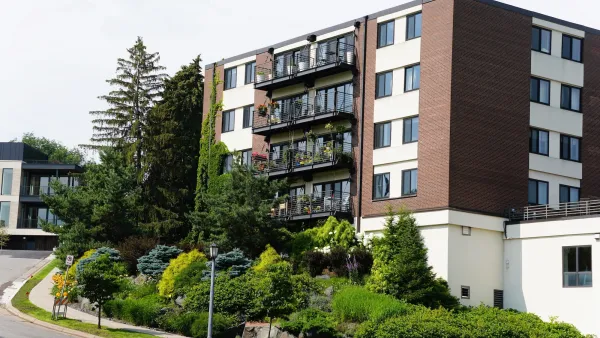
How policy changes helped Minneapolis beat rent inflation
Despite a boom in population, Minneapolis has managed to keep rents relatively steady through a combination of legislative action and private investment.
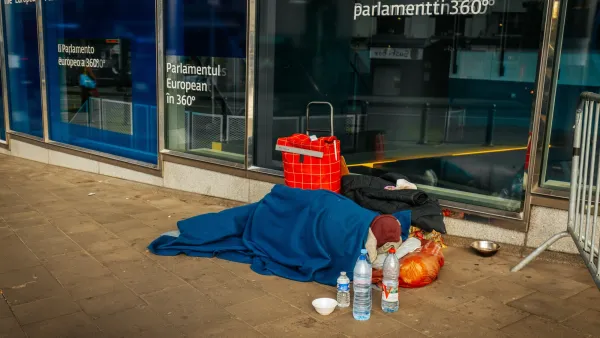
Home prices in the EU rose 53% since 2015, threatening 'right to adequate housing'
More Europeans face homelessness as housing costs soar.

Planetizen Federal Action Tracker
A weekly monitor of how Trump’s orders and actions are impacting planners and planning in America.

Amtrak, CN end decades-long dispute with eight-year agreement
The new operating agreement establishes an updated framework for the companies to work together, including processes to resolve disputes.

Northwest rail fans eager for Sept. 30 debut of Amtrak’s Airo fleet
Get ready for that new train smell and more seats. But they won’t go faster or run more frequently on the Cascades route in Washington and Oregon.

LAX SkyLink opening delayed again, contractor won’t commit to new deadline
The project was supposed to open its doors to the public in 2023.

Caltrain may slash over one-third of its stations
If Bay Area voters reject two transit tax measures, Caltrain, BART and AC Transit will see steep service cuts.

A 'dangerous' precedent: North Carolina successfully pressures communities into voting for toll roads
Two mayors resigned from the Charlotte Regional Transportation Planning Organization after it voted in favor of the toll roads.

FREE Course: Walkable City 1: Why Walkability?
After describing his path towards focusing on walkability as the essence of good planning, Jeff Speck marches through his five principal reasons for making more walkable places.
Reinventing Malls: Planning Alchemy—Turning Gray Fields Into Gold
The course focuses on the opportunities and imperatives that shape reinvention of mall sites.

City of Thousand Oaks
City of Wisconsin Rapids
Harvard University Graduate School of Design
The Architects Foundation
University of Cincinnati Online
The Pocatello Development Authority
The Urban Renewal Agency of the City of Pocatello