The Elara at the Market development includes 150 affordable housing units.


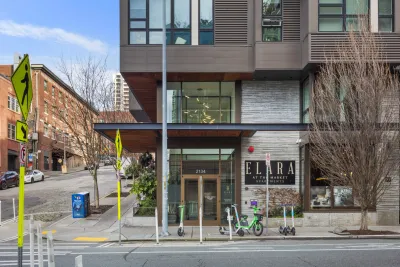
Seattle just opened its first social housing building, and over 10,000 people applied for the 150 units available.
As Heidi Groover explains in The Seattle Times, "The developer received 10,243 applications for the building during a two-week lottery that closed Friday. Starting Monday, the agency plans to draw names at random. It will first offer apartments to people making 30% of area median income or less, about $34,500 for a single person, until it has filled about 15 vacant apartments in the building."
According to Groover, "The Seattle Social Housing Developer, a publicly funded development authority, said it would pay nearly $61 million for the Elara, its first acquisition since voters approved creating the public developer three years ago and the funding source last year. The sale has not yet officially closed, according to county records."
Seattle needs roughly 100,000 new homes in the next two decades to meet demand. The social housing agency hopes it can build roughly 1,670 new units in the next five years. "Seattle funds the developer with a tax on companies that pay individual employees salaries exceeding $1 million."
Read the full story: Seattle’s first social housing building draws more than 10K applicants

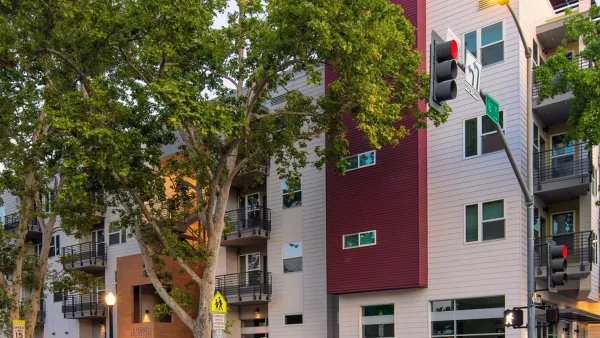
New Washington State Law Lets Cities Give Social Housing Developers City-owned Land
In its current form, HB 1687, which authorizes local governments to assist social housing agencies with land or other resources, only applies to Seattle.
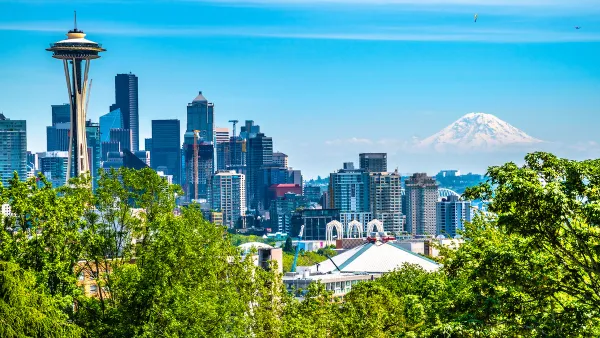
Housing Measure Wins in Seattle Special Election
Voters approved a new tax that could bring in $50 million per year for social housing.
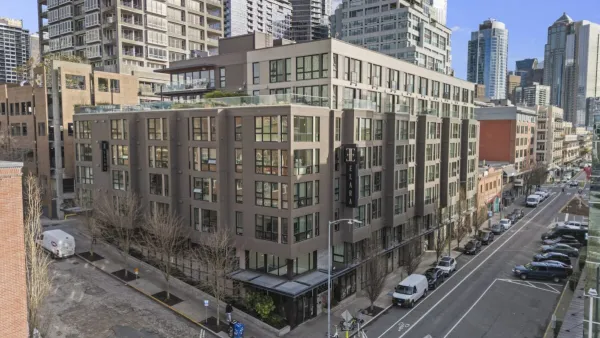
Seattle social housing agency can now issue bonds
The new Seattle Social Housing Developer funds affordable housing through a tax on the city's highest-paying companies.

Planetizen Federal Action Tracker
A weekly monitor of how Trump’s orders and actions are impacting planners and planning in America.

California plans to bury El Niño’s downpour
If the state plays its cards right, it may be able to store a billion acre-feet of El Niño’s water in aquifers.

Chicago breaks ground on $3 billion megadevelopment
The new neighborhood, titled Foundry Park, will one day host 3,700 residences.

Satanic place names
From streams and lakes to valleys and canyons, I mapped more than 1,000 places named after the Devil.

California High-Speed Rail Authority CEO resigns after $600,000 scandal
Under Ian Choudri, the authority used taxpayer dollars to fund first class flights and trips to nightclubs.

Want to study the Missouri River? Soon, you may need unanimous approval from 10 states
Legislation would require 10 governors’ permission to study or build projects moving water outside the basin.

FREE Course: Walkable City 1: Why Walkability?
After describing his path towards focusing on walkability as the essence of good planning, Jeff Speck marches through his five principal reasons for making more walkable places.
Reinventing Malls: Planning Alchemy—Turning Gray Fields Into Gold
The course focuses on the opportunities and imperatives that shape reinvention of mall sites.

City of Rosemead
Rutgers University, Edward J. Bloustein School of Planning and Public Policy
One Hundred Miles
Hunter College, City University of New York (CUNY)
The Architects Foundation
University of Cincinnati Online
City of Cambridge
Montrose County
The Pocatello Development Authority