Lower-income Americans face significant mobility challenges.


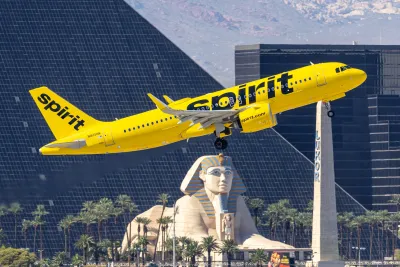
In an article for Streetsblog USA, Kai Boysan argues that the failure of Spirit Airlines "exposed a deeper weakness in America’s transportation system: tens of millions of people rely on affordable travel, and we still don’t provide enough of it."
According to Boysan, the United States has not built a system that reliably supports affordable transportation. "Affordable travel is still too often treated as a compromise, rather than a core part of broader mobility."
To keep transportation affordable and equitable, Boysan argues that governments must treat all types of mobility as part of an integrated system, paying attention to intermodal connections and freedom of choice. "Ground transportation is one of the most scalable ways to close that gap. Intercity buses already connect communities airlines have left behind, linking small towns to major cities year-round at prices that remain accessible even as airfares rise."
Boysan reminds the reader that for many Americans, access to transportation is not just about recreation — "When lower-cost options disappear, participation in work, education, and family life becomes harder to sustain."
FULL STORY: Spirit’s Shutdown Exposes America’s Fragile Affordable Travel System

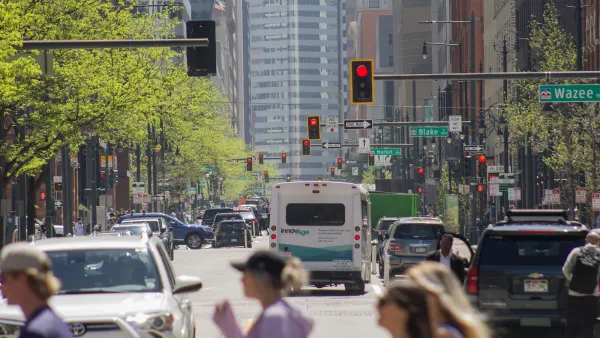
Congestion Costing Reality Check, Part 1: Congestion evaluation best practices
Widely cited studies claim that traffic congestion is a huge and growing problem. They exaggerate. Let’s examine how to correctly calculate congestion costs and roadway expansion benefits.
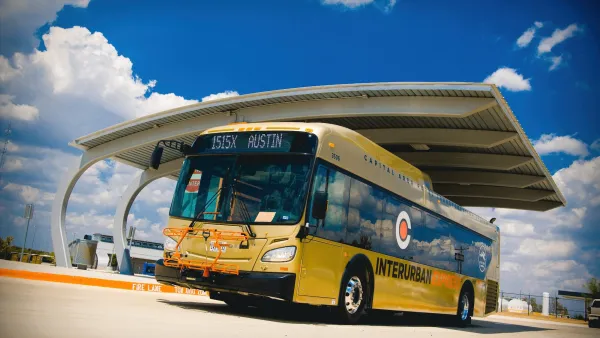
Rural Texas transit program is a 'lifeline' for seniors
A Central Texas program offers free transit to residents over 60.

Planning for Love, Part 2: What happens to dating in a car-centric world?
A survey of over 150 adults about their dating lives reveals stark differences based on their neighborhood's walkability.

Planetizen Federal Action Tracker
A weekly monitor of how Trump’s orders and actions are impacting planners and planning in America.

The state-sanctioned urbicide of Austin
People don’t kill cities. Freeways do.

US to reduce Colorado River water deliveries to Mexico
A new Colorado Treaty amendment reduces Mexico’s Colorado River water allocation by 250,000 acre feet.

5 New England states march closer to 800 megawatt wind energy project
Securing federal approval for the project may be complicated under the Trump administration, which has historically been hostile towards domestic wind power.

Baltimore to break ground on $50 million Transit Priority Project
The project will bring faster bus trips, safer streets and better bike connections to Baltimore.

Airbnb launches $250 million 'last-dollar financing' housing accelerator, makes first investment in Austin
The company will put $6.4 million towards affordable housing development in Texas’ capital.

FREE Course: Walkable City 1: Why Walkability?
After describing his path towards focusing on walkability as the essence of good planning, Jeff Speck marches through his five principal reasons for making more walkable places.
Reinventing Malls: Planning Alchemy—Turning Gray Fields Into Gold
The course focuses on the opportunities and imperatives that shape reinvention of mall sites.

Eagle County Government
Harvard University Graduate School of Design
Nashville Planning Department
The Architects Foundation
University of Cincinnati Online
The Pocatello Development Authority
The Urban Renewal Agency of the City of Pocatello
Journal of the American Planning Association