Lincoln County pulled the funding from the town of Wicasset, saying it was only meant to be used for housing projects.



The town of Wicasset, Maine lost nearly a quarter of a million dollars in federal funding earmarked for affordable housing after town officials proposed using the money to conduct a feasibility study for a data center instead, reports Julia Tilton in The Daily Yonder.
The case centers on a 300-acre undeveloped parcel that the town was considering for new housing. In 2024, Lincoln County decided to allocate $1.5 million in ARPA funds to housing projects, including the one in Wicasset. "But by November of 2024, a different plan was taking shape in Wiscasset, without the public’s awareness" as officials started a dialogue about a potential $5 billion data center on the same site, which could significantly increase the town's tax base. The town manager signed a nondisclosure agreement with the unnamed private company interested in developing the data center that obscured information about how much electricity and water the project would use.
Once the county got wind of the new plans, it decided to reallocate the funding to housing in other nearby towns. "We were only concerned with the housing issue, and we weren’t interested in helping a private developer build a multi-million, if not multi-billion, dollar facility," said Lincoln County commissioner Evan Goodkowsky. The data center project stalled, and so did any plans for new housing. "When a powerful industry comes in and exercises its financial might, it’s often up to local elected leaders to balance attractive economic prospects with a community’s existing needs for other kinds of developments."
FULL STORY: How a Data Center Derailed $240,000 for Affordable Housing in Rural Maine


Federal cuts to voucher program put 9,000 New Yorkers at risk of homelessness
The Emergency Housing Voucher program is ending years ahead of schedule, forcing housing agencies to find new ways to support roughly 70,000 households nationwide.
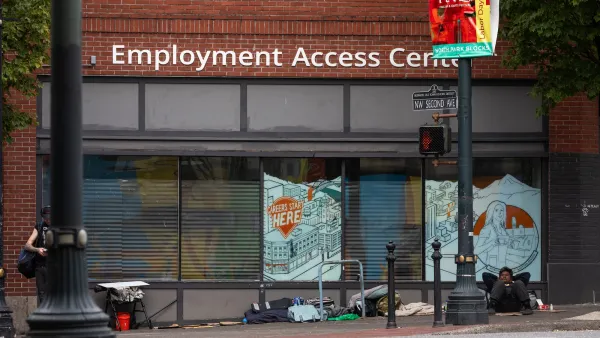
Judge: HUD acted illegally in changing homelessness grant rules
A Rhode Island judge struck down 'partisan' Trump restrictions on Continuum of Care Build grants.

Planning Trends for 2026: States and Cities Take Initiative, Passenger Rail Gains Steam, and the Costs of AI Revealed
With federal funding for everything from transportation projects to housing assistance under threat, city and state governments are poised to take a stronger role in building strong, resilient local economies and public services.

Planetizen Federal Action Tracker
A weekly monitor of how Trump’s orders and actions are impacting planners and planning in America.

The state-sanctioned urbicide of Austin
People don’t kill cities. Freeways do.

US to reduce Colorado River water deliveries to Mexico
A new Colorado Treaty amendment reduces Mexico’s Colorado River water allocation by 250,000 acre feet.

5 New England states march closer to 800 megawatt wind energy project
Securing federal approval for the project may be complicated under the Trump administration, which has historically been hostile towards domestic wind power.

Baltimore to break ground on $50 million Transit Priority Project
The project will bring faster bus trips, safer streets and better bike connections to Baltimore.

Airbnb launches $250 million 'last-dollar financing' housing accelerator, makes first investment in Austin
The company will put $6.4 million towards affordable housing development in Texas’ capital.

FREE Course: Walkable City 1: Why Walkability?
After describing his path towards focusing on walkability as the essence of good planning, Jeff Speck marches through his five principal reasons for making more walkable places.
Reinventing Malls: Planning Alchemy—Turning Gray Fields Into Gold
The course focuses on the opportunities and imperatives that shape reinvention of mall sites.

Eagle County Government
Harvard University Graduate School of Design
Nashville Planning Department
The Architects Foundation
University of Cincinnati Online
The Pocatello Development Authority
The Urban Renewal Agency of the City of Pocatello
Journal of the American Planning Association