Planners in Houston finally establish a municipal land-bank program for redevelopment, but find after years of delays, that the real estate market has changed.


"In the mid-1990s, when officials decided to establish a land-bank program in Houston, the Third Ward seemed an ideal laboratory for the city's newest experiment in urban redevelopment....The land bank would sell abandoned property to developers at below-market prices to promote construction of low- and moderate-income housing." The city finally established the Land Assemblage Redevelopment Authority, which oversees the land bank program, but "finds itself at a disadvantage as it competes with Houston's freewheeling development tradition." Unlike the municipal land bank program in Dallas, the Houston program currently does not "have the authority to acquire tax-delinquent property before it becomes available to the public." In addition, the demand for property near downtown Houston "regardless of its condition, is rising."
Many people have raised concerns over the land bank concept. Some are skeptical, saying that that there is no need for city intervention if the market is already addressing the blighted area of the Third Ward on its own. On the other side of the spectrum, community groups are concerned that "there is always a risk that such programs will benefit private development interests rather than neighborhood residents."
Thanks to Connie Chung
Read the full story: Land bank squeezed out of race for Houston property


Planetizen Federal Action Tracker
A weekly monitor of how Trump’s orders and actions are impacting planners and planning in America.

The state-sanctioned urbicide of Austin
People don’t kill cities. Freeways do.
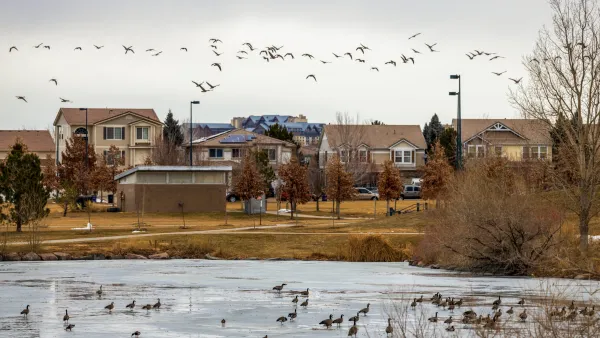
Colorado’s Largest Data Center Could Rise Next to Homes — Without a Public Hearing
The proposed campus would consume 11 times the power of Denver International Airport; as it has across the country, opposition mounts.

Nation's most wind-powered state turns to coal as data centers increase energy demand
For the first time in decades, Iowa has increased its generation of coal power.

NYC cools commuters with city's first rain garden above a bus stop
New York City officials say the plants in the rain garden can absorb 16 gallons of rainwater during heavy storms.

Brightline West’s future may rely on $6 billion federal loan
The company has until Nov. 2 to make a $400 million equity investment into its proposed high-speed rail line.

FREE Course: Walkable City 1: Why Walkability?
After describing his path towards focusing on walkability as the essence of good planning, Jeff Speck marches through his five principal reasons for making more walkable places.
Reinventing Malls: Planning Alchemy—Turning Gray Fields Into Gold
The course focuses on the opportunities and imperatives that shape reinvention of mall sites.

Greater Baltimore Committee
Eagle County Government
Harvard University Graduate School of Design
The Architects Foundation
University of Cincinnati Online
The Pocatello Development Authority
The Urban Renewal Agency of the City of Pocatello
Journal of the American Planning Association