The European honeybees kept by many businesses and schools often compete with local pollinator species.


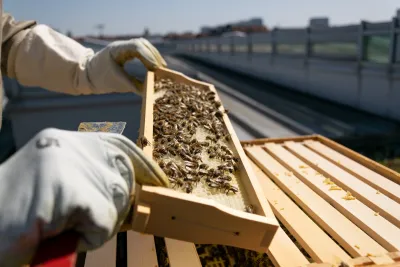
Urban rooftops around the country are abuzz with intentionally placed beehives, writes Andrew Zaleski in Bloomberg CityLab. Since New York City ended a ban on urban bees in 2010, the number of registered hives in that city grew from 68 to over 400.
Many of these hives are managed by commercial operations similar to the ones that move hives from farm to farm to help pollinate crops, and urban beekeepers say they want to help save the honeybee population from recent fears of collapse. “But raising honeybees in a city has raised environmental concerns, too. Apis mellifera, the European honeybees that are so important for commercial agriculture in North America, are not native to the continent, and they can outcompete and spread disease to native, wild bee species.”
Experts note that keeping bees is “not inherently bad,” but it is not necessarily a conservation measure. Rather, it is more akin to keeping chickens. Urban bees can also help maintain the health of plants and green spaces and thus habitat for other local pollinator species.
FULL STORY: In Parks and on Rooftops, Urban Beekeeping Takes Flight

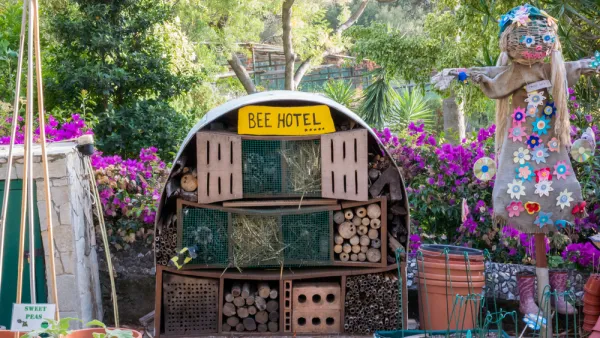
How Pollinators Fight Warming Cities
Researchers are starting to understand how urban bee populations can support healthy green spaces and reduce the urban heat island effect.
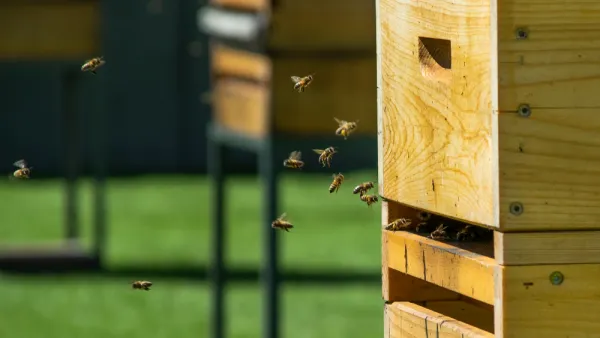
A Sweet Deal: Zoning for Honeybees
A Boston ordinance could make it easier for residents to take up urban beekeeping.
Worker Bees
Michael S. Thompson of the Chicago Honey Co-op discusses his urban beekeeping operation and how it provides jobs to otherwise hard-to-employ people.

Planetizen Federal Action Tracker
A weekly monitor of how Trump’s orders and actions are impacting planners and planning in America.

The state-sanctioned urbicide of Austin
People don’t kill cities. Freeways do.

US to reduce Colorado River water deliveries to Mexico
A new Colorado Treaty amendment reduces Mexico’s Colorado River water allocation by 250,000 acre feet.

5 New England states march closer to 800 megawatt wind energy project
Securing federal approval for the project may be complicated under the Trump administration, which has historically been hostile towards domestic wind power.

Baltimore to break ground on $50 million Transit Priority Project
The project will bring faster bus trips, safer streets and better bike connections to Baltimore.

Airbnb launches $250 million 'last-dollar financing' housing accelerator, makes first investment in Austin
The company will put $6.4 million towards affordable housing development in Texas’ capital.

FREE Course: Walkable City 1: Why Walkability?
After describing his path towards focusing on walkability as the essence of good planning, Jeff Speck marches through his five principal reasons for making more walkable places.
Reinventing Malls: Planning Alchemy—Turning Gray Fields Into Gold
The course focuses on the opportunities and imperatives that shape reinvention of mall sites.

Eagle County Government
Harvard University Graduate School of Design
Nashville Planning Department
The Architects Foundation
University of Cincinnati Online
The Pocatello Development Authority
The Urban Renewal Agency of the City of Pocatello
Journal of the American Planning Association