Researchers say a city program designed to help people access housing and services “does not live up to its name” and has caused more harm than good.


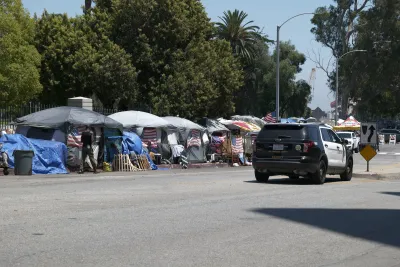
UCLA researchers found that a Los Angeles program designed to help unhoused people is displacing five times more people than it connects with services.
As Ryan Kushner explains in Smart Cities Dive, the study from the Luskin Institute observed the Comprehensive Cleaning and Rapid Engagement (CARE+) initiative on 16 days between June and October 2025 and surveyed unhoused people. “Among 51 unhoused residents surveyed in the study, 37% estimated they’d been forced to relocate more than five times in the past 30 days, and five had been offered access to shelter, according to the report. Only one respondent said shelter was obtained, in the form of a hotel voucher.”
Researchers reported that “Rather than caring for unhoused persons, the program is being used to punish them, pushing them from one location to another and trashing their belongings, while rarely providing useful services to them.”
The study included three recommendations for improving the program: “ending disposal of personal property, focusing on assistance over removal and building more low-income and supportive housing.”
The study comes soon after a plan from the county instructed cities on methods for clearing homeless encampments near sports venues that will be used in the 2028 Olympics.
FULL STORY: Los Angeles’ encampment cleanup program may displace more people than it helps, study finds

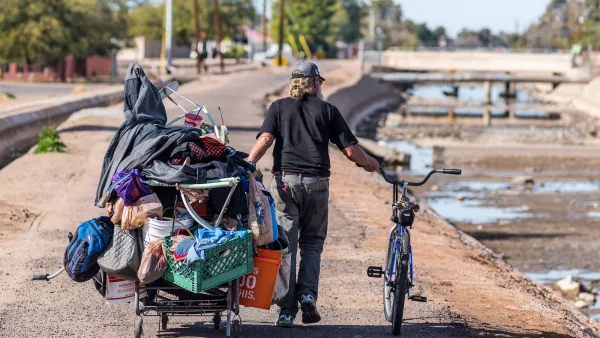
New Phoenix and Oakland Homelessness Plans Prioritize Prevention, Permanent Housing
Phoenix’s unsheltered homeless population grew by 28 percent last year.

LA Housing Authority Buys 30-Unit Apartment Building for Supportive Housing
The Koreatown building will offer housing as well as healthcare services and case management.
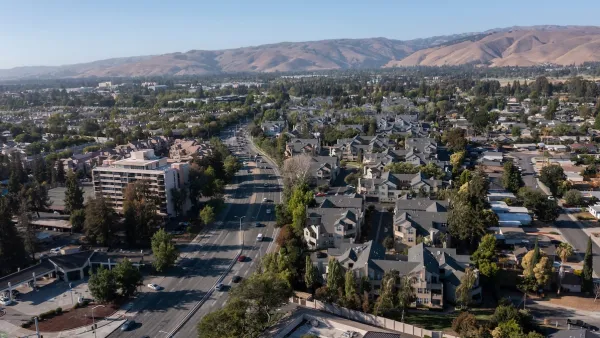
Fremont, California Criminalizes Homelessness, “Abetting” Encampments
Non-profits worry the ordinance, which does not explicitly exempt service providers, will have a chilling effect on unhoused residents and those who offer resources.

The state-sanctioned urbicide of Austin
People don’t kill cities. Freeways do.

US to reduce Colorado River water deliveries to Mexico
A new Colorado Treaty amendment reduces Mexico’s Colorado River water allocation by 250,000 acre feet.

New Jersey’s second-largest city bans standalone data centers
Jersey City will continue to allow co-location facilities, such as those meant for research institutions that store their own data.

Amtrak not solely to blame for New Jersey commuter rail's unreliability, report finds
A new study from the Garden State Initiative found that NJ Transit’s budget grew 20% across a 4 year period, but reliability declined significantly over the same period.

EPA erases limits on planet-warming pollution from power plants
Under Monday’s plan, power plants would still have some limits on how much mercury, arsenic and other contaminants they can emit.

Phoenix announces new on-demand transit service, more frequent RAPID buses
Both new services will launch in October, and are part of Phoenix's Project Effective Access Solutions for Easing Congestion.

FREE Course: Walkable City 1: Why Walkability?
After describing his path towards focusing on walkability as the essence of good planning, Jeff Speck marches through his five principal reasons for making more walkable places.
Reinventing Malls: Planning Alchemy—Turning Gray Fields Into Gold
The course focuses on the opportunities and imperatives that shape reinvention of mall sites.

Eagle County Government
Harvard University Graduate School of Design
Nashville Planning Department
The Architects Foundation
University of Cincinnati Online
The Pocatello Development Authority
The Urban Renewal Agency of the City of Pocatello
Journal of the American Planning Association