The space between homes can as much as double a chance’s home of survival during a fire.


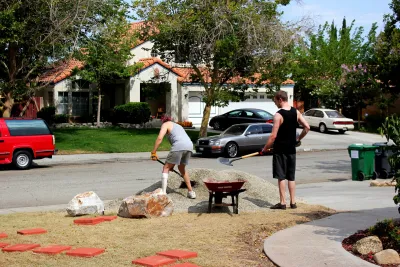
Los Angeles homeowners who lost homes in the Eaton and Palisades fires are working to rebuild homes that are safer and more fire-resistant — and that goes beyond the home itself, writes Linda Poon in Bloomberg CityLab.
Along with the materials used to build a home, the design and landscaping of areas immediately next to and between homes can be crucial fire-stopping barriers. According to research by mechanical engineer Michael Gollner, “making homes fire-resistant and maintaining the space between houses to clear or limit the presence of combustible materials like dried vegetation, wooden fences and patio furniture are among the most effective strategies for taming urban fires.”
Taking steps to limit flammable materials and implement ‘hardening’ measures between homes can as much as double the share of structures that survive a fire. According to Poon, “California officials delayed finalizing rules around ‘Zone Zero’ regulations that, among other things, would require property owners in high-risk areas to maintain an ‘ember-resistant zone’ within five feet of their building.” Some cities, like Berkeley and San Diego, are enforcing their own regulations, moving to ban flammable plants and other materials from within five feet of homes.
Read the full story: Slowing the Spread of Urban Fires Starts Right Outside the Home

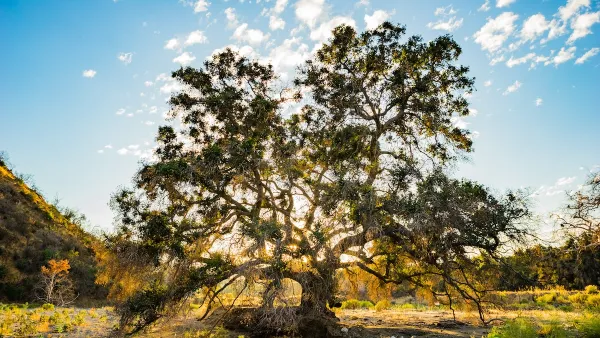
Rethinking Wildfire Defense: How a Landscape Approach Can Protect Neighborhoods
Post-fire analysis of the Eaton Fire reveals that a landscape approach — including fire-resistant vegetation, home hardening, and strategic planning — can help reduce wildfire risk, challenging assumptions that trees and plants are primary fire hazards.

Rethinking Los Angeles Landscapes: Balancing Iconic Trees and Fire Resilience
L.A. must balance fire resilience with ecological preservation by gradually replacing flammable non-native plants like eucalyptus and palm trees with native and fire-resistant species while rethinking urban landscapes and land management practices.
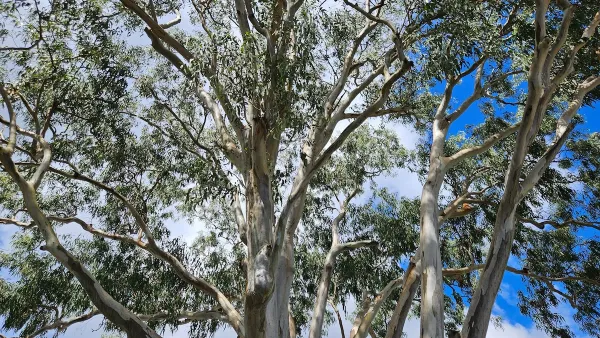
Rethinking Fire-Resistant Landscaping: Which Trees Should We Plant?
Fire experts emphasize the need to replace highly flammable trees like Mexican fan palms and eucalyptus with fire-resistant species such as oak, sycamore, and toyon, while also strengthening home fire defenses to reduce wildfire risks in California.

Planetizen Federal Action Tracker
A weekly monitor of how Trump’s orders and actions are impacting planners and planning in America.

California plans to bury El Niño’s downpour
If the state plays its cards right, it may be able to store a billion acre-feet of El Niño’s water in aquifers.

Chicago breaks ground on $3 billion megadevelopment
The new neighborhood, titled Foundry Park, will one day host 3,700 residences.

California High-Speed Rail Authority CEO resigns after $600,000 scandal
Under Ian Choudri, the authority used taxpayer dollars to fund first class flights and trips to nightclubs.

Want to study the Missouri River? Soon, you may need unanimous approval from 10 states
Legislation would require 10 governors’ permission to study or build projects moving water outside the basin.

Desperate measures: Advocates weigh draining Lake Powell to fill Colorado River
Draining the reservoir could reduce evaporation losses by a couple hundred thousand acre-feet.

FREE Course: Walkable City 1: Why Walkability?
After describing his path towards focusing on walkability as the essence of good planning, Jeff Speck marches through his five principal reasons for making more walkable places.
Reinventing Malls: Planning Alchemy—Turning Gray Fields Into Gold
The course focuses on the opportunities and imperatives that shape reinvention of mall sites.

City of Rosemead
Rutgers University, Edward J. Bloustein School of Planning and Public Policy
One Hundred Miles
Hunter College, City University of New York (CUNY)
The Architects Foundation
University of Cincinnati Online
City of Cambridge
Montrose County
The Pocatello Development Authority