The city chose to buy an existing building, slashing the cost of bringing new affordable housing units onto the market.


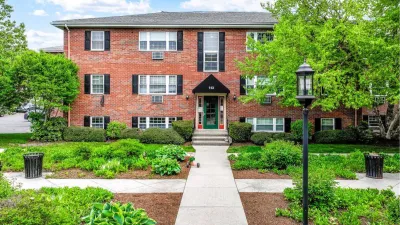
The city of Newton, Massachusetts is taking a different approach to affordable housing development. Rather than subsidizing new construction, the city helped an affordable housing developer buy an apartment building that was up for sale.
As Andrew Brinker explains in the Boston Globe, the developer will renovate the units and offer them at below-market rents, allowing current residents to stay in the building.
The strategy helps preserve “naturally occurring affordable housing” such as older buildings, helps reduce tenant turnover, and gets new affordable housing on the market faster and at a lower cost. It also prevents other developers from buying the building and hiking rents.
The project was funded in part by $4 million from the Newton Affordable Housing Trust, $6.6 million from the state, and $10 million from private investors. The total cost of $44 million comes out to roughly $400,000 per unit, $200,000 less than the cost of building a comparably sized new building. The city says the project will be “workforce housing” restricted to tenants making $39,700 to $141,592 for a two-person household.
Read the full story: In Newton, a new approach to affordable housing: Just buy an old apartment building

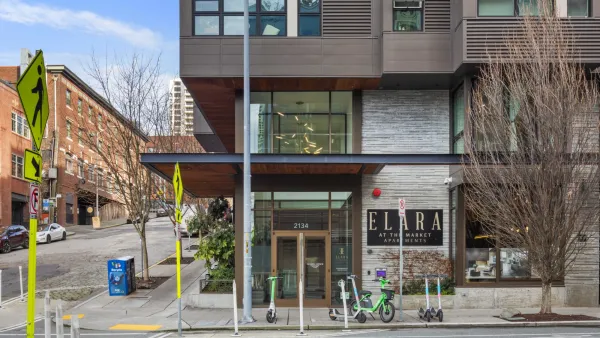
Seattle's first social housing building gets 10,000 resident applications
The Elara at the Market development includes 150 affordable housing units.
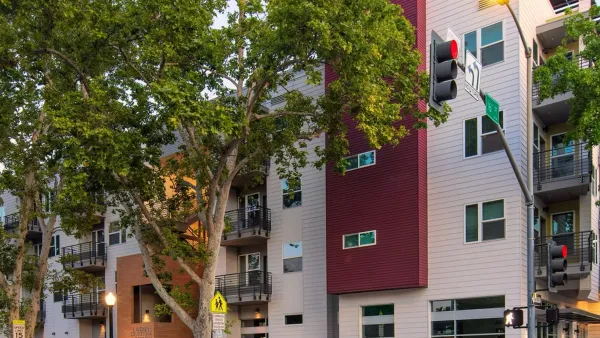
New Washington State Law Lets Cities Give Social Housing Developers City-owned Land
In its current form, HB 1687, which authorizes local governments to assist social housing agencies with land or other resources, only applies to Seattle.
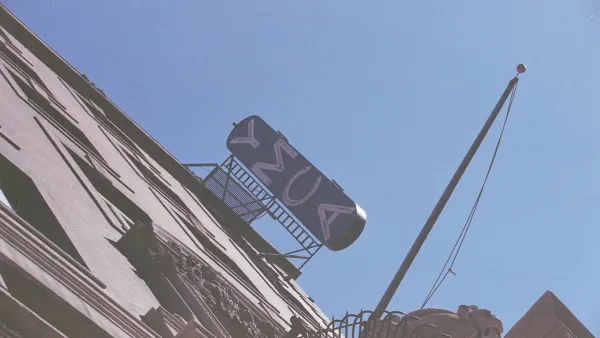
YMCA: The Swan Song of SROs and the Birth of Modern Homelessness
The demise of our last mass stock of affordable market housing left us no place to go when we’re short on our dough. How will we rebuild last resort housing?

Planetizen Federal Action Tracker
A weekly monitor of how Trump’s orders and actions are impacting planners and planning in America.

Amtrak, CN end decades-long dispute with eight-year agreement
The new operating agreement establishes an updated framework for the companies to work together, including processes to resolve disputes.

Judges permit Denver to divert 77,000 acre feet from the Colorado River for reservoir expansion
Overuse and climate change have caused the Colorado River’s water levels to plummet.

Boston has spent millions making the Green Line more accessible — and there’s no end in sight
While the city has invested millions into expanding and adding platforms to the Green Line to make it more accessible, new train cars set to arrive next year will be too tall for disabled passengers to board without raising the current platforms.

Idaho may see an 18% drop in federal surface transit funding — the largest estimated cut in the US
Transit systems in rural communities are much more reliant on federal funding to provide their services.

How ‘post-disaster gentrification’ alters neighborhoods after natural calamities
After hurricanes, fires or other calamities, the original residents of a community are often replaced by younger, wealthier residents.

FREE Course: Walkable City 1: Why Walkability?
After describing his path towards focusing on walkability as the essence of good planning, Jeff Speck marches through his five principal reasons for making more walkable places.
Reinventing Malls: Planning Alchemy—Turning Gray Fields Into Gold
The course focuses on the opportunities and imperatives that shape reinvention of mall sites.

City of Wisconsin Rapids
Harvard University Graduate School of Design
KFH Group Inc.
The Architects Foundation
University of Cincinnati Online
The Pocatello Development Authority
The Urban Renewal Agency of the City of Pocatello