Denver Urban Gardens is building green spaces that clean the air and offer free, fresh fruit to neighbors.


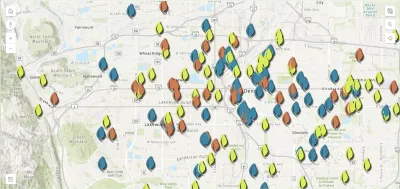
A network called Denver Urban Gardens (DUG) is growing the region’s tree canopy through hundreds of community gardens and food forests, reports Riley Ramirez in Civil Eats.
The movement started in the 1970s with a vacant lot transformed into a community garden. “DUG officially became a nonprofit in 1985, and over the past four decades, it has grown and distributed more than 62,000 pounds of food throughout the metro area.”
Now, DUG has expanded its work to food forests, which, unlike community gardens, don’t charge residents for plots, instead offering free fruits, nuts, and berries to neighbors. “Beyond providing fresh food in neighborhoods that need it most, these agroforests reduce the urban heat island effect, create pollinator habitat, and combat pollution and climate change by absorbing and filtering harmful gases.”
DUG built 26 food forests in three years and plans to add more sites. However, the organization recently lost two federal grants totaling $850,000, forcing it to reduce the scope of its Dig Deeper Initiative, which would have built six community gardens and nine food forests in the working-class Denver West neighborhood.
FULL STORY: Denver’s Food Forests Provide Free Fruit While Greening the Environment

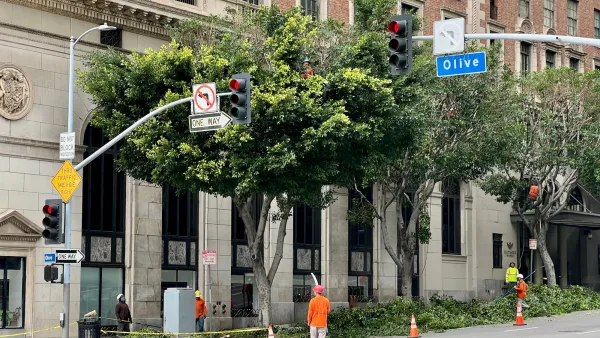
LA’s Tree Canopy is Nearing a ‘Point of Failure’
Calls to 311 for “tree emergencies” are rising, endangering a resource that helps bring down urban temperatures and reduce air pollution.
Washington Urban Forestry Program Faces 'Existential' Budget Cut
A proposed budget eliminates funding for a key urban forestry program that funds greening efforts across the state.
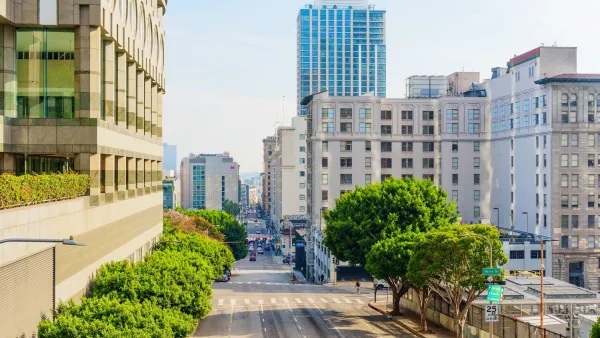
LA’s Tree Emergency Goes Beyond Vandalism
After a vandal destroyed dozens of downtown LA trees, Mayor Karen Bass vowed to replace them. Days later, she slashed the city’s tree budget.

Planetizen Federal Action Tracker
A weekly monitor of how Trump’s orders and actions are impacting planners and planning in America.

The state-sanctioned urbicide of Austin
People don’t kill cities. Freeways do.

US to reduce Colorado River water deliveries to Mexico
A new Colorado Treaty amendment reduces Mexico’s Colorado River water allocation by 250,000 acre feet.

5 New England states march closer to 800 megawatt wind energy project
Securing federal approval for the project may be complicated under the Trump administration, which has historically been hostile towards domestic wind power.

Baltimore to break ground on $50 million Transit Priority Project
The project will bring faster bus trips, safer streets and better bike connections to Baltimore.

Airbnb launches $250 million 'last-dollar financing' housing accelerator, makes first investment in Austin
The company will put $6.4 million towards affordable housing development in Texas’ capital.

FREE Course: Walkable City 1: Why Walkability?
After describing his path towards focusing on walkability as the essence of good planning, Jeff Speck marches through his five principal reasons for making more walkable places.
Reinventing Malls: Planning Alchemy—Turning Gray Fields Into Gold
The course focuses on the opportunities and imperatives that shape reinvention of mall sites.

Eagle County Government
Harvard University Graduate School of Design
Nashville Planning Department
The Architects Foundation
University of Cincinnati Online
The Pocatello Development Authority
The Urban Renewal Agency of the City of Pocatello
Journal of the American Planning Association