Reforming farm subsidies can slow sprawl and trim waistlines.


Every day Americans buy groceries at Wal-Mart supercenters and other hypermarkets built on what used to be farmland. Theres rich irony in the thought of food centers pushing out food producers that is only heightened by the fact that inside those big blocks of concrete and fluorescent lights are cheap replicas of the wholesome food that once grew right below where their slab foundations now sit. The reason families have come to confuse these industrial foods for the real, nutritious thing parallels the reason communities keep putting parking lots on top of fertile fields. The common cause of Americas current appetite for both junk foods and expressways dominated by chain-store billboards is a distortion of the free market that makes tasty foods from nearby farms difficult to find and afford.
Thanks to Keith Schneider
Read the full story: Big Boxes, Little Boxes, and Farmland Protection


Planetizen Federal Action Tracker
A weekly monitor of how Trump’s orders and actions are impacting planners and planning in America.

‘Going backwards:’ Baltimore mayor, students rally against state's transit funding plan
Maryland's proposed six-year plan provides no funding for Baltimore’s BMORE bus program and reduces its road maintenance funding.
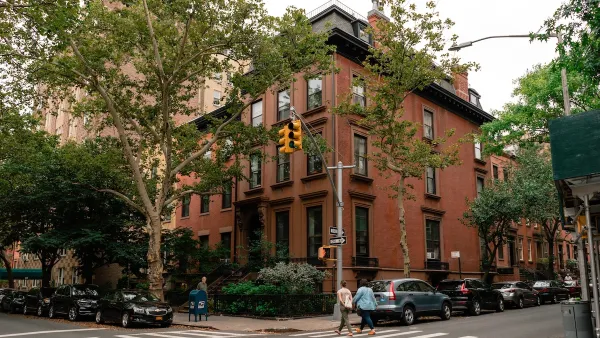
Mamdani sent nearly 6,000 pied-à-terre tax warnings to homes that didn’t qualify
A judge has ordered the administration to cancel thousands of pied-à-terre tax notices after it sent 35% of them erroneously.

One of nation’s poorest counties to receive $6 billion data center
The developers estimate the project will create 200 permanent jobs and 1,000 temporary construction jobs.

MTA expects Trump’s tariffs to increase new NYC transit costs by $1 billion
The Metropolitan Transit Authority said the cost of new subway cars has risen by 30% since Trump began his second term as president.

Alaska takes public comment on new long-term plan for roads, bridges and more
Alaska's draft Statewide Transportation Improvement Program includes over $1 billion for the Alaska Marine Highway System.

FREE Course: Walkable City 1: Why Walkability?
After describing his path towards focusing on walkability as the essence of good planning, Jeff Speck marches through his five principal reasons for making more walkable places.
Reinventing Malls: Planning Alchemy—Turning Gray Fields Into Gold
The course focuses on the opportunities and imperatives that shape reinvention of mall sites.

City of Thousand Oaks
City of Wisconsin Rapids
Harvard University Graduate School of Design
The Architects Foundation
University of Cincinnati Online
Northern Illinois Transit Authority (NITA)
The Pocatello Development Authority
The Urban Renewal Agency of the City of Pocatello