Despite a small increase in the low-income housing tax incentive, deep cuts to other federal housing programs will likely exacerbate the housing crisis.


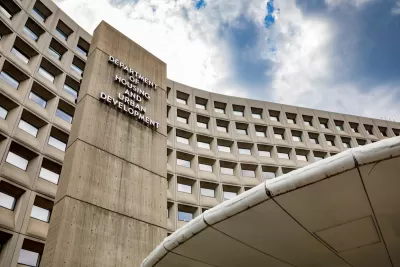
Although the congressional reconciliation bill provides a small boost to the federal Low Income Housing Tax Credit (LIHTC) and establishes permanent funding for the Opportunity Zones program, an article by Roshan Abraham in Shelterforce argues that the budget is ultimately harmful to affordable housing.
The law’s massive cuts to social programs such as Medicaid and Medicare will contribute to the housing crisis, Abraham notes. “The tax law has dire implications for renters and homeowners, largely because millions of American renters rely on the country’s major social safety health programs, but also because cuts to climate tax credits will result in raised utility bills.”
Housing advocates say that the LIHTC does not have the same tenant protections as other HUD programs, and often acts as an incentive for speculative developers, while also not providing deep enough affordability.
Advocates say federal cuts to rental assistance and fair housing enforcement programs will drive more people into homelessness. The federal budget calls for a 29 percent reduction in funding for administrators for public housing authorities that help people find Section 8 voucher housing. “Given the stringent requirements of the program and ongoing challenges of voucher-holders who face income-based discrimination, this would significantly slow down tenants’ ability to find homes.” The bill also eliminated the Fair Housing Initiatives Program, putting fair housing enforcement in jeopardy.
FULL STORY: How Trump’s Tax Law Will Deepen Housing Insecurity


Federal cuts to voucher program put 9,000 New Yorkers at risk of homelessness
The Emergency Housing Voucher program is ending years ahead of schedule, forcing housing agencies to find new ways to support roughly 70,000 households nationwide.
Blocked, Restored, Blocked Again — Housing Funds in Legal Limbo
Since Trump took office, the administration has blocked multiple affordable housing funding streams. Here's a look at which funds have been frozen, which have been reinstated, and which are in the courts.

Missouri Law Would Ban Protections for Housing Voucher Users
A state law seeks to overturn source-of-income discrimination bans passed by several Missouri cities.

Planetizen Federal Action Tracker
A weekly monitor of how Trump’s orders and actions are impacting planners and planning in America.

The state-sanctioned urbicide of Austin
People don’t kill cities. Freeways do.

US to reduce Colorado River water deliveries to Mexico
A new Colorado Treaty amendment reduces Mexico’s Colorado River water allocation by 250,000 acre feet.

5 New England states march closer to 800 megawatt wind energy project
Securing federal approval for the project may be complicated under the Trump administration, which has historically been hostile towards domestic wind power.

Baltimore to break ground on $50 million Transit Priority Project
The project will bring faster bus trips, safer streets and better bike connections to Baltimore.

Airbnb launches $250 million 'last-dollar financing' housing accelerator, makes first investment in Austin
The company will put $6.4 million towards affordable housing development in Texas’ capital.

FREE Course: Walkable City 1: Why Walkability?
After describing his path towards focusing on walkability as the essence of good planning, Jeff Speck marches through his five principal reasons for making more walkable places.
Reinventing Malls: Planning Alchemy—Turning Gray Fields Into Gold
The course focuses on the opportunities and imperatives that shape reinvention of mall sites.

Eagle County Government
Harvard University Graduate School of Design
Nashville Planning Department
The Architects Foundation
University of Cincinnati Online
The Pocatello Development Authority
The Urban Renewal Agency of the City of Pocatello
Journal of the American Planning Association