Several new state laws cut the red tape on new housing construction, create a fund for affordable housing and bar municipalities from imposing restrictions on where and how much new housing can be built.



This article by Eesha Pendharkar was originally published in Maine Morning Star. It has been shortened by Planetizen.
A bill [Maine House of Representatives Speaker Ryan Fecteau] introduced — LD 1082, which eventually got wrapped into the budget — will increase the real estate transfer tax on properties that sell for more than a million dollars. That increased revenue, which only applies to the portion of the sale that exceeds one million dollars, will then be allocated to a dedicated fund for affordable housing.
LD 1829, another bill Fecteau sponsored, which was ultimately signed into law, makes comprehensive zoning changes to make it easier to build more units on the same lot, and removes some restrictions on the height, density and location of where housing can be built.
The goal of the newly signed law is to increase smaller developments of two to four units on a lot, or make it easier to build that type of development in order to spur housing production close to existing public infrastructure such as sewer and water systems, for example, so that developers and municipalities don’t have to spend millions of dollars to extend those lines out to more rural areas.
Fecteau, McCollister, and Mitchell also pointed to several other bills that passed this session that will help increase the supply by easing some restrictions on developers.
One such example is LD 146, sponsored by Sen. Peggy Rotundo (D-Androscoggin). The legislation streamlines the Historic Property Rehabilitation Tax Credit, which encourages private sector investment in the rehabilitation and re-use of historic buildings, by removing timeline barriers that have previously slowed down development projects.
Fecteau highlighted a new law introduced by Rep. Amy Roeder (D-Bangor), LD 427, that reduces the minimum parking requirements to one space per dwelling unit. Until now, some communities required a parking spot for every bedroom in a unit.
Two successful measures from Rep. Marc Malon also create more opportunities for housing: LD 997, which allows residential construction in commercial zones, and LD 970, which opens up existing structures to be rehabilitated for housing.
FULL STORY: Maine lawmakers remove red tape to enable more affordable housing construction


New York Launches New Housing Financing Initiative
The program is aimed at supporting housing projects with 70 percent or more affordable units.

New California law could reduce building costs by up to $70k per unit
The law reduces impact fees, which developers say drive up the cost of new housing.
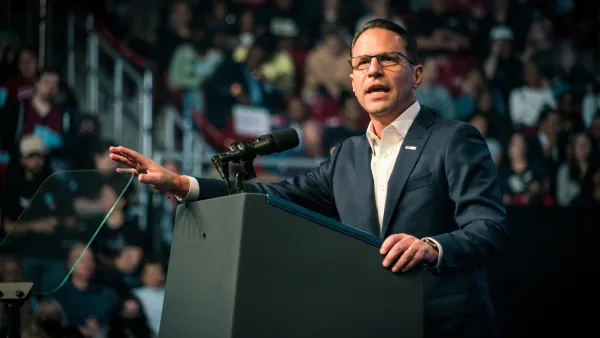
Pennsylvania Housing Action Plan Calls for $1B Fund, Expanded Renter Protections, Homebuyer Assistance
Gov. Shapiro’s proposed plan would bolster support for renters and homebuyers and reduce barriers to housing development.

Planetizen Federal Action Tracker
A weekly monitor of how Trump’s orders and actions are impacting planners and planning in America.

The state-sanctioned urbicide of Austin
People don’t kill cities. Freeways do.

US to reduce Colorado River water deliveries to Mexico
A new Colorado Treaty amendment reduces Mexico’s Colorado River water allocation by 250,000 acre feet.

5 New England states march closer to 800 megawatt wind energy project
Securing federal approval for the project may be complicated under the Trump administration, which has historically been hostile towards domestic wind power.

Baltimore to break ground on $50 million Transit Priority Project
The project will bring faster bus trips, safer streets and better bike connections to Baltimore.

Airbnb launches $250 million 'last-dollar financing' housing accelerator, makes first investment in Austin
The company will put $6.4 million towards affordable housing development in Texas’ capital.

FREE Course: Walkable City 1: Why Walkability?
After describing his path towards focusing on walkability as the essence of good planning, Jeff Speck marches through his five principal reasons for making more walkable places.
Reinventing Malls: Planning Alchemy—Turning Gray Fields Into Gold
The course focuses on the opportunities and imperatives that shape reinvention of mall sites.

Eagle County Government
Harvard University Graduate School of Design
Nashville Planning Department
The Architects Foundation
University of Cincinnati Online
The Pocatello Development Authority
The Urban Renewal Agency of the City of Pocatello
Journal of the American Planning Association