U.S. Forest Service employees work on projects that have impacts far beyond remote, rural wilderness areas.


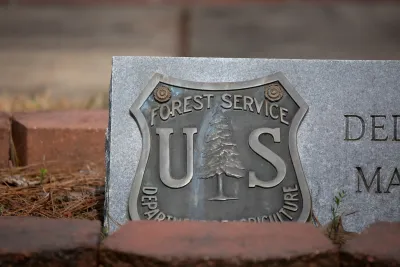
In an opinion piece in Greater Greater Washington, Lorenzo Cinalli and Kesha Braunskill, two former U.S. Forest Service employees, argue that the mass firing of USFS workers impacts all Americans, including those in urban areas. “Forest Service staffers work on innovative and applied research such as developing climate adaptation actions for use in local decision-making, like Climate Ready DC.”
The deep cuts to the Forest Service aren’t just a blow to the people who lost their paychecks—they’re a blow to the environmental resilience, economic stability, and overall quality of life of DC and urban communities across the country.
According to the authors, the Forest Service works on everything from fire prevention to urban forestry. “Nationwide, trees provide $104 billion dollars in benefits to residents from improved air quality, energy savings, and property values, with nearly $1 billion of those benefits in the DC alone. Trees provide flood mitigation, mental health benefits, critical habitat needed by our food systems, and far too many other benefits to list.”
Workforce reductions will likely reduce the resources allocated to tree planting initiatives (some grants were already revoked), harming urban tree canopies for decades to come, since “Urban trees planted today take years of care and maintenance to become mature canopy trees that provide shade, clean our air, and become valued parts of the community.”
Read the full story: Forest Service layoffs could mean less resilient cities
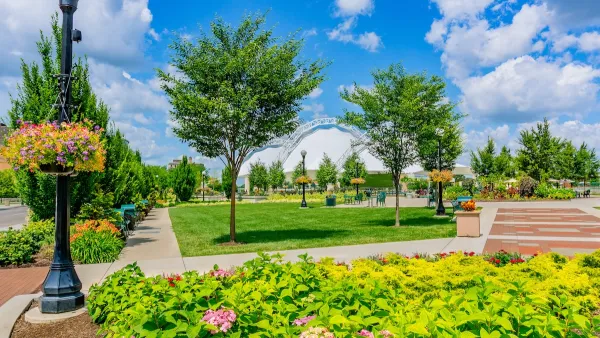
A Plan to Expand Tree Canopy Across Dayton
Dayton is developing an urban forest master plan, using a $2 million grant to expand its tree canopy, address decades of tree loss, and enhance environmental equity across the city.
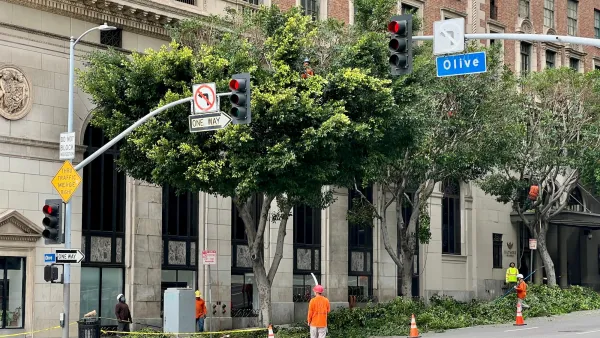
LA’s Tree Canopy is Nearing a ‘Point of Failure’
Calls to 311 for “tree emergencies” are rising, endangering a resource that helps bring down urban temperatures and reduce air pollution.
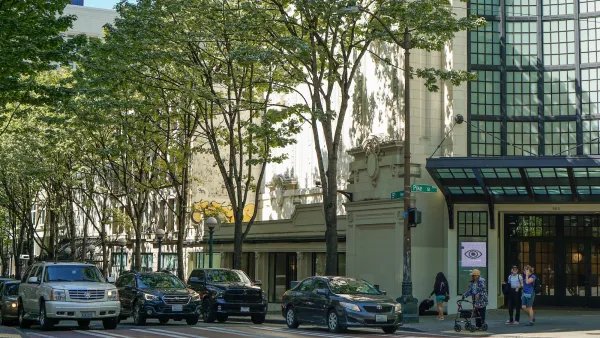
Washington Urban Forestry Program Faces 'Existential' Budget Cut
A proposed budget eliminates funding for a key urban forestry program that funds greening efforts across the state.

Planetizen Federal Action Tracker
A weekly monitor of how Trump’s orders and actions are impacting planners and planning in America.

California plans to bury El Niño’s downpour
If the state plays its cards right, it may be able to store a billion acre-feet of El Niño’s water in aquifers.

Desperate measures: Advocates weigh draining Lake Powell to fill Colorado River
Draining the reservoir could reduce evaporation losses by a couple hundred thousand acre-feet.

In Texas, data centers are swallowing promised parkland
Residents who moved to Taylor, Texas for a rural community now have to contend with three data centers in their backyard.

How a Chicago-sized wind farm beat the odds and powered on
The project spanned five presidential administrations and a standoff with a U.S. military base.

MTA gives itself 30 days to transform pit into basketball court
The site has been under construction since 2022; the city originally estimated it would finish the court in 2024.

FREE Course: Walkable City 1: Why Walkability?
After describing his path towards focusing on walkability as the essence of good planning, Jeff Speck marches through his five principal reasons for making more walkable places.
Reinventing Malls: Planning Alchemy—Turning Gray Fields Into Gold
The course focuses on the opportunities and imperatives that shape reinvention of mall sites.

City of Rosemead
Rutgers University, Edward J. Bloustein School of Planning and Public Policy
One Hundred Miles
Hunter College, City University of New York (CUNY)
The Architects Foundation
University of Cincinnati Online
City of Cambridge
Montrose County
The Pocatello Development Authority