Bus ridership on local and intercity buses in rural areas rose sharply even as urban transit ridership took a hit between 2019 and 2024.


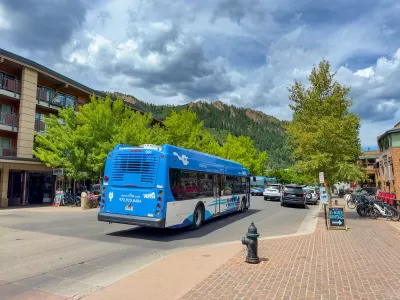
The Colorado Department of Transportation (CDOT) is making an effort to support the rural bus routes that are seeing significant growth in ridership, signaling a need for public transit in more dispersed areas.
As Bruce Finley explains in The Denver Post, “In December, CDOT officials launched a Bustang Outrider route linking Sterling in northeastern Colorado with Denver International Airport. A state transit connections study in progress will identify additional intercity bus routes, including possible new daily service between Gunnison and Montrose in southwestern Colorado; Limon and Denver; Weld County and Denver; and Salida and Colorado Springs.”
Total ridership on the agency’s Bustang routes grew from 238,000 to 390,000 between 2019 and 2024, despite a steep decrease in ridership on urban routes. According to Cara Marcus, knowledge and resource manager for the National Rural Transit Assistance Program, public transit is a “lifeline” for rural residents. “In Colorado, bus ridership in rural areas hit 17 million in 2022, up from 16.7 million in 2017, Federal Transit Administration data shows.”
FULL STORY: As rural bus routes thrive, Colorado builds on what is working

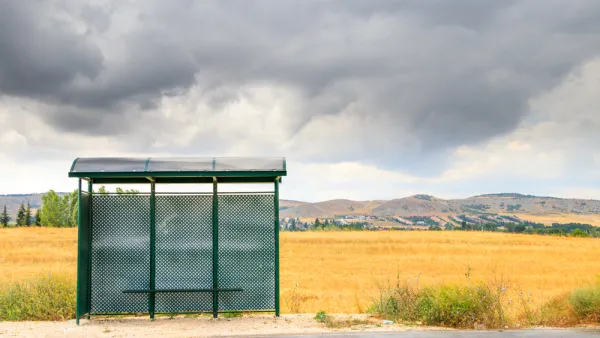
How Rural Transit Systems Are Doing More With Less
With limited resources and dispersed service areas, rural transit systems are turning to technology to provide on-demand service and improve transit options for residents.
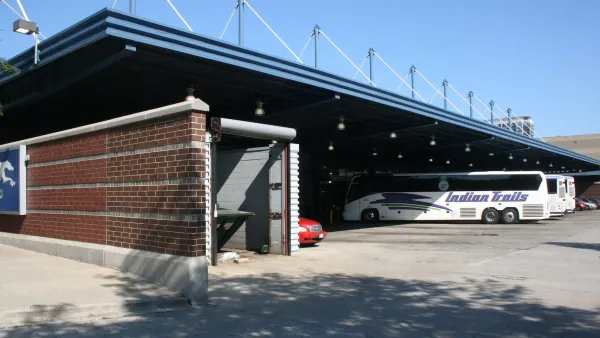
Chicago approves city buyout of downtown Greyhound station
The city is also budgeting $30 million for repairs to the city's only intercity bus station.
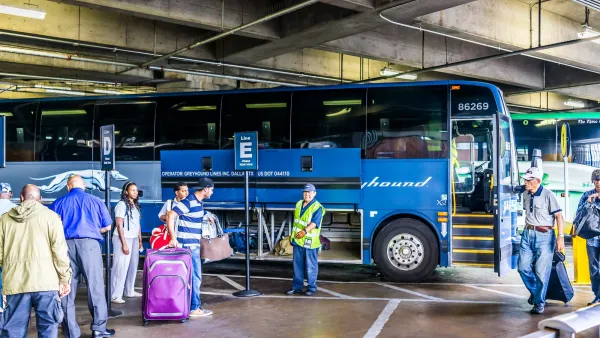
Greyhound Says the ‘Great American Road Trip’ is Best Done by Bus
Hitting back on Sec. Duffy’s call for Americans to “get in the car,” Greyhound launched a guide to using buses to access America 250 celebrations.

Planetizen Federal Action Tracker
A weekly monitor of how Trump’s orders and actions are impacting planners and planning in America.

The state-sanctioned urbicide of Austin
People don’t kill cities. Freeways do.

US to reduce Colorado River water deliveries to Mexico
A new Colorado Treaty amendment reduces Mexico’s Colorado River water allocation by 250,000 acre feet.

Mamdani overhauls NYC's Vision Zero plan with 100 new policy goals
The overhaul aims to reduce traffic deaths and make streets safer for pedestrians, cyclists and drivers through lower speed limits, new safety infrastructure and more.

Amtrak not solely to blame for New Jersey commuter rail's unreliability, report finds
A new study from the Garden State Initiative found that NJ Transit’s budget grew 20% across a 4 year period, but reliability declined significantly over the same period.

EPA erases limits on planet-warming pollution from power plants
Under Monday’s plan, power plants would still have some limits on how much mercury, arsenic and other contaminants they can emit.

FREE Course: Walkable City 1: Why Walkability?
After describing his path towards focusing on walkability as the essence of good planning, Jeff Speck marches through his five principal reasons for making more walkable places.
Reinventing Malls: Planning Alchemy—Turning Gray Fields Into Gold
The course focuses on the opportunities and imperatives that shape reinvention of mall sites.

Eagle County Government
Harvard University Graduate School of Design
Nashville Planning Department
The Architects Foundation
University of Cincinnati Online
The Pocatello Development Authority
The Urban Renewal Agency of the City of Pocatello
Journal of the American Planning Association