U.S. cities are charged with replacing dangerous lead pipes and improving drinking water quality within the next 13 years.


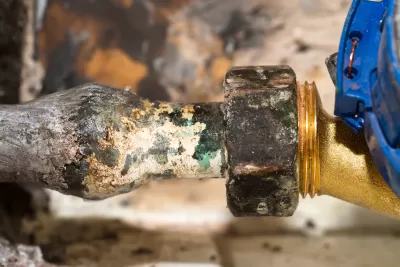
President Biden announced a 10-year deadline (starting three years from now) for U.S. cities to replace lead pipes in an effort to ensure safe drinking water, according to a report by Matthew Daly and Michael Phillis for the Associated Press. The rule replaces a less stringent standard set by the previous administration that did not require replacing lead pipes.
According to the EPA, the changes mandated by the new rule could prevent up to 900,000 infants from having low birth weight and avoid up to 1,500 premature deaths per year.
The new rule limits lead to levels of 10 parts per billion, down from 15 parts per billion previously. The rule also calls for cities to notify the public if higher levels of lead are found and to provide ways to limit lead exposure.
The cost of replacing lead pipes can be extremely high. In addition to $15 billion allocated to the issue in the 2021 infrastructure law, the administration is making another $2.6 billion available for drinking water infrastructure.
Read the full story: Biden sets 10-year deadline to replace lead pipes, ensuring safe drinking water


84% of Chicago's Pipes Contain Lead — and They're Not Equally Distributed
The city’s Black and Latino communities are most impacted, but the issue is widespread across the city’s water distribution network.

Study: Fracking Chemical Disclosures Prompt More Cautious Behavior
Because toxic chemicals used in fracking can contaminate local water supplies, residents in states that require companies to disclose their materials are more likely to increase their bottled water consumption.

Replacing lead pipes in Chicago costs more than 6 times the national average — and authorities can't explain why
Replacing one lead pipe in Chicago costs around $31,000, while the national average cost sits at around $4,700 per line.

Planetizen Federal Action Tracker
A weekly monitor of how Trump’s orders and actions are impacting planners and planning in America.

California plans to bury El Niño’s downpour
If the state plays its cards right, it may be able to store a billion acre-feet of El Niño’s water in aquifers.

Chicago breaks ground on $3 billion megadevelopment
The new neighborhood, titled Foundry Park, will one day host 3,700 residences.

California High-Speed Rail Authority CEO resigns after $600,000 scandal
Under Ian Choudri, the authority used taxpayer dollars to fund first class flights and trips to nightclubs.

Want to study the Missouri River? Soon, you may need unanimous approval from 10 states
Legislation would require 10 governors’ permission to study or build projects moving water outside the basin.

Desperate measures: Advocates weigh draining Lake Powell to fill Colorado River
Draining the reservoir could reduce evaporation losses by a couple hundred thousand acre-feet.

FREE Course: Walkable City 1: Why Walkability?
After describing his path towards focusing on walkability as the essence of good planning, Jeff Speck marches through his five principal reasons for making more walkable places.
Reinventing Malls: Planning Alchemy—Turning Gray Fields Into Gold
The course focuses on the opportunities and imperatives that shape reinvention of mall sites.

City of Rosemead
Rutgers University, Edward J. Bloustein School of Planning and Public Policy
One Hundred Miles
Hunter College, City University of New York (CUNY)
The Architects Foundation
University of Cincinnati Online
City of Cambridge
Montrose County
The Pocatello Development Authority