The decision reverses new laws once dubbed the ‘Montana Miracle.’



A Montana judge reversed parts of a sweeping zoning reform package passed last year which would have legalized accessory dwelling units and duplexes in residential areas. According to the judge, the laws would “likely do ‘irreparable’ damage to residents of single-family neighborhoods.” Writing in Reason, Christian Britschgi calls the decision ‘eyebrow-raising,’ noting that “the reforms rank as some of the more ambitious housing bills passed by any state legislature last year.”
The decision is the result of a lawsuit brought by a group calling themselves Montanans Against Irresponsible Densification (MAID), which sued the state arguing that the zoning reforms were unconstitutional because they allowed neighborhoods with restrictive covenants to continue excluding denser housing types. “MAID said this would unfairly funnel development into areas without protective covenants, and produce arbitrary results whereby duplexes could be built on one side of a street, but not on the other side.”
This reversal of recent zoning reforms isn’t unique to Montana: “In September 2023, a Minnesota judge overturned Minneapolis' first-in-the-nation abolition of single-family-only zoning (in addition to other zoning reforms), citing the city's failure to conduct a proper state-required environmental analysis of increased allowable density,” and a Texas judge similarly invalidated zoning reforms in Austin.
With more Americans unable to afford housing, evictions on the rise, and housing supplies not meeting demand in many regions, the zoning reform and missing middle housing’ debate isn’t going anywhere soon.
FULL STORY: Court's Wild Zoning Decision Blocks 'Montana Miracle'


Montana Supreme Court Upholds Zoning Reform Bills
The decision invalidates a preliminary injunction that blocked two key housing bills.

A Look at Milwaukee’s Zoning Reform Proposal
The ‘Growing MKE’ plan calls for allowing ADUs, reducing barriers to new construction, and expanding the types of housing available in the city’s residential areas.
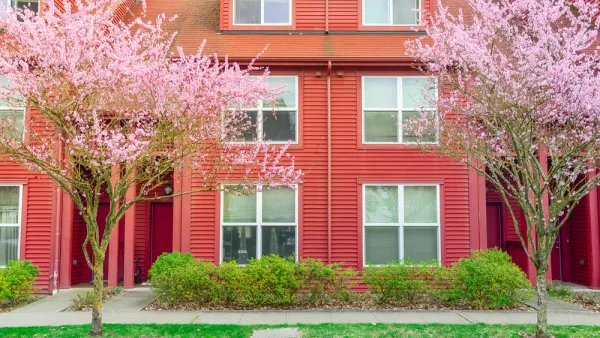
‘Missing Middle Housing’ Bill Passes in Washington Senate
The legislation would permit duplexes and, in some cases, fourplexes in residential areas in most Washington towns.

The state-sanctioned urbicide of Austin
People don’t kill cities. Freeways do.

US to reduce Colorado River water deliveries to Mexico
A new Colorado Treaty amendment reduces Mexico’s Colorado River water allocation by 250,000 acre feet.

New Jersey’s second-largest city bans standalone data centers
Jersey City will continue to allow co-location facilities, such as those meant for research institutions that store their own data.

Amtrak not solely to blame for New Jersey commuter rail's unreliability, report finds
A new study from the Garden State Initiative found that NJ Transit’s budget grew 20% across a 4 year period, but reliability declined significantly over the same period.

EPA erases limits on planet-warming pollution from power plants
Under Monday’s plan, power plants would still have some limits on how much mercury, arsenic and other contaminants they can emit.

Phoenix announces new on-demand transit service, more frequent RAPID buses
Both new services will launch in October, and are part of Phoenix's Project Effective Access Solutions for Easing Congestion.

FREE Course: Walkable City 1: Why Walkability?
After describing his path towards focusing on walkability as the essence of good planning, Jeff Speck marches through his five principal reasons for making more walkable places.
Reinventing Malls: Planning Alchemy—Turning Gray Fields Into Gold
The course focuses on the opportunities and imperatives that shape reinvention of mall sites.

Eagle County Government
Harvard University Graduate School of Design
Nashville Planning Department
The Architects Foundation
University of Cincinnati Online
The Pocatello Development Authority
The Urban Renewal Agency of the City of Pocatello
Journal of the American Planning Association