By requiring landlords to enter mediation before filing eviction cases, the city’s eviction diversion program has successfully kept thousands of people at risk for displacement in their homes.


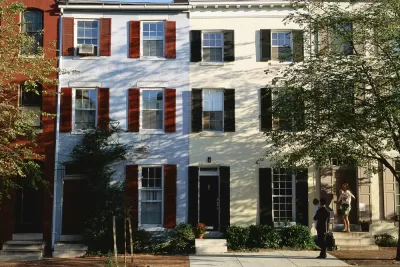
Philadelphia’s Eviction Diversion Program (EDP), which assists tenants at risk of eviction, could prove to be a successful model for other cities, writes Jessica Blatt in an article for the Philadelphia Citizen, republished in Next City.
By steering tenants away from eviction proceedings — a process in which less than 10 percent of tenants, compared with more than 80 percent of landlords, have historically had legal representation — Philadelphia’s program allows renters to avoid significant damage to their credit and their ability to secure desirable housing in the future.
The EDP began as part of the city’s effort to address the 17 recommendations provided in the 2018 Taskforce on Eviction Prevention and Response report, which included legally requiring landlords to enter mediation before filing an eviction. The program gained steam during the pandemic, when officials worried “the backlog of eviction cases would turn into an avalanche of people losing their homes.”
The program has had “a significant impact” on evictions in the city, with 85 percent of potential eviction cases now avoiding court proceedings and wait times for hearings reduced by two thirds. See the source article for more details on the program.
FULL STORY: How Philly’s Eviction Diversion Program Became A Model For Cities Around The U.S.


Philadelphia 'Diversion Program' Prevents Evictions Through Mediation
A program that provides mediation between landlords and tenants has helped a majority of applicants avoid eviction, signaling a promising avenue for renter assistance as landlords seek to recoup COVID-era losses.

Report: DC Needs ‘Immense’ Funding Increase to Address Housing Crisis
Close to 60,000 District households can’t afford their housing costs, according to research from the Urban Institute.
Approaching Affordable Housing From All Angles
Housing providers and advocates around the country are combining a variety of strategies to boost the affordable housing supply.

The state-sanctioned urbicide of Austin
People don’t kill cities. Freeways do.

US to reduce Colorado River water deliveries to Mexico
A new Colorado Treaty amendment reduces Mexico’s Colorado River water allocation by 250,000 acre feet.

New Jersey’s second-largest city bans standalone data centers
Jersey City will continue to allow co-location facilities, such as those meant for research institutions that store their own data.

Amtrak not solely to blame for New Jersey commuter rail's unreliability, report finds
A new study from the Garden State Initiative found that NJ Transit’s budget grew 20% across a 4 year period, but reliability declined significantly over the same period.

EPA erases limits on planet-warming pollution from power plants
Under Monday’s plan, power plants would still have some limits on how much mercury, arsenic and other contaminants they can emit.

Phoenix announces new on-demand transit service, more frequent RAPID buses
Both new services will launch in October, and are part of Phoenix's Project Effective Access Solutions for Easing Congestion.

FREE Course: Walkable City 1: Why Walkability?
After describing his path towards focusing on walkability as the essence of good planning, Jeff Speck marches through his five principal reasons for making more walkable places.
Reinventing Malls: Planning Alchemy—Turning Gray Fields Into Gold
The course focuses on the opportunities and imperatives that shape reinvention of mall sites.

Eagle County Government
Harvard University Graduate School of Design
Nashville Planning Department
The Architects Foundation
University of Cincinnati Online
The Pocatello Development Authority
The Urban Renewal Agency of the City of Pocatello
Journal of the American Planning Association