A 2014 complaint about segregated housing lodged with the Department of Housing and Urban Development could revive integrationist housing policies to improve opportunities for all residents.



“Although Minneapolis remained over 90 percent white until the 1980s, civil rights activists scored serious victories in the mid-20th century. But as the city, and region, grew more diverse, desegregationist policies were increasingly stymied,” writes Jake Blumgart in Governing. Today, “The majority of the region’s subsidized housing is built in lower-income areas, while over a quarter of Black students go to deeply segregated schools — up from almost none 30 years ago.”
These conditions aren’t unique to Minneapolis. “Last year, a study out of the University of California, Berkeley, found that 81 percent of American metropolitan areas with populations over 200,000 were more segregated in 2019 than they had been in 1990.” Meanwhile, research shows that residents of resource-rich neighborhoods have better economic and health outcomes, making where you live a key determinant of social well-being.
Now, local activists are bringing attention to a 2014 complaint lodged with the Department of Housing and Urban Development (HUD) that could “reinvigorate more integrationist policies” if HUD threatens to withhold funds. “But, given how long the 2014 case has been left on the back burner, there are legitimate questions of whether this form of pressure will bring relief in a meaningful time frame,” warns Blumgart. Additionally, “The complaint about the Metropolitan Council wouldn’t address housing in Minneapolis and St. Paul (those cities already settled a separate complaint brought by [Michael Allen, a national civil rights lawyer]).”
However, “Prominent leaders in the region, like Minneapolis’ Jacob Frey, also express broad support of the goals of building more subsidized housing in more privileged neighborhoods and municipalities.”
Read the full story: Can the Feds Force the Twin Cities to Tackle Segregated Housing?

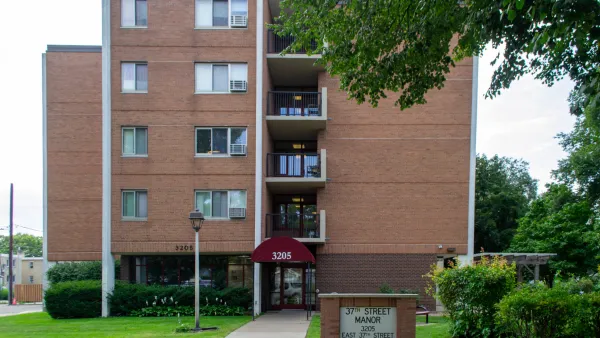
HUD to Investigate Minneapolis Over Allegations of ‘Racial and Ethnic Favoritism’ in Housing Policy
The Trump administration says the city’s housing policies and support of ‘cultural districts’ are racially discriminatory, while city leaders call the investigation politically motivated.
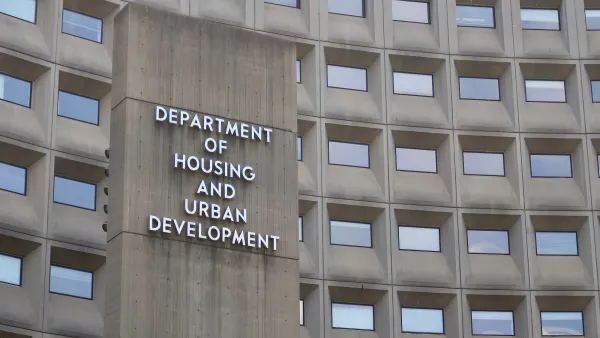
16 States Sue HUD Over New Limits to Fair Housing Act
The lawsuit charges the agency with reversing decades of fair housing regulations and weakening its own enforcement capacity.

HUD Plans to Kill Key Fair Housing Rule
The department issued a proposal to eliminate the disparate impact rule, a cornerstone of some discrimination rulings under the Fair Housing Act.

Planetizen Federal Action Tracker
A weekly monitor of how Trump’s orders and actions are impacting planners and planning in America.

Colorado’s Largest Data Center Could Rise Next to Homes — Without a Public Hearing
The proposed campus would consume 11 times the power of Denver International Airport; as it has across the country, opposition mounts.

Amtrak, CN end decades-long dispute with eight-year agreement
The new operating agreement establishes an updated framework for the companies to work together, including processes to resolve disputes.

'This is going to be painful:’ Virginia stares down $1.7 billion funding gap for highway maintenance
The state may address the deficit by shifting $290 million from its construction budget to maintenance projects.

Judges permit Denver to divert 77,000 acre feet from the Colorado River for reservoir expansion
Overuse and climate change have caused the Colorado River’s water levels to plummet.

Amtrak, CN end decades-long dispute with eight-year agreement
The new operating agreement establishes an updated framework for the companies to work together, including processes to resolve disputes.

FREE Course: Walkable City 1: Why Walkability?
After describing his path towards focusing on walkability as the essence of good planning, Jeff Speck marches through his five principal reasons for making more walkable places.
Reinventing Malls: Planning Alchemy—Turning Gray Fields Into Gold
The course focuses on the opportunities and imperatives that shape reinvention of mall sites.

KFH Group Inc.
Greater Baltimore Committee
Eagle County Government
The Architects Foundation
University of Cincinnati Online
The Pocatello Development Authority
The Urban Renewal Agency of the City of Pocatello