Transportation planning decisions affect our lives in many ways. New Quick Bites (short reports) published by the Institute of Transportation Engineers can help create healthier and happier communities.



Transportation and Health Resources
The following is a listing of the Institute of Transportation Engineer's most recent publications for this topic.
ITE QuickBite (Active Transportation): Transportation as a Determinant of Health
Transportation is much more than mobility; it is a social determinant of health (SDOH). Social determinant of health is a framework that recognizes that an individual's health status is influenced by factors at many levels. One such factor is the design of cities and communities, including transportation infrastructure. In fact, place is so influential for health status that an individual's zip code is a greater predictor of life expectancy than his or her genetic code.
ITE QuickBite (Active Transportation): Transportation as a Determinant of Health
Transportation is much more than mobility; it is a social determinant of health (SDOH). Social determinant of health is a framework that recognizes that an individual's health status is influenced by factors at many levels. One such factor is the design of cities and communities, including transportation infrastructure. In fact, place is so influential for health status that an individual's zip code is a greater predictor of life expectancy than his or her genetic code.
ITE QuickBite (Active Transportation): Transportation for Mental Health and Happiness
Transportation planning decisions can affect people's lives in many ways, including mental health and happiness (also called "subjective wellbeing" or "life satisfaction"). Following are various ways that certain transportation planning decisions can support mental health and happiness goals.
ITE QuickBite (Active Transportation): Health and Co-Benefits of Active Transportation
Active travel infrastructure is a proven strategy for increasing physical activity. How much more walking or cycling an individual or community obtains--the magnitude of the effect--depends on a variety of factors, including whether there are destinations within walking or bicycling distance, how direct the route is, and how safe and secure individuals feel.
Transportation’s Role in Public Health Transportation plays an important role in health, well-being, and quality of life. The transportation system provides access to goods and services critical to health such as affordable/healthy foods, health care, education, and career opportunities. Active transportation options are known to increase physical activity, reduce obesity, and lower rates of disease. Transportation is a top contributor to urban air pollution, with major impacts to respiratory and lung health. The transportation system has a significant impact on the health of our communities.
Improving Arterial Roads to Support Public Health: How Can We Do This?
A desire to protect and enhance public health has motivated improvements to arterial roads and corridors. There are countless "on the ground" examples that illustrate this. In 2016, the Urban Land Institute (ULI) published a report on its Healthy Corridor Project describing how four communities in the United States implemented improvements along specific corridors with the goal of making positive changes in the health of the people who live, work, and travel along them. The improvements targeted health by expanding the set of relevant issues to include food access, physical activity, economic opportunities, and affordable housing in addition to pedestrian and bicycle safety.
ITE’s Role in Integrating Transport & Public Health - Paper
ITE’s Role in Integrating Transport & Public Health - Presentation
Read the full story: New Transportation and Health Resources

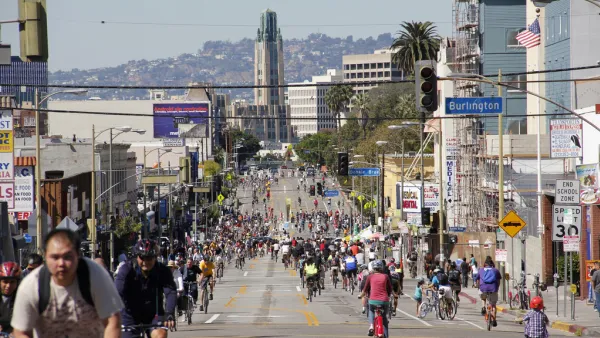
Gehl Institute Releases New 'Guide to Inclusion and Health in Public Space'
The Gehl Institute's new Inclusive Healthy Places Framework is a free tool for evaluating and creating inclusive public places that support health equity.

Planetizen Federal Action Tracker
A weekly monitor of how Trump’s orders and actions are impacting planners and planning in America.

Colorado’s Largest Data Center Could Rise Next to Homes — Without a Public Hearing
The proposed campus would consume 11 times the power of Denver International Airport; as it has across the country, opposition mounts.

US to reduce Colorado River water deliveries to Mexico
A new Colorado Treaty amendment reduces Mexico’s Colorado River water allocation by 250,000 acre feet.

'This is going to be painful:’ Virginia stares down $1.7 billion funding gap for highway maintenance
The state may address the deficit by shifting $290 million from its construction budget to maintenance projects.

Judges permit Denver to divert 77,000 acre feet from the Colorado River for reservoir expansion
Overuse and climate change have caused the Colorado River’s water levels to plummet.

Amtrak, CN end decades-long dispute with eight-year agreement
The new operating agreement establishes an updated framework for the companies to work together, including processes to resolve disputes.

FREE Course: Walkable City 1: Why Walkability?
After describing his path towards focusing on walkability as the essence of good planning, Jeff Speck marches through his five principal reasons for making more walkable places.
Reinventing Malls: Planning Alchemy—Turning Gray Fields Into Gold
The course focuses on the opportunities and imperatives that shape reinvention of mall sites.

KFH Group Inc.
Greater Baltimore Committee
Eagle County Government
The Architects Foundation
University of Cincinnati Online
The Pocatello Development Authority
The Urban Renewal Agency of the City of Pocatello