Even as Japanese skateboarders achieve Olympic glory, skateboarding is still viewed as an unacceptable nuisance on Tokyo’s streets and parks.


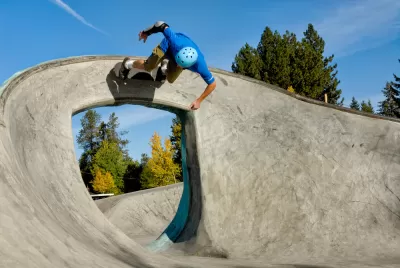
If you have been following the Olympics taking place in Tokyo this summer, you may have noticed that skateboarding is one of the sports newly included in the games. You may also have learned that Japan dominated, with the host country's skateboarders capturing three of the four available gold medals in the sport. However, their success is not a reflection of a national love of the sport nor an abundance of facilities for skateboarding.
As Hanako Lowry reports in this L.A. Times article, skateboarding is essentially banned in public areas in Tokyo, including streets and most parks. There are dedicated skate parks, but those are often monitored and inspected by police for suspicious activities. Thus it is not surprising that Japan’s Olympic medalists, three of whom are teenagers and one only 12 years old, have used their moment in the spotlight to plead for more space to practice.
“I hope we’ll see many more parks to practice in Japan,” 13-year-old Momiji Nishiya said after winning the gold medal in women’s street skateboarding. “We’d like to have good trainings and more often.”
Read the full story: Japan dominated in Olympic skateboarding. Will it bring acceptance on Tokyo’s streets?

Trump's DC 'beautification' efforts threaten historic skate spots
The city is taking more aggressive measures to prevent skateboarders from using unsanctioned public spaces.
San Francisco to Dismantle its Polarizing Brutalist Fountain
The Vaillancourt Fountain stands as a symbol of the tension between the city’s past and future.
Skateboarding and the City
Skateboarding is becoming a legitimate part of the urban landscape by revitalizing public spaces and engaging young people and the broader community.

Planetizen Federal Action Tracker
A weekly monitor of how Trump’s orders and actions are impacting planners and planning in America.

Amtrak, CN end decades-long dispute with eight-year agreement
The new operating agreement establishes an updated framework for the companies to work together, including processes to resolve disputes.

Judges permit Denver to divert 77,000 acre feet from the Colorado River for reservoir expansion
Overuse and climate change have caused the Colorado River’s water levels to plummet.

NYC DOT wants faster, more permanent street upgrades
The city is examining ways to build more concrete infrastructure without getting entangled in 'decades-long' projects.

'Something we’ve never seen before:' rising utility rates could strain city finances nationwide
Data centers, climate change and other factors have caused utility rates in the United States to increase by 38% since 2020.

Trump to overrule local leaders, lease millions of acres of America’s Pacific Island territories’ seafloors to mining companies
International law says that the Indigenous people of America’s territories have a right to prior and informed consent regarding projects that impact their countries.

FREE Course: Walkable City 1: Why Walkability?
After describing his path towards focusing on walkability as the essence of good planning, Jeff Speck marches through his five principal reasons for making more walkable places.
Reinventing Malls: Planning Alchemy—Turning Gray Fields Into Gold
The course focuses on the opportunities and imperatives that shape reinvention of mall sites.

Harvard University Graduate School of Design
KFH Group Inc.
Greater Baltimore Committee
The Architects Foundation
University of Cincinnati Online
The Pocatello Development Authority
The Urban Renewal Agency of the City of Pocatello