The federal government has never provided so much aid to renters, but rental assistance is still failing to reach the people who need it most.


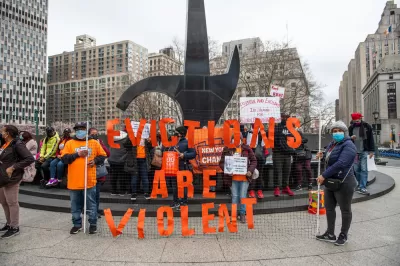
The risk of millions of evictions as a consequence of the pandemic's economic downturn has loomed over the nation for more than a year. The risk persists, according to a recent article by Jerusalem Demsas, despite an unprecedented level of funding devoted to rental assistance and eviction moratoria at multiple layers of government.
"Getting money into the hands of renters has been exceedingly complicated — the National Low Income Housing Coalition has found over 340 different programs attempting to administer the federal aid. Some programs require onerous documentation; others don’t make it easy for landlords to apply and most put the onus on tenants to provide extensive proof of need," explains Demsas.
The stopgaps provided by eviction moratoria have also proven insufficient, and they are also due to expire soon. According to Demsas, "with the federal eviction moratorium expiring at the end of June, and several judges attempting to strike it down before then, states may have mere weeks to get money into the hands of renters before eviction processes start up again in earnest."
"Not a single expert or advocate Vox spoke with believes the money will be allocated by then," reports Demsas.
Money allocated in December 2020 and again in March 2021 came too late, according to Diane Yentel, president and CEO of the National Low Income Housing Coalition, as quoted in the article. Renters had already accrued nearly $50 billion in rent arrears, according to Yentel, but various estimates place the amount of back rent owed in the country anywhere between $8.4 billion and $52.6 billion. "[T]he $45 billion allocated should cover the vast majority of need," according to Demsas, but that doesn't mean the vast majority of renters are clear of the pandemic's economic consequences.
The source article includes more data on the state of the rental housing market, rent debt, and the effort by various levels of government to relieve the economic stress on renters.
FULL STORY: What happened to the $45 billion in rent relief?

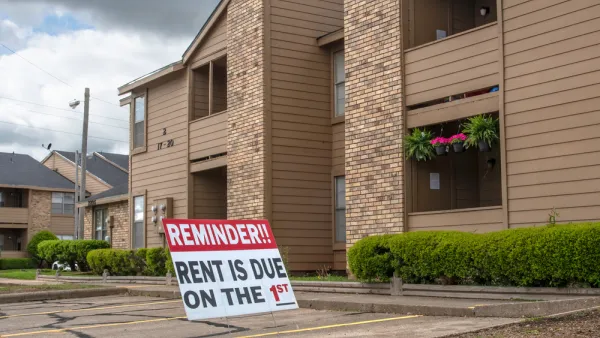
Census: 7 Million Americans Are Behind on Rent
With the federal eviction moratorium due to expire at the end of the month and rent relief programs failing to reach those who need it most, an eviction crisis still looms.
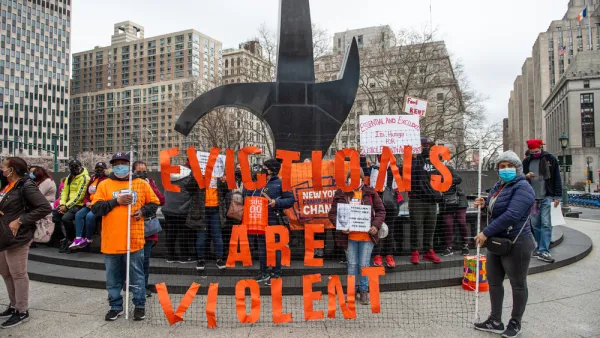
Emergency Rental Relief Gaining Momentum in Some States
Rental assistance spending in June surpassed the entire year's total so far, but there's still a long way to go.
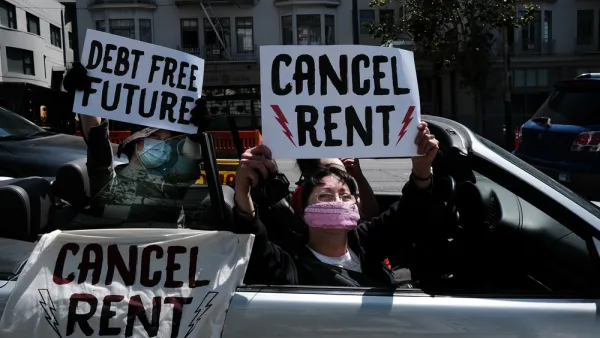
Survey Measures Consequences of the Pandemic for Small Landlords
A new survey reveals details about the financial crunch facing owners of small rental properties as tenants struggle to pay rent during the pandemic and emergency aid is slow to reach those in need.

Planetizen Federal Action Tracker
A weekly monitor of how Trump’s orders and actions are impacting planners and planning in America.

The state-sanctioned urbicide of Austin
People don’t kill cities. Freeways do.

US to reduce Colorado River water deliveries to Mexico
A new Colorado Treaty amendment reduces Mexico’s Colorado River water allocation by 250,000 acre feet.

5 New England states march closer to 800 megawatt wind energy project
Securing federal approval for the project may be complicated under the Trump administration, which has historically been hostile towards domestic wind power.

Baltimore to break ground on $50 million Transit Priority Project
The project will bring faster bus trips, safer streets and better bike connections to Baltimore.

Airbnb launches $250 million 'last-dollar financing' housing accelerator, makes first investment in Austin
The company will put $6.4 million towards affordable housing development in Texas’ capital.

FREE Course: Walkable City 1: Why Walkability?
After describing his path towards focusing on walkability as the essence of good planning, Jeff Speck marches through his five principal reasons for making more walkable places.
Reinventing Malls: Planning Alchemy—Turning Gray Fields Into Gold
The course focuses on the opportunities and imperatives that shape reinvention of mall sites.

Eagle County Government
Harvard University Graduate School of Design
Nashville Planning Department
The Architects Foundation
University of Cincinnati Online
The Pocatello Development Authority
The Urban Renewal Agency of the City of Pocatello
Journal of the American Planning Association